





AG13 Battery Guide: Equivalents, Uses and Safety Tips
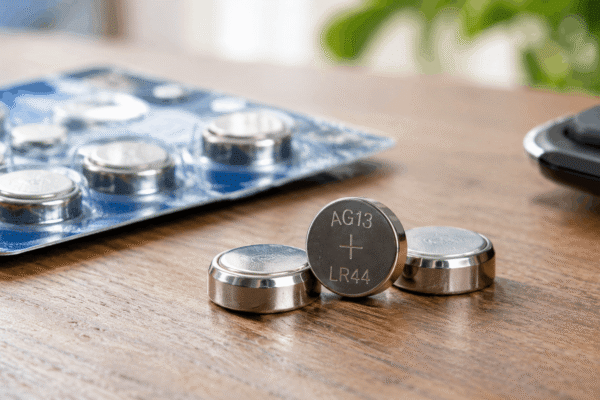
AG13 Battery Guide: AG13 is a size and chemistry designation for a small alkaline button cell. It measures about 11.6 mm across and 5.4 mm tall, and delivers a nominal 1.5 volts. You’ll find it in low-drain devices, which means gadgets that sip power instead of gulping it.
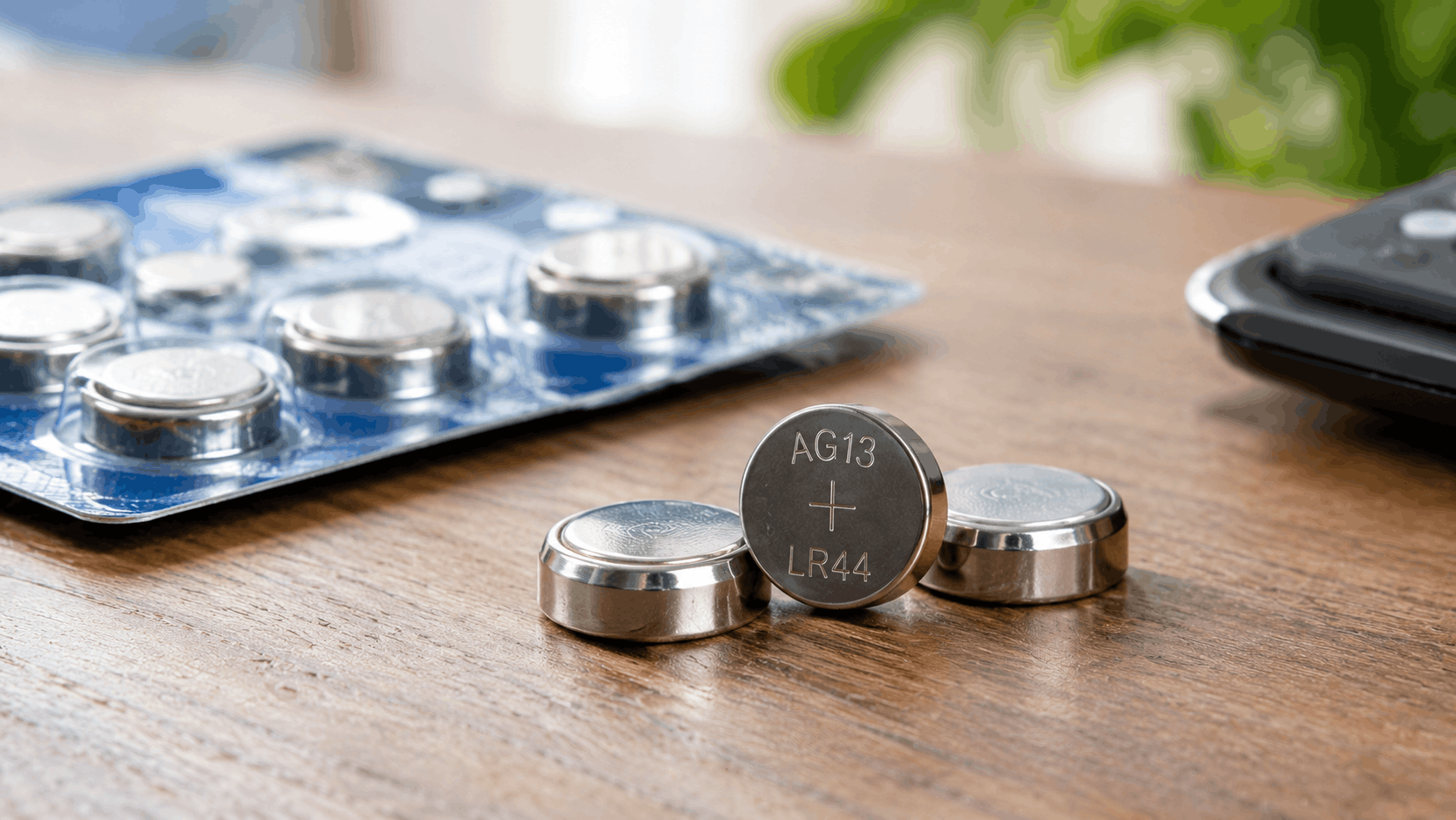
The button cell family is big, and the naming gets confusing fast because manufacturers use their own codes. AG13 is the label most often used in Europe and by watch and calculator makers. In the U.S. and on many battery packs, you’ll see the same cell sold as LR44.
In my experience, people waste more time on the names than on the batteries. They’re the same physical cell wearing different labels.
AG13, LR44, A76 and Friends: The Equivalents
For the alkaline version, these codes are generally treated as interchangeable: AG13, LR44, A76 and L1154. Different manufacturers use different numbering systems, and a few add regional variants, so check the package for the dimensions and voltage as well as the name.
The silver-oxide cousins are where things get tricky. Codes like SR44, 357, and 303 share the same physical size, but they use a different chemistry. A silver-oxide battery outputs a slightly higher, flatter voltage (about 1.55 volts) over its life, and it usually lasts longer in devices that need steady power.
Can you swap one for the other? Often yes, since the size matches. But electronics that are sensitive to voltage, such as some watches and measuring instruments, can behave differently, so use the chemistry the manufacturer specifies when you can.
Alkaline vs. Silver Oxide for Your Device
An alkaline cell like the AG13 is cheaper and works well for toys, small flashlights, laser pointers, calculators, and novelty gadgets. Its voltage drops gradually as it drains, so a device might get dim or erratic before it quits entirely.
Silver oxide costs more but holds its voltage steadily and tends to have a longer service life. That matters for watches, glucose meters, medical gadgets, and precision tools. If a device is important and the battery is hard to replace, I’d lean toward silver oxide every time.
One thing worth flagging is that some watchmakers specify silver oxide because alkaline cells can leak and damage the movement. If your watch calls for SR44, don’t swap in an AG13 just to save a dollar.
Where the AG13 Battery Is Used
It’s one of the most common button cells, found in:
- Calculators and digital thermometers
- Small toys, light-up shoes and novelty items
- Laser pointers and mini flashlights
- Digital calipers and some measuring tools
- Cheap watches and clocks
- Garage-door remotes in some models
If you aren’t sure whether your device takes one, check the battery compartment or the manual before buying. The old cell usually has the code stamped on it. Take a photo before you toss it so you can match it at the store.
Capacity and Battery Life
Capacity depends on the brand and chemistry, and it’s usually a modest figure, often in the neighborhood of 100 to 150 mAh for alkaline versions. Exact numbers vary, so check the manufacturer’s datasheet if you need a precise figure.
Real-world life varies even more. A low-drain calculator might run for years, while a light-up toy that draws more current can drain the same cell in days. What tends to surprise people is how much shelf life matters. A button cell that sat in a drawer for years may already be weak.
If a device seems dim or erratic with a fresh battery, the problem may be dirty contacts, corrosion or a design that simply eats batteries quickly.
How to Buy One Without Getting Burned
Buy from reputable sellers, and check the expiration or “best before” date on the package. Name-brand cells cost more but have a track record for consistent capacity and leak resistance. Bargain multi-packs from unknown sellers are a gamble, and sometimes the cells are old stock.
Don’t trust claims that seem too good. A 100-pack for a tiny price often means weak or aging batteries. Packs sold with child-resistant packaging are a plus, and I’d choose them if kids are around.
For devices you rely on, such as a medical tool or a precision instrument, spend more on a quality silver-oxide cell. For a cheap toy, an alkaline AG13 is perfectly fine. Prices change often, so compare current listings before buying in bulk.
Installing and Replacing It Properly
Handle cells by the edges to avoid transferring skin oils to the contacts. Match the positive (+) side, usually the flat, labeled face, with the positive marking in the compartment. Clean any corrosion on the contacts with a cotton swab and a small amount of white vinegar or isopropyl alcohol, then let it dry completely.
If a device has been dead for a long time, check for leakage. Alkaline cells can leak potassium hydroxide, which is caustic and can burn skin and damage electronics. Wear gloves if you see crusty residue, and wash your hands afterward.
Avoid mixing old and new batteries in a multi-cell device. The weaker cell drags down the stronger ones and raises the leak risk.
The Safety Issue Every Household Should Know About
This is the section I’d ask you to read twice. Button batteries are a serious hazard for small children and pets. A swallowed cell can lodge in the throat and cause severe burns in as little as two hours, because it reacts with saliva and tissue.
The National Capital Poison Center has detailed guidance on button battery ingestion. If you suspect a child swallowed one, treat it as an emergency, go to the nearest emergency room immediately, and call your local poison control number. Don’t wait for symptoms and don’t induce vomiting.
Prevention is simpler than it sounds. Keep spare batteries in a locked or child-resistant container, check that battery compartments on toys and remotes are secured with screws, and dispose of dead cells right away. Dead batteries can still hold enough charge to cause harm.
Disposal and Recycling
Don’t throw button cells in the regular trash if you can avoid it. Many contain metals, and silver oxide cells in particular are worth recycling. The EPA’s page on used household batteries explains your options, and many electronics stores and municipal collection programs accept them.
Tape the terminals of used button cells with clear tape before storing them for recycling. That prevents contact with other metal objects and reduces short-circuit risk. Keep the container out of reach of children.
Quick Troubleshooting
If your new AG13 battery doesn’t work, check orientation first. Then inspect the contacts for corrosion or bent tabs. A battery tester helps rule out a dud cell.
If the device works briefly and dies, the cell could be old, or the device might be drawing too much current for an alkaline cell. A silver-oxide replacement often fixes that.