
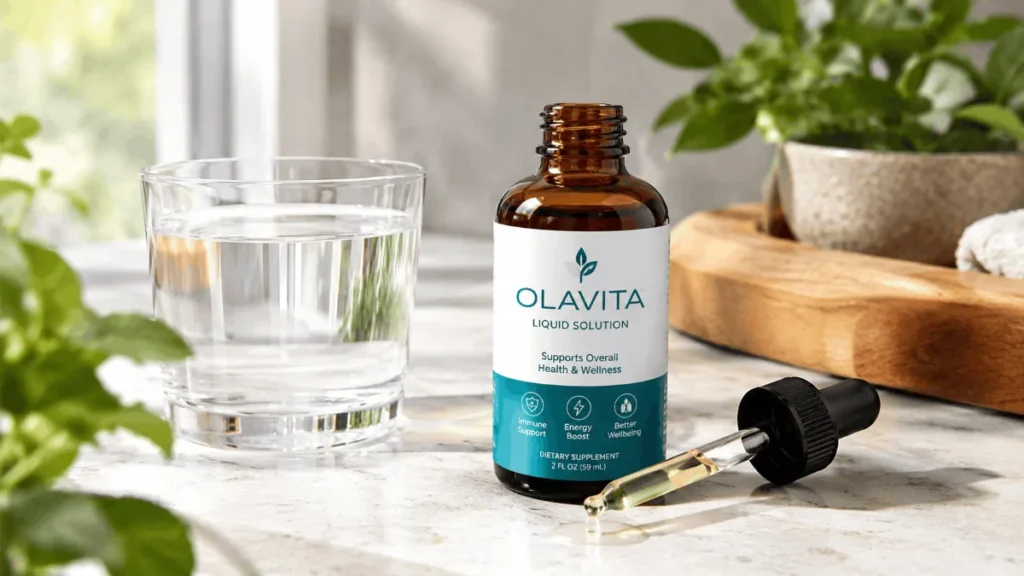

Olavita Liquid Solution Review: It’s sold as a topical anti-aging serum in a 30 ml (1.01 oz) bottle. One eBay listing I found offered four boxes new for $55 plus shipping, with a no-returns policy, and described it with phrases like “fade fine lines” and “lifting and firming.” That’s a third-party reseller, not the brand, so prices and availability vary by seller and change often.
The product shows up mostly in advertorials, review-style articles and marketplace listings. That pattern matters. When a skincare product’s loudest voices are paid-content pages, you learn a lot about its marketing and very little about its performance.
The Ingredient Story Doesn’t Add Up
Here’s the first warning sign. Different pages describe completely different formulas. Some say it contains peptides, hyaluronic acid and ceramides. Others mention Argireline and hydrolyzed collagen. One review describes a vitamin C and vitamin E serum for dullness and dark spots. A few claim it contains botulinum toxin.
Those can’t all be the same bottle. A reliable product publishes a full ingredient list (INCI list) on its packaging and website, and you should be able to read the same list everywhere. One review noted that concentrations aren’t disclosed in the marketing materials, which is common but unhelpful.
In my experience, the safest move is to ignore every secondhand ingredient list and read the label on the actual box you’re holding. If the seller can’t show you one, skip it.
The Botulinum Toxin Claim Is a Big Red Flag
Several pages say the serum contains “botulinum toxin” and compare it to Botox injections. That claim deserves real skepticism.
Botulinum toxin is a potent neurotoxin used in prescription treatments that clinicians inject into muscles. In the U.S., those products are regulated as drugs, not sold as over-the-counter cosmetics. A toxin molecule is also far too large to pass through the skin’s barrier in any meaningful way, which is why topical “botox serums” can’t do what an injection does.
What these products usually contain instead is something like acetyl hexapeptide-8, sold as Argireline, a peptide marketed as a gentler alternative. Evidence for it is limited and the effects are modest at best. Marketing that blurs the line between a peptide and the real toxin is, to my eye, misleading.
The FDA’s cosmetics guidance explains that cosmetics aren’t approved by the agency before they’re sold, and that claiming to change the body’s structure or function can push a product into drug territory. That’s useful context for any “needle-free facelift” pitch.
What the Evidence Actually Shows
I couldn’t find independent, peer-reviewed clinical trials for the finished product. One review explicitly noted there are no publicly available studies tied to this serum, and another said the brand references clinical ingredients without disclosing product-specific results. Some pages claim patch tests on dozens of volunteers, but those figures come from advertorial content and aren’t verifiable.
Ingredients like hyaluronic acid do have a sound basis for hydration and a temporarily plumper look. Peptides may support skin appearance over time with consistent use. But research on an ingredient doesn’t prove a specific formula works, because concentration, pH and delivery matter a lot.
So the honest summary is that it may hydrate and smooth the surface, and that’s about the realistic ceiling for a topical serum at this price.
Reading the Reviews Carefully
A lot of the glowing coverage uses identical language: “clinically tested,” “dermatologist approved,” “hundreds of verified customers.” Be careful. Some of it is labeled advertorial, and some pages call the product “100% legitimate” while offering no proof. Independent reviews I found were mixed, with users describing mild hydration but disappointment with the promised results. One reviewer reported little change after several weeks.
Look for reviews that show verified purchases, detailed before-and-after context and the reviewer’s skin type. A star rating without detail doesn’t tell you much.
I’d also be wary of pages that rank products using vague “expert scores” with no methodology. A number like 8.7/10 sounds precise, but it means nothing if nobody explains how it was calculated.
Safety and Patch Testing
Any new serum can irritate skin. Do a patch test on your inner forearm or behind your ear for 24 to 48 hours before applying it to your face. Stop if you notice redness, burning, itching or swelling.
If you have sensitive skin, a skin condition, or you’re pregnant or nursing, ask a dermatologist before adding a new active product. The American Academy of Dermatology offers general skincare guidance and a way to find a board-certified dermatologist.
Introduce only one new product at a time. If you react, you’ll know which one caused it.
How to Buy Without Getting Burned
Buy from the brand’s official site or a reputable retailer, and avoid anonymous marketplace sellers if you can. A listing that says “no returns” removes your safety net. Check whether you’re being enrolled in a subscription or auto-ship plan, and read the cancellation terms before you enter payment details.
Use a credit card or a payment method with buyer protection, and keep screenshots of the offer, the terms and the ingredient list. If something goes wrong, the Federal Trade Commission’s consumer site explains how to dispute charges and report deceptive advertising.
One more tip. Beware of free trial offers that only ask for shipping. Those sometimes lead to recurring charges, and getting out can be a headache.
Better-Documented Alternatives
If your goal is smoother, brighter skin, there are products with clearer evidence and transparent formulas. A vitamin C serum with a disclosed percentage, a retinoid recommended by a dermatologist and a daily broad-spectrum sunscreen do far more for visible aging than most miracle serums. A plain hyaluronic acid serum or a ceramide moisturizer handles hydration at a modest price.
These aren’t glamorous, but they’re predictable, and their ingredient lists are public. For stubborn lines and sagging, a dermatologist can discuss treatments that actually change skin structure, which no over-the-counter serum can match.
Who Might Try It, and Who Should Skip It
If you’re curious, you have a clean patch test result and you’re comfortable treating it as a hydrating serum, trying a small bottle from a reputable seller isn’t a disaster. Keep your expectations modest.
Skip it if you want visible, injection-like results, if you can’t verify the seller or ingredient list, or if you have reactive skin or a medical condition. And skip it if the marketing promises feel too good to be true, because they usually are.
My lean is that your money is better spent on a documented basic routine, then revisiting specialty serums once the foundation is in place.
Related Guides
- Can Arthritis Be Reversed? What Really Helps and What Doesn’t
- Cowboy Colostrum Review: Ingredients, Cost and Evidence
- Ringing in Ear With Ear Plugs: Causes and What to Do
- Conical Cream: What It Really Means and How to Use It
FAQs
What is olavita liquid solution?
It’s marketed as a 30 ml anti-aging serum. Descriptions of its ingredients vary widely across sources, so read the label on your own bottle.
Does olavita liquid solution contain botulinum toxin?
Some promotional pages claim so, but the claim is questionable. Real botulinum toxin products are prescription treatments, and topical serums can’t replicate injections.
Is olavita liquid solution legit or a scam?
It appears to be a real product, but the marketing overstates what a serum can do, and I found no independent clinical evidence. Buy from reputable sellers with a return policy.
Does it remove wrinkles?
Don’t expect dramatic results. Hydrating ingredients can temporarily smooth the look of fine lines, but they don’t work like injectables or procedures.
How much does it cost?
Prices vary by seller and change often. One eBay listing offered four boxes for $55 plus shipping, but check the official site and trusted retailers.
What should I check before using it?
Read the full ingredient list, patch test first and make sure you know the return and subscription terms.