
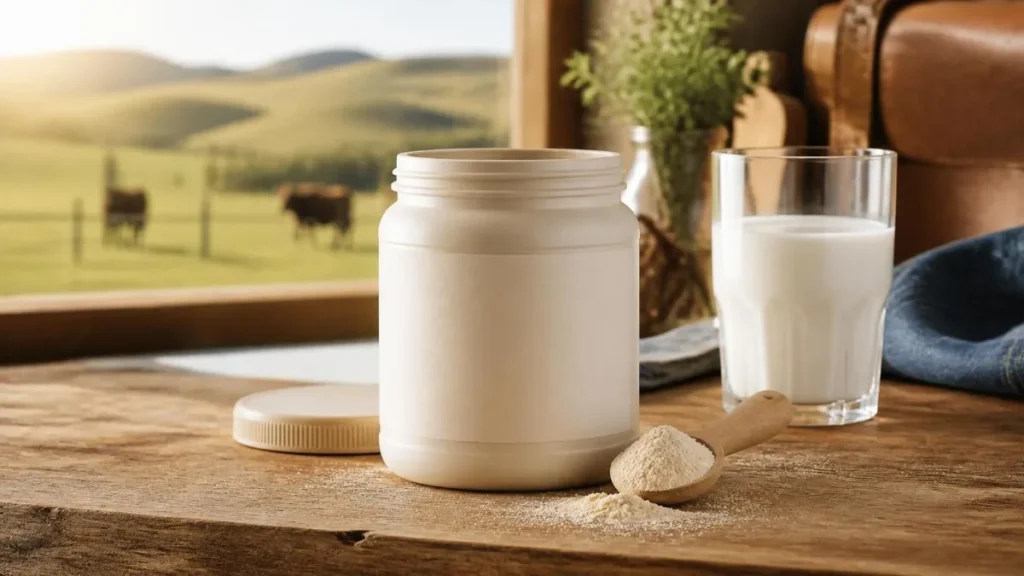

Cowboy Colostrum is a whole, full-fat bovine colostrum powder sold in flavored and unflavored versions. It is a simple product with a short ingredient list, and it costs more per serving than many competitors. The research on colostrum in general is encouraging in a few narrow areas and thin everywhere else, and nothing specific to this brand has been shown to beat other colostrum powders. It suits curious buyers with no dairy issues and realistic expectations. It’s a poor pick if you want a proven fix for a health problem.
What Cowboy Colostrum Is
Colostrum is the first milk a cow produces after calving. Supplement makers dry it into powder and sell it for gut, immune, and recovery support. Cowboy says its colostrum comes from grass-fed U.S. dairy cows and is collected from the first milking, after the calves have had their share. The brand describes the powder as unstripped and full-fat.
One wrinkle: the brand’s own pages don’t agree on timing. Some product pages say first-day colostrum, while others say the first four to six hours after calving. Treat the collection window as a marketing description, not a measured specification.
Ingredients and What’s in a Scoop
The label is short. According to the brand’s unflavored product page, the unflavored version contains only grass-fed bovine colostrum. Vanilla adds organic natural vanilla flavor, organic monk fruit extract, and sea salt. Chocolate swaps in organic cacao powder. All versions are labeled as containing milk.
The brand states about 3 grams of colostrum per serving, and a bottle holds 40 servings. Flavored scoops weigh slightly more because of the added ingredients, per SuppCo’s listing. The Matcha version is a separate product: a review site that summarized its label lists 30 servings and a $69 regular price. A brand-sourced listing puts the caffeine at roughly 30 mg per serving, so check the label if you’re caffeine-sensitive.
What I couldn’t find on the product pages reviewed is an IgG percentage. IgG is the main antibody in colostrum, and some competitors publish a guaranteed figure. Without one, you can’t compare antibody content per dollar across brands.
Taste, Mixing, and Daily Use
The brand recommends a high-speed frother or electric blender for the smoothest result. That matches how most whole-milk-style powders behave: stirring by hand tends to leave clumps. Unflavored works in coffee, smoothies, or oats without changing the taste much. Vanilla and chocolate are sweetened with monk fruit rather than sugar.
If you already add functional ingredients to your morning drink, Headlinza’s guide to functional coffee explains why published doses matter more than a long label, and the same logic applies here.
What the Research Does and Doesn’t Show
The best-supported findings involve upper respiratory infections and gut permeability, mostly in active people.
| Area | What the evidence suggests | Main caution |
|---|---|---|
| Respiratory infections | A 2022 meta-analysis of seven randomized trials (445 participants) found fewer upper respiratory infections with colostrum | Small trials; doses ranged from 0.4 to 60 g a day |
| Gut permeability in athletes | A systematic review of nine studies suggests colostrum may help reverse exercise-related increases | The authors call for better placebo-controlled trials and long-term safety data |
| Exercise performance and recovery | A narrative review found some benefit for gut and illness outcomes during intensified training, with mixed results elsewhere | Product quality and bioactivity vary |
| Children and older adults | A 28-paper systematic review found conflicting results in children and little evidence in older adults | Not a basis for giving it to kids or seniors |
Two things follow. First, the trials tested particular products and doses, so a result doesn’t transfer automatically to a 3-gram scoop of any given brand. Second, the evidence is weakest for the claims often attached to colostrum in ads, such as skin, hair, and general immunity in healthy adults. Cleveland Clinic’s dietitian advises most people to skip it, citing cost and a lack of regulation that makes contents hard to verify. WebMD notes the FDA hasn’t reviewed bovine colostrum for safety and effectiveness.
On testing, retailer pages disagree about whether Cowboy is third-party tested. ConsumerLab, a subscription testing service, included Cowboy in a colostrum review, but the detailed results are behind its paywall. Ask the brand for certificates of analysis if testing matters to you.
Cost and Value
Recent brand and retailer listings show a 40-serving bottle at roughly $69 to $73 before discounts, which works out to about $1.75 to $1.85 per serving. The brand advertises subscription discounts of around 25%. SuppCo ranks it as more expensive than most colostrum products, and prices shift often, so confirm on the brand’s site before ordering.
The brand’s comparison chart pits it against unnamed competitors, so it’s marketing, not an independent test. A better value check has three parts: grams of colostrum per serving, whether IgG is disclosed, and the monthly cost at the dose you’d actually take. Because no one has established the best dose for any goal, paying more for a bigger scoop isn’t proof of a better result. For the same reason, Headlinza’s piece on non-alcoholic functional beverages makes a useful comparison: dose and disclosure matter more than ingredient lists.
Who Should Skip It
Cowboy Colostrum is a dairy product, so anyone allergic to cow’s milk should avoid it. WebMD advises people with lactose intolerance to talk to a healthcare provider first, and it flags hormone-sensitive cancer as another condition to raise with a clinician. Safety data for pregnancy, breastfeeding, and children is limited. If you have a gut disorder, an autoimmune condition, or take medication that affects the immune system, check with your doctor first. It is a supplement, not a treatment.
Who It Suits
It fits adults without dairy issues who want a simple, single-source colostrum powder, don’t mind paying a premium, and will judge it over several weeks without expecting dramatic changes. If gut health or recovery is the real goal, fiber, protein, sleep, and training load will likely matter more. Headlinza’s nutrition coverage covers those basics.
Related Guides
- Can Arthritis Be Reversed? What Really Helps and What Doesn’t
- Calorie Calculator: How It Works and How to Use It Well
- Heating Pad for Charley Horse: What Works and What’s Safe
- Olavita Liquid Solution Review: Does It Really Work?
FAQs
Does it contain lactose? Colostrum naturally contains some lactose, and the product pages reviewed don’t state an amount. The label lists milk as an allergen.
Is it third-party tested? Sources conflict, so request test documentation from the brand.
Does the matcha version have caffeine? A brand-sourced listing gives about 30 mg per serving. Check the current label.
Bottom Line
Buy it if you’re curious, tolerate dairy, and are comfortable paying a premium for a clean label. Start with one bottle, use it consistently for a few weeks, and decide on how you feel rather than on testimonials. Skip it if you have a milk allergy, expect it to treat a condition, or would rather spend the money on food and a doctor’s visit.
Last updated: October 28, 2026