
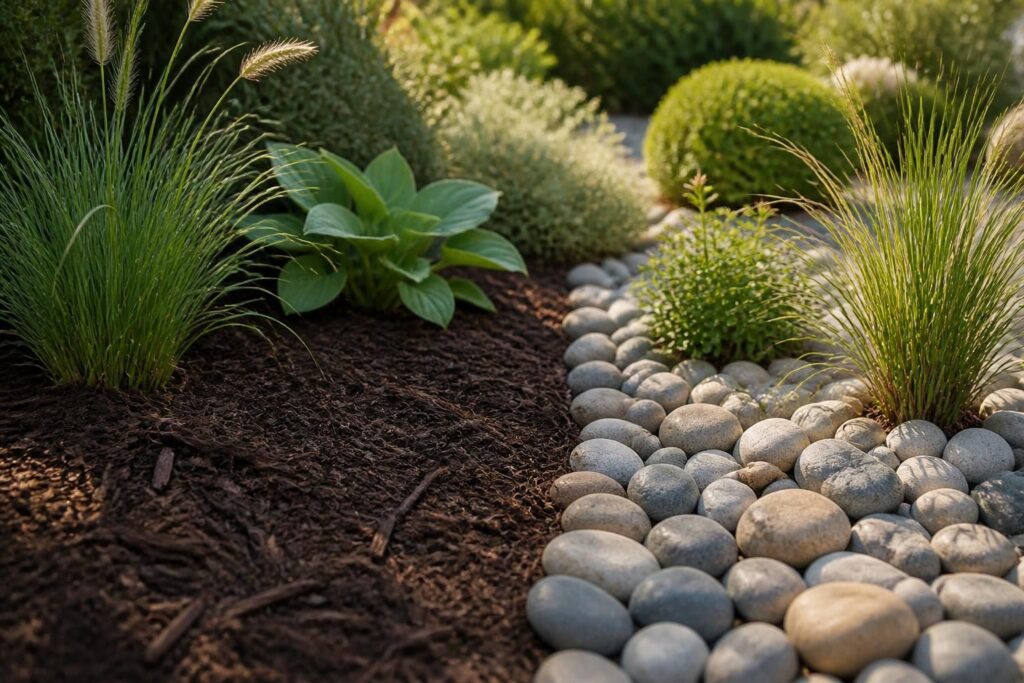

The mulch vs rocks choice comes down to what lives in the bed. Use mulch where you want plants to grow. Use rock on slopes, drain paths, the strip right next to your house in wildfire country, and corners where nothing is planted. Most yards need both, and the most common regret is putting rock where shrubs and perennials live.
Rock gets sold as the “do it once and forget it” option. Many homeowners find out a few years later that it isn’t. Here’s how to decide, spot by spot, with real costs.
Key Takeaways
- Organic mulch feeds the soil and holds moisture. Rock does neither, according to Clemson Extension.
- Rock controls weeds only in the short term, because blown-in debris turns into soil between the stones.
- Over ten years, rock can cost less than store-bought mulch. Free arborist wood chips beat both.
- Within five feet of a house in wildfire areas, fire safety groups recommend stone or gravel only.
Start With One Question: What Lives in This Bed?
Organic mulch is food for the soil. As wood chips or bark break down, they add organic matter, hold moisture and keep roots cooler. Rock does none of that. Clemson’s Home and Garden Information Center puts it plainly: rock offers no benefit to soil health or plant growth.
So a bed of roses, hydrangeas, hostas or young trees should get mulch. A bed of agave, yucca or lavender in a dry climate can take rock without complaint, because those plants want lean, fast-draining soil anyway. If you’re choosing between mulch types, our guide to mulch vs wood chips explains why coarse arborist chips usually beat bagged bark for plant health.
Why Rock Beds Get Weedy Over Time
Rock looks clean for the first year or two. Then leaves, dust and grass clippings blow in, settle between the stones and form a thin layer of soil. Weed seeds love it.
Homeowner forums are full of this story. In one recent r/garden_maintenance thread, a buyer said an inherited rock garden got weedier every year for four years, despite hand-weeding every season. The most common reply was to pull out the rock and fabric and plant ground cover instead. Another commenter said fresh fabric and more stone usually buy about two years before weeds return.
The University of Illinois Extension’s mulch selection guide says the same thing more carefully. It warns that stone controls weeds only in the short term and can lead to weeds that are hard to control. Mulch gets weeds too, but they pull out easily. In rock, roots wedge between stones and snap off.
Mulch vs Rocks Cost Over Ten Years
Rock costs more on day one. Over a decade, the gap often closes or flips. Here’s a rough example for a 200-square-foot bed covered 3 inches deep, which needs about 2 cubic yards of material:
| Material | First year | Each year after | About 10 years |
|---|---|---|---|
| River rock ($45 to $140 per cubic yard) | $90 to $280, plus delivery and fabric | Close to $0 | $90 to $280 |
| Bulk mulch ($30 to $135 per cubic yard) | $60 to $270 | $20 to $85 to top up about an inch | $240 to $1,000 |
| Free arborist chips | About $0 | About $0 | About $0 |
Prices come from Lawn Love’s guides to river rock cost and mulch cost. They vary a lot by region, so treat these as scale, not a quote. Two cubic yards of rock also weigh about 2.8 tons, which is a lot of wheelbarrow trips. What rock won’t save you is the weeding time described above.
Heat: Less of a Problem Than You’ve Heard
A common worry is that rock cooks the soil. Research suggests it doesn’t. The Illinois Extension guide notes that rock mulch doesn’t raise summer soil temperatures in studies. One homeowner who tested it on a 90°F day measured soil under river rock at 77.7°F, against 77°F under mulch, as reported by The Cool Down. That’s one backyard test, not a study, but it matches the research.
The exception is the air above the stones. Rock in full sun throws heat back at leaves and walls. Clemson says that can leave plants feeling like they’re growing in a desert. So keep rock away from heat-sensitive shrubs and from the base of sunny south- and west-facing walls.
Next to the House in Wildfire Areas, Rock Wins
If you live where wildfires happen, the first five feet around your home matter more than anything else in the yard. Fire safety groups call this Zone 0. Embers that land in wood mulch against a wall can smolder and ignite siding.
FIRESafe MARIN’s Zone 0 guidance is to use only non-combustible mulch such as stone or gravel in that strip. California has been working on formal Zone 0 rules for high-risk areas, so check with your local fire authority about your address. Beyond five feet, mulch is generally fine.
Other Places Rock Is the Right Call
- Slopes: Clemson notes rock works well on sloped beds, where wood mulch tends to wash downhill in heavy rain. Our slope calculator guide helps you measure how steep a bed really is.
- Under downspouts and in drainage swales: moving water carries mulch away and leaves rock in place.
- Side yards and paths: gravel handles foot traffic and wheelbarrows.
- Desert and dry gardens: rock suits drought-tolerant plants that dislike rich, moist soil.
Mulch vs Rocks: A Quick Way to Decide
Walk your yard and sort each area. Plants you care about get mulch, 2 to 3 inches deep and kept a few inches off stems and trunks. The five feet around a house in fire-prone areas get rock or gravel. So do slopes, drain lines and paths.
For bare spots with no plans to plant, rock is fine. Just budget an afternoon a year for clearing debris and weeds. If you’re choosing rock to avoid maintenance, go in knowing the trade. It lowers your material costs. It doesn’t end the weeding.
Frequently Asked Questions
Can I put mulch over rocks?
It’s not a good idea. Mulch sifts down between the stones, mixes with the rock and becomes a mess you can’t rake or weed easily. Rake the rock out first, pull up any fabric, and reuse the stone somewhere it belongs, such as a downspout splash area or a path edge.
Do rocks attract bugs or snakes?
Rock doesn’t hold moisture, so it draws fewer moisture-loving pests like slugs than wood mulch does. Spiders, ants and some insects do shelter under stones, though. In areas with snakes, large rock piles near the house can offer hiding spots, so keep rock beds low and flat.
Should I put landscape fabric under rock?
Fabric keeps stones from sinking into the soil, which is its real job. It doesn’t stop weeds for long, since soil builds up on top of it and weeds root right through. If you use it, pick a woven, water-permeable fabric. Skip fabric under organic mulch, where it blocks the mulch from feeding the soil.
Can I use dyed mulch for the dark look of rock?
Yes. Dyed wood mulch gives a tidy, dark finish while still feeding the soil. Look for products made from clean, untreated wood. Our black mulch guide covers what’s in the dye and how long the color lasts.
Headlinza Editorial Team writes practical guides for Headlinza.