
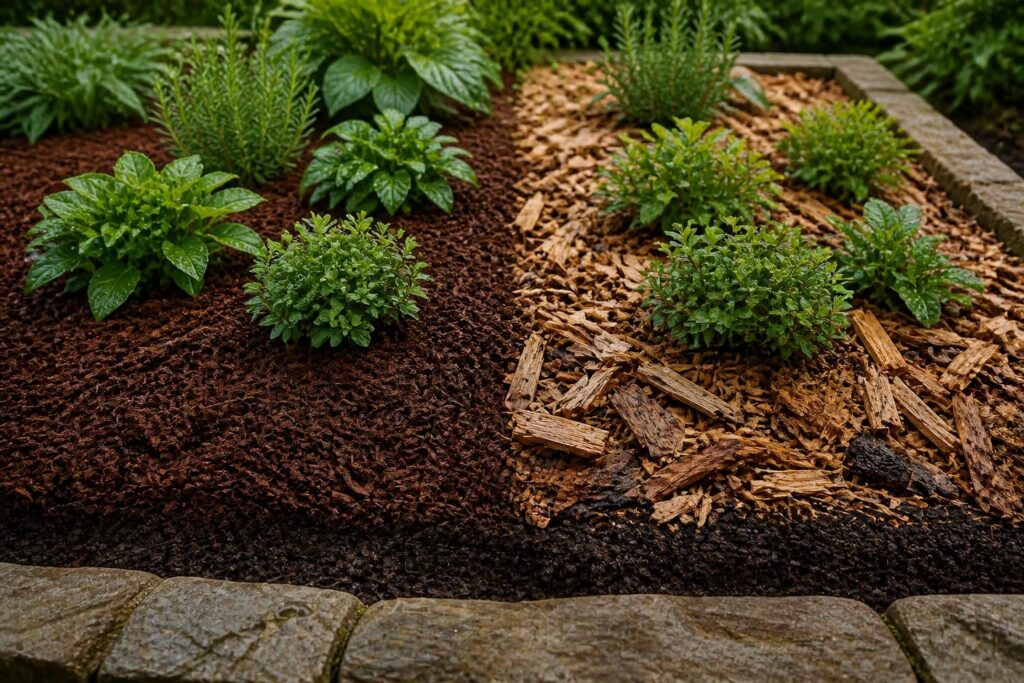

Mulch vs Wood Chips: Wood chips are a type of mulch, so the real question is wood chips versus the bagged mulches most people buy: shredded bark, double-shredded hardwood and dyed mulch. Coarse arborist wood chips are the better choice for trees, shrubs and perennial beds, because they hold water, feed the soil and are often free. Bagged shredded mulch is better when you want a uniform, tidy look in a front yard bed.
Both do the core jobs of mulch: blocking weeds, holding moisture and keeping soil temperatures steady. The differences are in texture, lifespan, cost and how they look.
Wood Chips vs Bagged Mulch at a Glance
| Feature | Arborist wood chips | Bagged shredded or dyed mulch |
|---|---|---|
| What it is | Chipped branches, leaves and wood from tree work | Shredded bark or wood, sometimes colored with dye |
| Look | Mixed sizes and colors, natural | Uniform, tidy, available in black, brown or red |
| Water absorption | Good | Bark sheds water more; fine shreds can mat |
| Lifespan | About 1-3 years, depending on size | About 1-2 years; dye fades sooner |
| Cost | Often free from tree services or city programs | Typically a few dollars per bag |
| Best for | Trees, shrubs, perennial beds, paths, natural areas | Front-yard beds, curb appeal, small areas |
Why Many Horticulturists Prefer Wood Chips
Research-based horticulturists tend to favor coarse arborist chips. The University of Illinois Extension’s guide on how to select mulch notes that wood chips absorb and retain water better than bark or nut shells, add nutrients as they break down, and are widely available and cost-effective. Because they include a mix of wood, bark and leaves, they break down into a richer soil layer over time and support beneficial fungi and soil life.
Washington State University Extension horticulturist Linda Chalker-Scott also recommends coarse arborist chips over bark, which does not absorb water as well, in her post on common mulch myths.
Do Wood Chips Steal Nitrogen?
This is the most common worry, and it is mostly a myth when chips are used on the surface. Chalker-Scott writes that years of research have shown no change in soil nitrogen under wood chip mulch. The nitrogen use by decomposing wood happens at the thin layer where chips meet soil, not in the root zone.
The problem is real if you dig fresh wood chips or sawdust into the soil, or use very fine sawdust. Keep chips on top of the soil as mulch, not mixed into planting holes or vegetable beds. Clemson’s Home and Garden Information Center similarly advises using fresh, uncomposted wood mulch only on the soil surface around trees, shrubs and perennials, and not around shallow-rooted annuals (Clemson HGIC).
When Bagged Mulch Makes More Sense
- Appearance matters most: Bagged double-shredded mulch gives a clean, even look for front beds and entrances.
- Small areas: A few bags are easier than arranging a truckload of chips.
- Slopes: Finely shredded mulch knits together and can stay in place better on gentle slopes.
- Color: If you want a black or dark look, dyed mulch is the usual choice. Our black mulch guide covers the pros, cons and safety of dyed mulch.
Watch out for bagged mulch made from recycled pallets or construction wood. Look for products certified by the Mulch and Soil Council or labeled as made from virgin wood.
How Deep to Apply
Depth is where most people go wrong. Too thin and weeds come through; too thick against stems and trunks and you invite rot. Chalker-Scott recommends at least three inches of coarse mulch to block light and prevent weed seeds from germinating, while Clemson suggests keeping organic mulch around two to three inches deep. A practical rule:
- 3-4 inches of coarse wood chips, which settle quickly
- 2-3 inches of fine shredded mulch, which packs tighter
- Keep mulch a few inches away from tree trunks and shrub stems, and away from wooden siding
- Top up as it breaks down instead of piling on fresh layers every spring
Where to Get Free Wood Chips
Tree care companies pay to dump chips, so many will drop a load in your driveway for free. Some services, often called chip-drop programs, match homeowners with local arborists. Many cities and counties also offer free mulch at recycling yards. Expect a large pile, often several cubic yards, so plan where it will go.
Which Should You Use?
- Use wood chips for tree rings, shrub borders, perennial beds, paths, play areas (check for safety-rated products) and large areas.
- Use bagged shredded mulch for formal beds, small spaces and when a uniform color matters.
- Use neither mixed into the soil. Both belong on the surface.
Frequently Asked Questions
Is wood chip mulch better than bark mulch? For plant health, usually yes. Wood chips absorb water better and break down into richer organic matter. Bark mulch lasts a little longer and looks more uniform.
Can I use fresh wood chips around plants? Yes, on the soil surface around established trees, shrubs and perennials. Avoid mixing them into soil or using them around annual vegetables.
Do wood chips attract termites? Mulch does not draw termites from far away, but any moist wood near a house can support them. Keep mulch away from foundations and wooden siding.
How often should wood chips be replaced? Top up every year or two as they decompose. You rarely need to remove old chips.
Is dyed mulch safe? Most dyes are iron oxide or carbon based and considered low risk, but the wood source matters more. Choose certified products.