
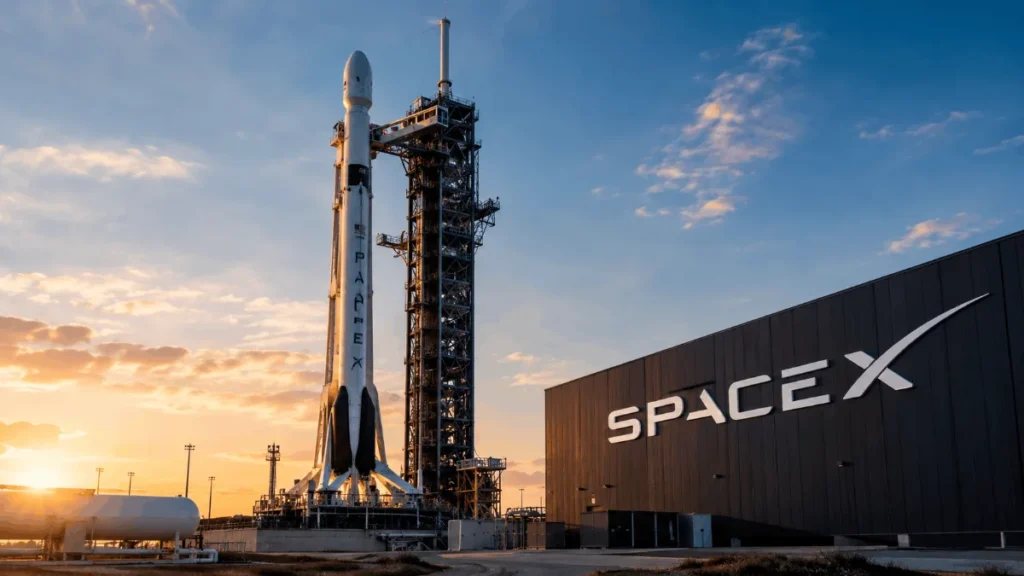

Forge Global was one of the best-known places where investors could trade SpaceX shares before the company went public. It no longer is. SpaceX listed on Nasdaq on June 12, 2026, and Forge’s own SpaceX page now says you can no longer buy or sell SpaceX stock there because the company is no longer private. If you want SpaceX shares today, you buy them on the public market under the ticker SPCX, the same way you would any listed stock.
The Forge–SpaceX story still matters, though. It shows how pre-IPO trading works, how reliable private-market “prices” really are, and what to check before putting money into the next company heading toward a listing.
What Forge Global does
Forge runs a secondary marketplace. That means it connects existing shareholders, such as employees and early investors, with buyers, instead of selling new shares for the company. It also publishes data, including the Forge Price, a proprietary indicative price it calculates from funding rounds and secondary-market activity.
Forge’s disclosures are clear that this figure is not a quote you can trade at. It is a model output built from what can be a very small number of trades and indications of interest.
Forge also has a new owner. Schwab completed its acquisition of Forge Global on March 2, 2026, paying $45 in cash per share. Schwab said Forge would keep operating its business while integration work continued. The same release notes that only accredited investors, qualified clients, or qualified purchasers are eligible to invest in private company securities.
SpaceX’s path from Forge to Nasdaq
According to Forge’s June 2026 private market update, SpaceX first traded on Forge in November 2012 at $0.34 per share. Its final Forge Price before the debut was $128.84.
The IPO itself moved quickly:
- April 1, 2026: SpaceX confidentially submitted its S-1 to the SEC.
- May 20, 2026: It made the filing public.
- June 12, 2026: It listed on Nasdaq.
- Offering price: SpaceX set the price at $135 per share before its roadshow began, which Forge called slightly unusual.
- First day: The company raised $75 billion, shares traded as high as $176.52, and the first day closed at $160.95, up 19.2%.
Forge’s SpaceX page puts the implied valuation at the IPO at $1.75 trillion. Earlier private marks were lower. Forge cites a December 2025 tender offer at an $800 billion valuation.
What the numbers do and don’t tell you
Forge’s last private-market price, $128.84, ended up close to the $135 IPO price. Public buyers then pushed the stock well above both on day one. That is a useful reminder that a private-market indicator and a public auction can disagree, and the gap can run in either direction.
Two cautions apply:
- Forge is a source with a stake in the story. Its commentary on SpaceX and why investors may consider exposure to late-stage private companies comes from a company that earns money when people trade private shares. Its data is useful. Its framing is not neutral.
- Don’t compare per-share Forge Prices across dates without checking the share count. Forge showed a Forge Price of $604.39 in April 2026 and $632.98 in May, then $128.84 just before listing. Those figures are not on the same scale. Compare valuations, or read the prospectus, before drawing conclusions from per-share changes.
One more point: a strong first day doesn’t say much about what comes next. New listings can be volatile, and SpaceX’s own filings describe how large holders’ shares are released for sale over time. Anyone buying should read those lock-up terms in the prospectus on the SEC’s EDGAR system, not rely on third-party summaries, which disagree with each other on exact dates.
Can regular investors still buy SpaceX through Forge?
No. Forge says it no longer actively tracks SpaceX. Before the IPO, buying through a platform like Forge generally required accredited-investor status, and private shares were illiquid with a real risk of total loss, as Forge’s own disclaimers state. Now that SpaceX is public, an ordinary brokerage account is the route.
Forge still lists other private companies, and its updates describe a pipeline of confidential IPO filings from other well-known firms. If you’re considering any of them, the lessons from SpaceX hold:
- A private-market price is an estimate, not a guarantee you can sell at that level.
- Private shares can be hard to resell, and holding periods can be long.
- Eligibility rules exist for a reason. They reflect how much risk these investments carry.
The SpaceX business you may already use
SpaceX’s value isn’t only rockets. It also runs Starlink, the satellite internet service. If you’re curious how that side shows up in everyday products, Headlinza’s T-Mobile Starlink review looks at the T-Satellite service built on it. For more money explainers, see the Finance section.
Bottom line
Forge Global gave eligible investors a way to trade SpaceX before the IPO, and its data became a widely quoted reference point. That chapter is over. If you’re interested in SpaceX now, treat it as a public stock: read the prospectus and recent filings, check how and when insider shares can be sold, and decide how much volatility you can live with. This article is general information, not personalized financial advice; consider speaking with a licensed financial professional before investing.