
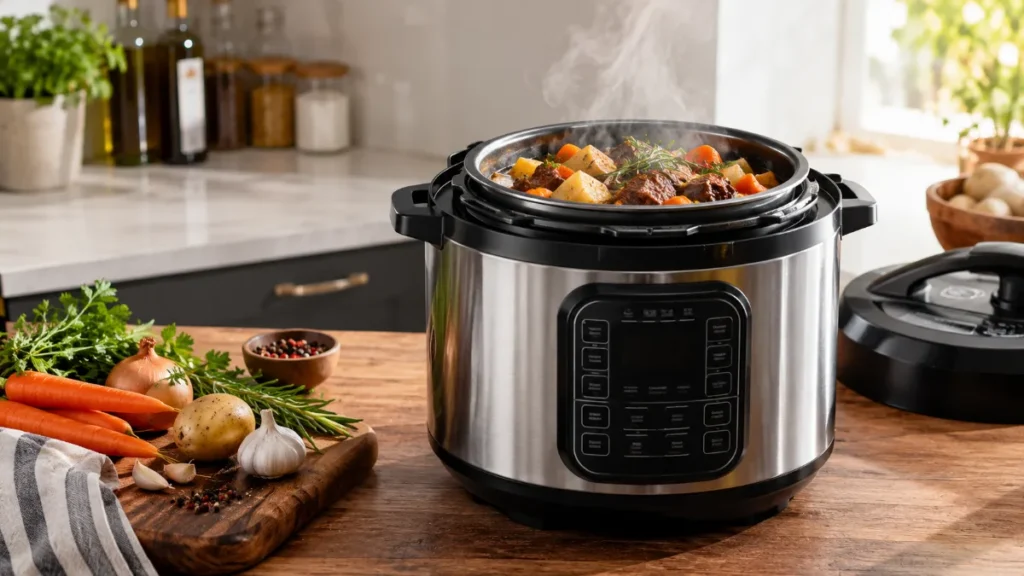

Rice cooker Buying Guide:A rice cooker is a sealed pot with a heating element and a thermostat. You add rice and water, press a button, and the machine heats until the water is absorbed. Then the temperature jumps above boiling, the thermostat trips, and the cooker switches to a keep-warm mode.
That simple mechanism is why basic cookers have lasted for decades. The more advanced models add sensors, better heating, and programmable settings, but the core idea is the same. In my experience, the biggest difference between cheap and good cookers isn’t speed, it’s consistency. A good one produces the same fluffy rice on Tuesday as it did on Sunday.
Basic Models: Cheap and Cheerful
The one-switch cooker is what most people picture. It’s small, light, inexpensive, and easy to use. For white rice, it works surprisingly well, especially if you measure carefully and let the rice rest after cooking.
The downsides show up with fussy grains. Brown rice, short-grain sushi rice, and small batches tend to cook unevenly because the machine can’t adjust. The bottom may scorch while the top stays firm.
I’d recommend this type if you cook rice once or twice a week, want something compact for a dorm or small kitchen, and don’t mind a little trial and error.
Fuzzy Logic Cookers: The Sensible Middle
Fuzzy logic models use sensors and a small computer to adjust heating as the rice cooks. The name comes from fuzzy logic, a way of making decisions with gradations instead of simple on/off rules. In practice, that means the cooker senses temperature changes and tweaks the cooking so the rice comes out better.
You’ll typically get menu settings for white rice, brown rice, sushi rice, porridge, and sometimes quick cook or steaming. Brands like Zojirushi and Tiger are known for this tier, and many other makers sell comparable models. Check each brand’s current lineup and specs on its official site, since models change.
This is the sweet spot for most households. The results are noticeably better than a basic model, and you don’t pay induction prices.
Induction Heating: When It’s Worth Paying More
Induction heating cookers heat the entire inner pot through magnetic induction instead of just the bottom plate. The result is more even heat, finer temperature control, and often better texture, especially with fussy rice.
If you eat rice most days, cook for a family, or care about the difference between good rice and excellent rice, induction is worth a look. The pots are usually thicker and the controls more detailed, which lets you tune for firmness or stickiness.
One thing worth flagging: don’t assume more expensive always means more useful. If you only ever cook plain white rice and don’t mind a slightly less perfect result, a mid-range fuzzy logic model will serve you fine. I’d save the induction money for a family that really uses it.
Choosing the Right Size
Rice cooker capacity is measured in cups of uncooked rice, and the cup is usually the small measuring cup included in the box, which holds about 180 ml (a Japanese cup), not a standard US cup. This catches people constantly. Use the included cup and the water lines inside the pot, and results get much more predictable.
A 3-cup cooker suits one or two people. A 5 to 5.5 cup model covers most families. Larger sizes are better for batch cooking or big gatherings, but they cook small amounts less well because the rice spreads thinly.
Think about leftovers too. Many cookers keep rice warm for hours, but long warm periods dry it out. For safe storage guidance, the USDA’s leftovers and food safety page covers how long cooked food can sit out and how to cool and reheat it. Cooked rice left at room temperature for long periods can be a food safety problem, so don’t treat the warm setting as indefinite storage.
Features That Actually Matter
A removable inner pot is non-negotiable. It makes cleaning easy and lets you store rice in the fridge if you want.
Non-stick coating is common, but quality varies. A thicker pot with a better coating lasts longer. Avoid metal utensils that scratch it.
A steam vent that releases cleanly prevents spitting and sticky messes. A delay timer is useful if you want rice ready when you get home. A keep-warm mode that doesn’t dry the rice is a quiet luxury, and it’s one of the real differences between budget and premium models.
Extra functions like slow cook, steam basket, or porridge are nice, but don’t let them drive the purchase. A cooker that makes great rice is worth more than one that does ten things poorly.
Getting Better Rice From Any Cooker
Rinse the rice until the water runs mostly clear. This removes surface starch and prevents gumminess, particularly for white rice. Then drain well, because extra water changes the ratio.
Use the water lines inside the pot rather than guessing. If you want firmer rice, go slightly under the line, and if you want softer rice, go slightly over. Small tweaks go a long way.
Let the rice rest for 10 minutes after the cooker finishes. That step is underrated. It lets steam redistribute so the grains settle evenly.
Then fluff gently with a rice paddle. Stirring too hard breaks grains and makes the texture mushy.
Soak brown rice for 30 minutes or more if your cooker doesn’t have a dedicated brown rice setting. It softens the bran layer and improves texture.
Cleaning and Care
Wash the inner pot with a soft sponge and mild soap. Wipe the lid and the steam vent so starch doesn’t build up. Dry everything before reassembling.
Don’t immerse the base in water. Wipe it with a damp cloth. Check the heating plate for stuck grains, since debris can affect heating. In my experience, the cookers that last a decade are the ones that get rinsed after every use, not left sitting with dried rice.
If the non-stick coating starts flaking, replace the pot or the cooker. Flaking coating isn’t something to ignore.
Who Should Skip the Fancy Models
If you eat rice rarely, a basic cooker is enough. If counter space is tight, a small cooker beats a large multi-function appliance. If you already own a multi-cooker or pressure cooker that does rice well, you may not need another appliance.
And if you mostly cook rice on the stove and like the results, there’s no rule that says you must switch. A cooker is about convenience and consistency, not magic.
Related Guides
- Mirugai Geoduck Explained: Species, Taste, and Sushi
- Nigiri vs Sashimi: Key Differences Explained
- Personalized Engraved Chopping Board: Buying Guide
- Pressure Cooker Birria: Tender Beef in About 2 Hours
FAQs
Is a rice cooker the same as a rice cooker?
In most searches, yes. “Rice cooker” appears to be a misspelling of rice cooker, which is the kitchen appliance for cooking rice.
What type of rice cooker is best for beginners?
A fuzzy logic model is a good balance of price and results. A basic one-switch model works if you want to start cheap.
Is induction heating worth the extra cost?
For daily rice eaters who care about texture, it can be. For occasional use, it’s likely overkill.
How much water should I use?
Follow the water lines inside the pot and use the measuring cup that came with the cooker. Adjust slightly for firmer or softer rice.
Can I cook brown rice in any rice cooker?
Many can, but results are better with a model that has a brown rice setting. Soaking first helps.
How long can rice stay on the warm setting?
Check your manual, since models differ. For food safety, don’t leave cooked rice at room temperature for long, and refrigerate leftovers promptly.
How big a rice cooker do I need?
A 3-cup model fits one or two people, and a 5 to 5.5 cup model suits most families. Remember that the “cup” refers to the small measuring cup included.