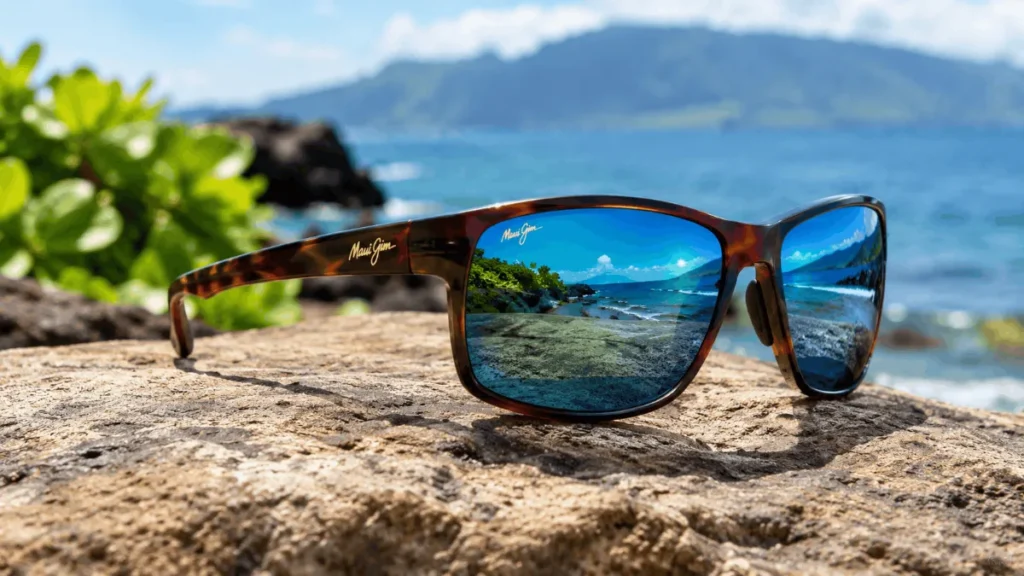

Eyewear Maui Jim Review. Maui Jim is a polarized sunglasses brand that started in the 1980s as a small business selling shades on Ka’anapali Beach in Lahaina, Maui. The company’s own history page says the founders set out to build lenses that cut intense tropical glare while keeping colors vivid. A duty-free retailer’s listing puts the start in 1986, though the brand itself says only “the 1980s.”
In 2022, Maui Jim joined Kering Eyewear, the luxury group behind brands like Gucci, Cartier and Saint Laurent. The brand says it now offers roughly 150 styles, and that every pair blocks 100% of UVA and UVB rays.
That ownership change hasn’t turned it into a fashion label first. The identity is still lenses first, frames second, which I think is the right order for sunglasses.
Eyewear Maui Jim: What You’re Actually Paying For
The headline feature is PolarizedPlus2, a lens technology the company says is on every pair regardless of price or frame style. Polarization filters out the horizontal light waves that bounce off water, roads and car hoods, which is the glare that makes you squint. Maui Jim layers color-enhancing treatments on top, so the pitch is less glare and richer color instead of simply darker lenses.
What tends to surprise people is how different a good polarized lens looks on a bright day. Water becomes see-through instead of a white sheet, and road surfaces lose their shine. You don’t have to care about brand names to notice that.
Then there are lens materials. Retailers list options such as Maui Pure and Pure LT, which one dealer describes as lightweight and the most impact-resistant of the brand’s lenses, plus glass options. Lighter lenses are more comfortable for all-day wear, and glass tends to deliver the sharpest optics at the cost of weight. Names and options change by model, so check each style’s page.
Prescription Options
Prescription wearers aren’t left out. Maui Jim says its polarized prescription sunglasses carry PolarizedPlus2 regardless of lens type, and there are reader versions too. One authorized retailer lists bi-gradient lenses as an option, along with a one-time, one-year scratch warranty on prescription lenses.
That retailer warranty is the seller’s, not necessarily Maui Jim’s, so confirm the terms wherever you buy. If you need a strong prescription, ask the optician about lens thickness and frame fit before you fall in love with a style. Wraparound frames and high prescriptions can be a tricky combination.
Price and Warranty
Pricing varies by style, lens and retailer, and it moves around. One duty-free retailer listed current models in the $239 to $309 range, including a discounted pair at $169.95 as of this search. Maui Jim’s own site is the place to see current prices in your country, and I’d compare a couple of authorized dealers before paying full list.
Maui Jim’s official About page says every pair comes with a two-year limited warranty against manufacturing defects. Some regional listings show shorter terms, so the warranty depends on where you buy and who sells it. Read the fine print, because it covers defects, not drops, scratches from careless handling or lost pairs.
My lean is to treat the warranty as a bonus. The real value is in the optics, and sunglasses live a rough life no matter what the brand promises.
Who Should Buy Eyewear Maui Jim
Anglers, boaters, drivers and anyone who works outdoors will get the most out of polarized lenses. So will people sensitive to glare, including those who find ordinary tinted lenses tiring after a few hours. If you wear one pair most days, spreading the cost over several years makes the price easier to swallow.
They also suit travelers who want one dependable pair that handles beach, road and city. The brand’s frame range is wide enough to find something that doesn’t scream “sports gear,” which matters if you don’t want to switch pairs between a hike and dinner.
For protection, remember that dark lenses without proper UV blocking can be worse than no sunglasses, because your pupils open wider. Maui Jim’s claim of 100% UVA and UVB protection addresses that, and the American Academy of Ophthalmology is a good place to read about what to look for in any sunglasses.
Drawbacks to Know About
Polarized lenses can make some LCD screens look dim or patchy, so checking a phone, car dashboard or ATM can feel odd at certain angles. It’s usually minor, but pilots and people who rely on screens all day should test before buying.
Price is the obvious one. You can buy perfectly decent sunglasses for a fraction of the cost, and for casual use that may be enough. And like any premium eyewear, they’re fragile in the wrong hands. A scratched lens or bent frame hurts more when the pair cost a few hundred dollars.
Fit is another gap. Some styles run narrow or wide, and there’s no way to know without trying them. If you can, visit a store or order from a retailer with easy returns.
How to Avoid Fakes
Popular premium sunglasses attract counterfeiters. Buy from Maui Jim’s own site, from authorized retailers or from opticians. Be wary of marketplace sellers with prices far below everyone else’s, missing cases and cloths, or no way to verify the model number.
If you’re unsure, check the model against Maui Jim’s catalog, look for consistent engravings and lens markings, and ask the seller for proof of authorization. A real pair also comes with proper packaging and paperwork.
Alternatives Worth Trying
Costa Del Mar focuses on water use and is a common pick for fishing. Oakley leans toward sport and active lifestyles, and Ray-Ban offers more classic fashion shapes at a wide range of prices. Mid-priced polarized pairs from other brands can also do a respectable job, though results vary by lens quality.
If you love the idea of polarization but not the price, start with a less expensive polarized pair and see how much glare reduction matters to you. Many people find they can’t go back, and that’s your sign to upgrade.