





Ratio 8 Coffee Maker Review: Is the Splurge Worth It?
If you’ve spent any time in a coffee gear forum, you’ve probably seen someone gushing about the ratio 8 coffee maker like it’s the last brewer they’ll ever buy. That kind of loyalty is rare for a kitchen appliance, and it made me curious enough to dig into what this machine actually does differently from the $60 drip maker sitting in most people’s kitchens.
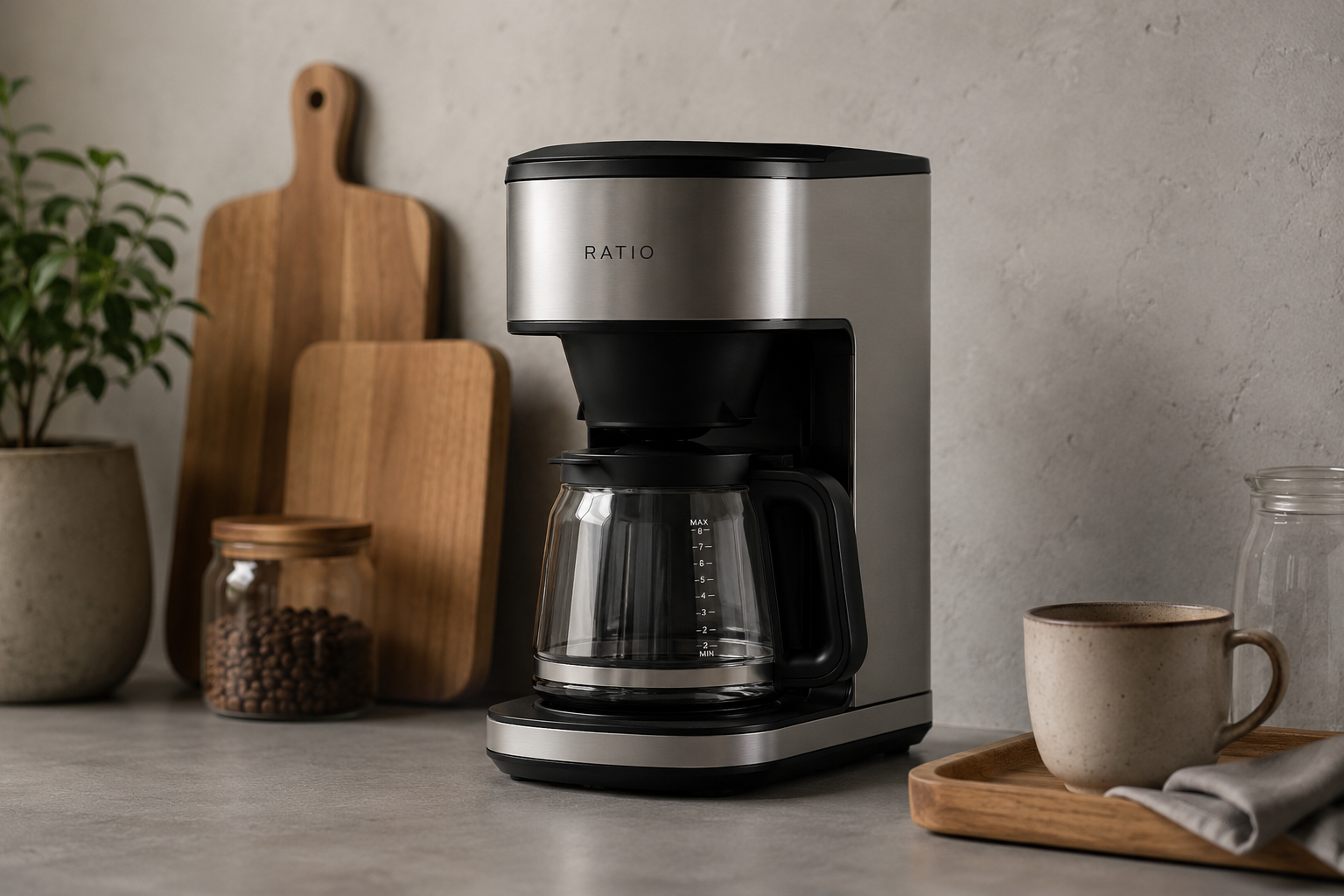
Short version: it’s an automatic brewer built by Ratio, a small Portland, Oregon company, and its whole pitch is replicating manual pour-over technique without you standing over a kettle every morning. It’s not cheap, and it’s not for everyone. But it does something genuinely uncommon in this category.
What Makes This Machine Different
Most drip coffee makers route hot water through plastic tubing and over a plastic showerhead before it ever touches your beans. The Eight Series 2 doesn’t. Water moves through borosilicate glass and stainless steel from the tank to the carafe, and that’s the whole point of owning one. Plastic in a hot water path can leach subtle off-flavors over time and dull the clarity of your cup, which is a real concern for people chasing pour-over style clarity at home.
The machine uses a shower head engineered to saturate the coffee bed evenly, mimicking the slow, circular pour a trained barista does by hand. It runs through a “bloom” phase (a brief pre-soak that lets the grounds degas) before the full pour begins, and the timing on that bloom is tuned rather than left to chance. In my experience, this is where most cheap automatic brewers fall short. They dump water fast and hot without any real attention to saturation, and you end up with a flat, under-extracted cup even with good beans.
Build and Materials
Every Eight is hand-assembled in Portland using a mix of globally sourced parts: a BPA-free Tritan water tank, borosilicate glass lines, hardwood trim, and either a handblown glass carafe or a double-wall stainless thermal carafe. The base is a matte polymer shell reinforced internally with metal, so it’s not entirely plastic-free on the outside, just along the actual brew path where it counts.
The hardwood accents aren’t cosmetic filler either. They genuinely change how the thing looks on a counter, more like a small appliance from a design studio than something off a big-box shelf. If your kitchen aesthetic leans warm and mid-century, this fits right in.
Brewing Performance
A full batch tops out at 40 ounces, roughly 6 to 8 cups depending on mug size, and takes about 8 to 10 minutes depending on volume and water temperature. There are two recipe programs built in, one tuned for a full batch and one for a half batch, so you’re not stuck over-extracting a small pot just because the machine only knows one setting.
There’s no hot plate underneath. Ratio made a deliberate call here, since hot plates tend to keep cooking your coffee after it’s done brewing, which is exactly why gas-station coffee tastes burnt by 10am. Instead, you either drink from the glass carafe soon after brewing or pair the machine with the thermal carafe if you want your coffee to stay hot for a couple hours without scorching.
What tends to surprise first-time buyers is how little the machine actually asks of you. There’s no app, no touchscreen, no menu diving. You fill the tank, load your filter and grounds, and press one button. That simplicity is either a selling point or a letdown depending on what you’re used to.
Pricing and What You Actually Get
As of mid-2026, the current Ratio Eight Series 2 sits at $799 for the standard configuration, and that’s a genuine jump from what most people think of as a “coffee maker” price. Ratio also sells certified refurbished units of the earlier Eight Original at a noticeably lower price point, which is worth checking if the flagship number gives you pause. Prices and configurations shift, so it’s worth confirming current numbers directly on Ratio’s site before buying.
That $799 figure is actually $100 less than the original Series 1 launched at, so the company has been trimming the entry cost over time rather than pushing it up, which is a rarer trend in premium kitchen gear than it should be.
For that money you’re getting the brewer, one carafe of your choice, and a warranty backed by a 30-day return window (though you’ll cover return shipping unless something’s actually defective). Compare that to a $150 to $300 automatic drip machine and the gap is obvious. But compare it to what a decent countertop espresso setup runs, and $799 stops looking quite so wild.
Living With It Day to Day
The Eight isn’t programmable in the sense of setting a wake-up brew timer, and for some households that’s a genuine dealbreaker. No auto-start means no smell of fresh coffee pulling you out of bed. It’s a single-button operation once loaded, which some people love for its lack of fuss and others find limiting compared to a $40 machine with a full digital clock and delay-brew feature.
Filter compatibility is straightforward. It takes standard 8 to 12 cup flat-bottom filters with a minimum height of about 5.75 inches, so you’re not locked into proprietary pods or hard-to-find replacements. That matters more than people expect, since plenty of “premium” appliances quietly trap you into buying overpriced branded consumables.
Maintenance is light but not nonexistent. Ratio recommends running a clean water cycle before the very first brew, and descaling roughly every 30 to 60 uses depending on how hard your tap water is. Because the brew path is glass and steel rather than opaque plastic, mineral buildup is actually visible, which makes it easier to know when it’s time.
Pros and Cons
The upside list is short but real: a genuinely plastic-free hot water path, even saturation that produces a cleaner cup than most drip machines manage, solid Portland-built construction, and a design that doesn’t look like every other appliance on the counter. Owners consistently mention the flavor clarity as the reason they keep it around long after the novelty wears off.
The downside list matters just as much. $799 is a lot for something that, at the end of the day, still just makes drip coffee. There’s no scheduling feature, no hot plate to keep a full pot warm for hours, and the parts (glass carafe especially) are more fragile and more expensive to replace than a standard Mr. Coffee pot. If you drop the glass carafe on tile, that’s not a $10 fix.
Who Should Buy the Ratio Eight, and Who Shouldn’t
If you already make manual pour-over most mornings and you’re tired of the ritual eating 10 minutes you don’t have, this machine solves that exact problem. It’s also a fit for anyone specifically trying to cut plastic exposure from daily habits, since that’s genuinely rare in this category. Reviewers at The Filtery landed on similar reasoning after living with one, noting the material choice as the standout reason to pick it over cheaper alternatives.
Skip it if you’re budget-conscious, want a programmable morning brew, or you’re happy with the coffee your current machine makes. There’s no shame in a $40 Mr. Coffee doing its job fine for a lot of people. The Eight is solving a specific problem (bridging manual pour-over quality with automatic convenience) and if that’s not your problem, the price tag won’t feel justified.
Alternatives Worth Considering
Ratio’s own Six model is the obvious step-down: similar brewing logic, less plastic-free construction, and a noticeably lower price if the flagship Eight is out of budget. Outside Ratio’s own lineup, the Moccamaster and Breville Precision Brewer both show up constantly in comparisons, and they’re worth a look through retailers like Clive Coffee, which carries several premium brewers side by side and lets you compare specs directly.
FAQs
Does the Ratio Eight have a programmable timer? No. It’s single-button operation, so there’s no scheduled auto-brew feature.
How many cups does a full batch make? A full batch is 40 ounces, which works out to roughly 6 to 8 cups depending on your mug size.
Is it actually plastic-free? The hot water brew path, from tank to carafe, is glass and stainless steel. The outer housing uses a matte polymer shell, so it’s not 100% plastic-free overall, just where it matters for flavor.
What filters does it use? Standard 8 to 12 cup flat-bottom paper filters with a minimum height around 5.75 inches, so you’re not locked into a proprietary filter brand.
Is there a cheaper way to get one? Ratio occasionally sells certified refurbished units of earlier Eight models at a reduced price, which is worth checking before committing to full retail.
Also Read: Best Music Streamer in 2026: Which Service Actually Wins?