





Seiko 5 Watch Guide: What Makes This Series Worth It
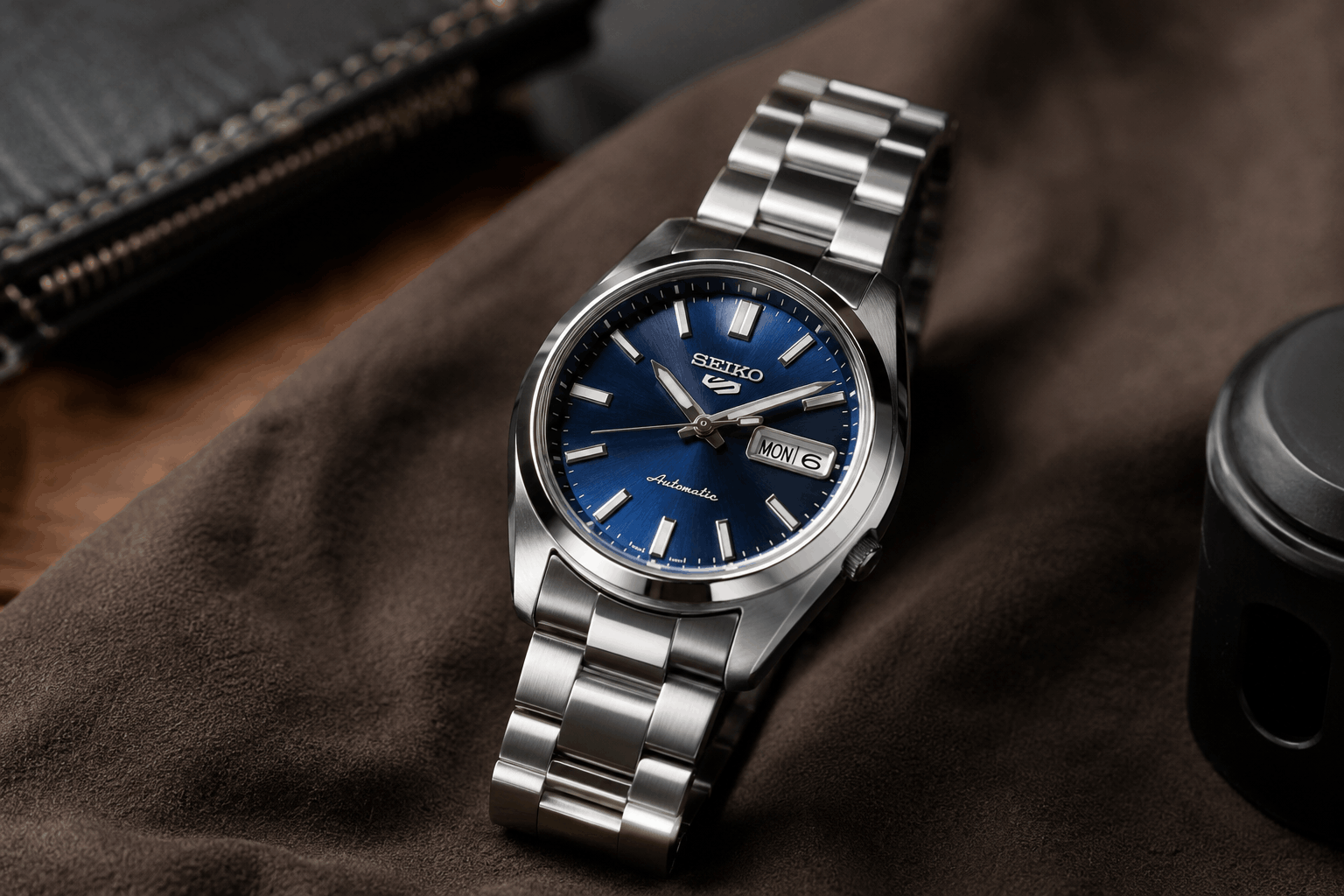
Ask ten watch collectors how they got into the hobby and at least half will mention a seiko 5 watch somewhere in that story. It’s often the first “real” mechanical watch people buy, and there’s a reason for that. It’s affordable, it’s genuinely well built for the price, and it doesn’t pretend to be something it isn’t.
This isn’t a single watch. It’s a whole family of automatic watches that Seiko has been producing since 1963, and the range now spans dozens of case shapes, dial colors, and styles, from field watches to dressier pieces. If you’re trying to figure out whether one belongs on your wrist, here’s what actually matters.
What the “5” Actually Stands For
The name comes from five original features Seiko built into the line back in the 1960s: automatic winding, a day/date display, water resistance, a recessed crown at the 4 o’clock position, and a durable case and bracelet. Some of those specifics have loosened over the decades (not every modern model has the recessed crown, for instance), but the spirit of the line has stayed consistent. It’s meant to be a rugged, no-fuss automatic watch that regular people can afford and actually wear every day.
You can read more about the brand’s broader history on Seiko’s official global site, which is worth a look if you want to see how the 5 series fits into the company’s wider catalog next to the Prospex and Presage lines.
The Movement: What’s Actually Ticking Inside
Most current seiko 5 watch models run on the Caliber 4R36 or 4R35, in-house automatic movements with a roughly 41-hour power reserve. These aren’t chronometer-grade movements. Accuracy typically lands somewhere between -20 and +40 seconds a day out of the box, though in my experience, watches like this often settle into tighter accuracy once they’ve been worn regularly for a few weeks.
That’s not a flaw so much as a tradeoff. You’re not paying for chronometer certification here. You’re paying for a movement that’s been refined over sixty years of mass production, and one that’s genuinely serviceable almost anywhere in the world because parts and knowledgeable watchmakers are so widely available.
One thing worth flagging: the 4R36 includes hacking (the seconds hand stops when you pull the crown) and hand-winding, which older 7S26 movements in vintage 5 series watches didn’t have. If you’re shopping secondhand, that’s a real difference in day-to-day usability.
Design Range: There’s More Variety Than People Expect
A lot of people picture one specific watch when they hear “Seiko 5,” usually something with a mesh bracelet and a black dial. But the current lineup is much broader than that.
Field and military-inspired models lean into a tool-watch look, with nylon straps, luminous markers, and cases that read more utilitarian than dressy. Sports models bring rotating bezels and sportier proportions, some of which borrow visual cues from Seiko’s diver lineup without the actual dive-rated specs. Dress-adjacent pieces trim things down, with slimmer cases and simpler dials that work better under a shirt cuff.
The SNK series, discontinued a few years back, is still one of the most recommended entry points on the secondhand market, largely because of its slim 37mm case and low prices. If you want smaller, that’s usually where people point beginners.
Pricing: What You’re Actually Looking At
New seiko 5 watch models typically run from around $200 to $350 USD depending on the retailer, finish, and specific reference, as of mid-2026. Limited editions and collaboration models (Seiko has done runs with Street Fighter, Marvel, and other franchises) can push past that range. Since Seiko adjusts pricing across regions and periodically, it’s worth checking current listings on Seiko’s official site or an authorized retailer before assuming a specific number.
Secondhand prices vary a lot more. Older 7S26-powered models can be found well under $100 in used condition, while newer 4R36 references hold value better given their added features.
Where the Seiko 5 Shines
The build quality relative to price is the obvious draw. Cases, crystals, and bracelets feel more substantial than you’d expect from a watch in this price bracket, and Seiko’s fit and finish on the 5 series has genuinely improved over the last decade. You’re also buying into a movement platform with a long service history, which matters more than people realize until they need a repair.
It’s also just an easy watch to live with. Most models sit around 40 to 43mm, which suits a wide range of wrist sizes, and the water resistance (typically 30 to 100 meters depending on the reference) covers daily wear without babying it.
Where It Falls Short
Accuracy is the most common complaint, and it’s a fair one if you’re used to quartz precision. A watch that drifts 20 to 30 seconds a day isn’t unusual for this movement class, and buyers coming from cheap quartz watches sometimes find that adjustment period frustrating.
Lume quality on some models is also inconsistent. Higher-end Seiko lines like the Prospex use superior lume compounds, and the 5 series doesn’t always match that glow duration or brightness.
Finally, some references have thicker cases than their dial diameter suggests, which can throw off how a watch wears under a cuff. It’s worth checking case thickness specifically before buying, not just diameter.
Seiko 5 vs. Other Entry-Level Automatics
Compared to brands like Orient (a sister company under the same parent group, Seiko Epson’s former ties aside) or Citizen’s automatic lines, the seiko 5 watch tends to win on brand recognition and resale value, while Orient often edges it slightly on movement accuracy for a similar price. Citizen’s Eco-Drive automatics aren’t a direct comparison since most of Citizen’s budget lineup is solar quartz rather than mechanical.
If you’re weighing options, Hodinkee has covered entry-level mechanical watches extensively and is a solid resource for comparing how these brands stack up in real-world reviews rather than just spec sheets.
Who Should Buy One
This is a strong first mechanical watch for someone who wants to understand what an automatic feels like without spending serious money to find out. It also makes sense for people who want a beater watch, something they don’t mind scratching or wearing while doing yard work, since the parts are cheap to replace and the watch itself isn’t precious.
Who Might Want to Skip It
If precision timekeeping matters to you day to day, a quartz watch will serve you better for a fraction of the price. And if you’re chasing a specific dive rating or serious water resistance for actual diving, look toward Seiko’s Prospex line instead, since most 5 series models aren’t built or rated for that kind of use.
A Few Practical Buying Tips
Check the movement reference before buying secondhand. A 4R36 gives you hacking and hand-winding; a 7S26 doesn’t. Look closely at case thickness, not just diameter, since some references wear larger than their numbers suggest. And if buying used, ask about service history. These movements are durable, but a watch that’s never been serviced in ten-plus years of daily wear is worth factoring into your offer.
For general background on how automatic movements work, the Wikipedia entry on automatic watches is a decent primer if you’re newer to mechanical watches generally.
FAQs
Is the Seiko 5 a good first mechanical watch? Yes, and it’s one of the most commonly recommended entry points into mechanical watches for that exact reason. It balances price, build quality, and serviceability better than most competitors in the same range.
How accurate is a seiko 5 watch? Most models land within -20 to +40 seconds a day, which is normal for this movement class but noticeably less precise than quartz.
Can you swim or shower with one? Most current models carry 30 to 100 meters of water resistance, which covers showering and swimming, but check the specific reference since ratings vary across the line.
Are older Seiko 5 watches worth buying used? Often, yes, especially SNK and SNKE references, though buyers should factor in the lack of hacking and hand-winding on 7S26 movements and check service history.
Where can I verify current pricing? Pricing shifts by region and retailer, so checking Seiko’s official website or an authorized dealer directly is the most reliable way to confirm current numbers.
Also Read: Leveraged Finance News Today: Private Credit’s Big Test