
Awning Buying Guide. AnAwning Buying GuideAwning Buying Guide awning is a secondary covering attached to the side of a building, usually made from fabric or metal and supported by a frame. It shades windows, doors, patios and decks, and it has been used for centuries, from market stalls to shopfronts to modern homes.
The comfort benefit is obvious, but there’s a practical one too. Blocking direct sun before it hits glass keeps the room behind it cooler, which can ease the load on your air conditioning. The U.S. Department of Energy notes that awnings can cut solar heat gain on windows significantly, with higher reductions on south- and west-facing windows, and you can read more on its energy-saving page for awnings. Actual savings depend on your climate, window size and orientation, so treat any big claim as a ceiling, not a promise.
In my experience, west-facing windows and patios are where an awning earns its keep fastest, because late afternoon sun is the harshest.
The Main Types
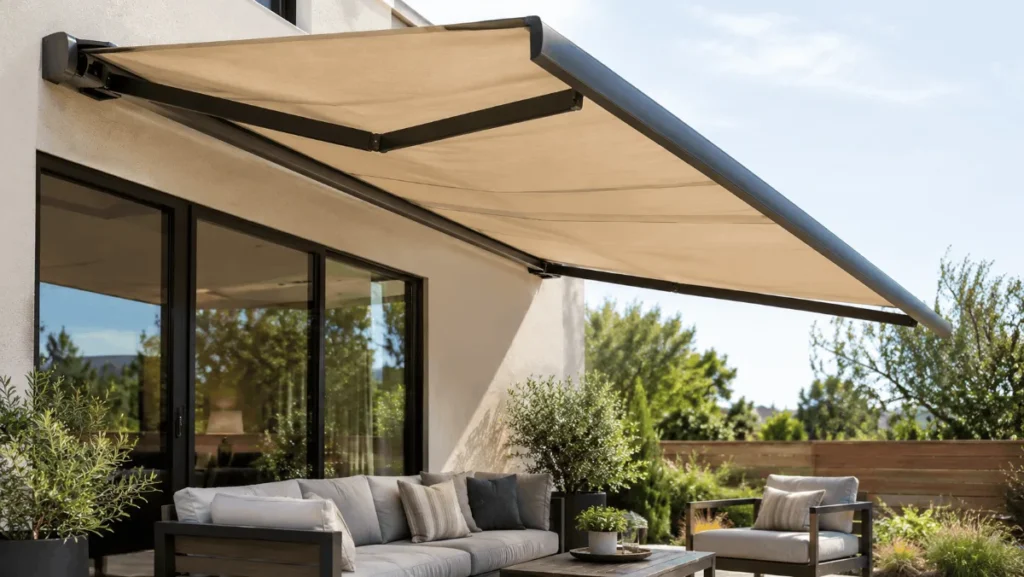
Retractable awnings extend and fold back against the wall, usually on arms with a roller tube. They’re popular for patios and decks because you can have shade when you want it and open sky when you don’t. They cost more than fixed versions and have moving parts that need care.
Fixed awnings are permanently mounted frames with fabric or metal covering. They’re sturdy, simpler and cheaper, and they work well over doors and windows, where permanent shade is fine.
Window awnings are smaller, often angled or domed units that shade a single window. Door awnings (or canopies) protect entrances from rain and snow. Freestanding versions, like pergola-style shades, don’t attach to the house at all.
RV and Awning Buying Guide awnings are a separate category, built to roll out from a vehicle and pack away. If you’re shopping for one, make sure the product is made for your specific rig.
Choosing the Fabric or Material
For fabric awnings, solution-dyed acrylic is the common top choice. The color goes all the way through the fiber, so it resists fading far better than printed fabrics. The acrylic fiber used in outdoor fabrics is also mildew-resistant and breathable, and brands like Sunbrella are well known in the category.
Polyester and vinyl-coated fabrics are cheaper and often more waterproof, though they can fade or get stiff in strong sun. Canvas has a traditional look but needs more upkeep and can mildew if it stays damp.
Metal awnings, usually aluminum, last a long time and handle heavy weather well. Polycarbonate panels let light through while blocking UV and rain, which suits patios where you want brightness. The right material depends on your climate, so snowy regions favor sturdier fixed frames and sunny ones favor breathable, fade-resistant fabric.
Sizing: Width and Projection
Two measurements matter. Width is how far the awning spreads along the wall, and projection is how far it extends outward. Both determine how much shade you actually get.
Measure the area you want to cover, then think about where the sun travels during the day. A shallow projection won’t shade much when the sun is low, so patios often need deeper coverage than window awnings. Add a little extra width so the sides overlap your target area.
Mounting height matters too. The awning should sit high enough that you can walk beneath it comfortably and that the front edge clears furniture and people. For retractable models, a slight downward slope helps rain run off.
If you’re torn between two sizes, the larger one usually feels better. People rarely complain about too much shade, but they often regret too little.
Manual or Motorized?
A manual retractable awning uses a hand crank, which is simple and has fewer parts to fail. It’s a good fit for smaller units and tighter budgets.
A motorized awning opens with a switch or remote, and some systems add sun and wind sensors that extend or retract automatically. An anemometer measures wind speed, which is why wind sensors can pull the awning in before a gust damages it.
Motorized units are more convenient and protect the awning from a forgotten open canopy, though they cost more and need power. If you tend to forget to close things, automation is worth considering.
One thing worth flagging is that a motor doesn’t make an awning storm-proof. Most are meant for shade and light wind, not high gusts, and manufacturers specify wind limits. Retract it when the weather turns, and never leave it open in a storm.
Installation: DIY or Professional?
A small window or door awning is a manageable DIY job for a handy person. A large retractable awning is heavy, and a bad installation can pull away from the wall or fail in wind.
The wall matters most. Brackets must be secured into solid framing, masonry or structural members, not just siding or stucco. Flashing and sealing are important to prevent water getting behind the mount. If you’re unsure about your wall or the awning’s weight, hire a professional installer.
For electrical connections on motorized models, use a licensed electrician if the wiring isn’t a simple plug-in setup. Follow the manufacturer’s instructions closely, because warranty coverage often depends on correct installation.
Rules, Permits and HOAs
Before you buy, check local rules. Some towns require building permits for permanent awnings, and some limit how far a structure can extend toward the property line. Homeowners’ associations frequently have restrictions on color, style and placement.
If you rent, get your landlord’s permission in writing. For commercial awnings and signage, municipal codes can be stricter, with rules on height, projection and wording.
It takes ten minutes to call your local building department or read your HOA guidelines, and it can save you the headache of a removal order.
Care and Maintenance
Clean fabric awnings once or twice a year with mild soap, lukewarm water and a soft brush. Avoid harsh chemicals and pressure washers, which can strip protective coatings. Let the fabric dry fully before retracting it, or mildew can form.
Check the frame, arms and bolts regularly, and tighten any loose hardware. Lubricate moving parts if the manufacturer recommends it. Remove leaves, snow and debris, since pooled water and heavy snow can bend frames and tear fabric.
In winter, retract and, if possible, protect or cover retractable awnings, depending on the manufacturer’s advice. Many warranties exclude damage from snow load and wind.
Common Mistakes
Buying for looks alone is the classic one. A pretty awning with weak hardware and cheap fabric won’t last. Skipping the wind rating is another, especially in exposed locations.
People also forget to consider how the awning interacts with their house, such as gutters, light fixtures and windows that open outward. And they underestimate the value of a good installer, which often matters more than the brand.
Prices vary widely by type, size and materials, so get at least two or three quotes and compare warranties, not just the bottom line.
Which Awning Should You Choose?
For a patio or deck where you want flexible shade, a retractable awning in solution-dyed acrylic is hard to beat, ideally with a wind sensor if you live somewhere gusty. For windows that take a beating from afternoon sun, fixed or small retractable window awnings work well. For a front door or entry, a fixed metal or fabric canopy is simple and effective.
If budget is tight, start with a smaller fixed awning over the hottest window and see how much difference it makes. You can always add a bigger one later.