


Clarifion Air Ionizer Review: Does It Really Work?
Title: Clarifion Air Ionizer Review: Does It Really Work?
Meta Description: Clarifion air ionizer is a cheap plug-in ionizer. See how it works, what reviewers say, ozone concerns, and whether a HEPA purifier is smarter.
Article:
Short verdict: the clarifion air ionizer is a tiny, cheap, silent plug-in gadget that may take the edge off dust and odors in a small room, but it isn’t a replacement for a real air purifier. If you have allergies, asthma or wildfire smoke to deal with, I’d spend the money elsewhere.
That’s the quick answer. The longer one depends on what you expect it to do, so here’s how it works and where it falls short.
What the Clarifion Air Ionizer Is
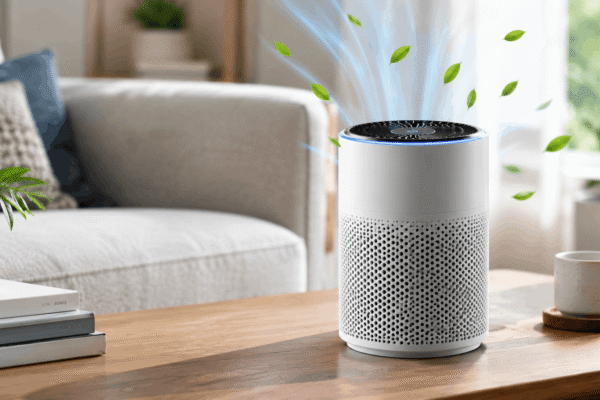
It’s a small plug-in device, roughly the size of a night-light, that generates negative ions. There’s no fan, no filter and no moving parts. Reviewers note it draws less than a watt of power, which is why it’s cheap to run around the clock.
It’s sold through major retailers and the brand’s own site. One review site said it was a few cents cheaper at Walmart than Amazon, but retail prices change constantly, so check current listings and don’t trust any fixed number you read online.
The company describes it as a plug-in device meant to improve indoor air quality. Notice the phrasing. It’s an ionizer, not a purifier in the HEPA sense, and that distinction matters for everything below.
How Air Ionizers Work
An air ionizer releases charged particles into the air. Those ions attach to airborne particles like dust, pollen and dander, which makes the particles heavier or causes them to cling to surfaces such as walls, floors and furniture. The particles don’t vanish. They fall out of the air, and you’d still need to vacuum or wipe them away.
Compare that with a HEPA purifier, which pulls air through a filter and traps particles inside the unit. The HEPA standard is well established, and a filter that’s properly sealed and sized for the room removes a large share of fine particles.
In my experience, the difference between “particles settled on your shelf” and “particles trapped in a filter” is the single most important thing to understand about ionizers. People expect cleaner air and end up dusting more.
What Reviewers and Owners Say
Opinions run mixed. Some owners report fresher air, less dust and fewer pet smells, and a 4.5-star average appears on a couple of review platforms. Some independent reviewers say the ionizer reduces airborne particles in testing, while still arguing that a filter-based purifier is the better pick.
Other users on review sites say it didn’t do much or that results were hard to notice. That fits the physics. A tiny ionizer in a large room has limited reach, and “the air feels fresher” is a subjective impression that’s easy to over-credit.
One thing worth flagging is that a lot of the glowing reviews you’ll see online are affiliate content or heavily promotional. Words like “revolutionary” and “breakthrough” in a product review should make you squint. Look for reviewers who measured something and who admit weaknesses.
The Ozone Question You Should Ask
This is where I’d slow down. Some ionizers produce small amounts of ozone as a byproduct, and ozone is a lung irritant. The U.S. EPA has a clear explanation of the issue on its page about ozone generators sold as air cleaners.
California regulates ozone emissions from indoor air cleaners, and the California Air Resources Board’s air cleaner program keeps a list of certified models. If a product is certified, it meets that state’s ozone emission limit. Before buying any ionizer, check whether it’s on that list, and read the manufacturer’s emissions claims carefully.
For people with asthma, other respiratory conditions or small children, I’d lean toward skipping ionizers entirely and choosing a filter-based purifier that has no ion-related byproducts. That’s a judgment call, not a medical rule, so ask your doctor if you’re unsure.
Where It Might Make Sense
The clarifion air ionizer suits very small spaces such as a closet, a bathroom, a bedroom corner or a desk. It’s quiet enough to leave on overnight, and it won’t hike your electric bill. If you want a light-touch way to reduce everyday dust and a faint smell in a tiny room, and your expectations are modest, it’s a low-risk experiment.
Multi-packs are sold in some places, and buying several to cover different rooms seems tempting. I’d test one first. If you can’t tell the difference after a few weeks, nine of them won’t change that.
Where It Falls Short
It won’t handle smoke, serious allergies, mold or large rooms. It has no way to measure air quality, so you’re relying on your senses. It also doesn’t remove gases or chemicals in any meaningful way.
The settled-dust problem is real too. If you notice dark smudges on walls or near the device, that’s a known side effect of ion-based cleaning. You’ll need to wipe those surfaces.
And independent testing on ionizers as a category is limited compared with filter purifiers. The EPA’s guide to air cleaners and air filters notes that air cleaners vary a lot in effectiveness and recommends looking at how well a unit removes particles and whether it emits ozone. That’s good advice for any device you plug in.
Pros and Cons at a Glance
On the plus side, it’s cheap, silent, compact and nearly free to run. Setup takes seconds because you just plug it in, and there are no filters to replace.
On the minus side, it doesn’t trap particles, performance in large spaces is weak, ozone and byproduct concerns exist for some ionizers, and plenty of buyers report not noticing much change. Customer reviews are polarized, and some complaints mention the product not delivering what the marketing implies.
My lean is that the pros are real but small, and the cons are the ones that matter if your reason for buying is health.
Better Options if Air Quality Is a Real Concern
If you have allergies or live somewhere with smoke or heavy pollution, a HEPA air purifier sized for your room is the sensible choice. Look at the clean air delivery rate (CADR) and the recommended room size, and plan for filter replacements.
Fix the sources too. Vacuum with a sealed or HEPA-equipped vacuum, wash bedding regularly, control humidity to discourage mold, and ventilate when outdoor air is good. Those steps often matter more than any gadget.
For a rough picture of how the pieces fit, think of the ionizer as a small supporting player and the filter purifier as the main tool.
Who Should Buy It, and Who Should Skip It
Buy it if you want a cheap, quiet experiment for a small room and you’re fine with modest results. It’s also fine as a novelty add-on for a bathroom or closet.
Skip it if you have asthma, serious allergies or a baby in the house and you want proven air cleaning. Skip it, too, if you can’t confirm the ozone situation for the specific model you’re buying.
FAQs
What is the Clarifion air ionizer?
It’s a small, filterless plug-in device that emits negative ions to help particles settle out of the air.
Does it replace an air purifier?
No. It doesn’t trap particles in a filter, so a HEPA purifier is generally the stronger choice for allergies or smoke.
Does it produce ozone?
Some ionizers can produce ozone as a byproduct. Check the manufacturer’s emissions information and whether the model appears on California’s certified list.
How much does it cost?
Prices vary by retailer and bundle size and change often. Check current listings from authorized sellers.
Does it use a lot of electricity?
No. Reviewers report that it uses under one watt.
Will it help with pet odors?
Some users say yes, but results vary. Cleaning pet bedding and ventilating rooms usually does more.
Categories: Technology, Lifestyle
Tags: clarifion air ionizer, air ionizer, indoor air quality, air purifiers