



Resistance Bands Guide: Which Type to Buy and How to Use It
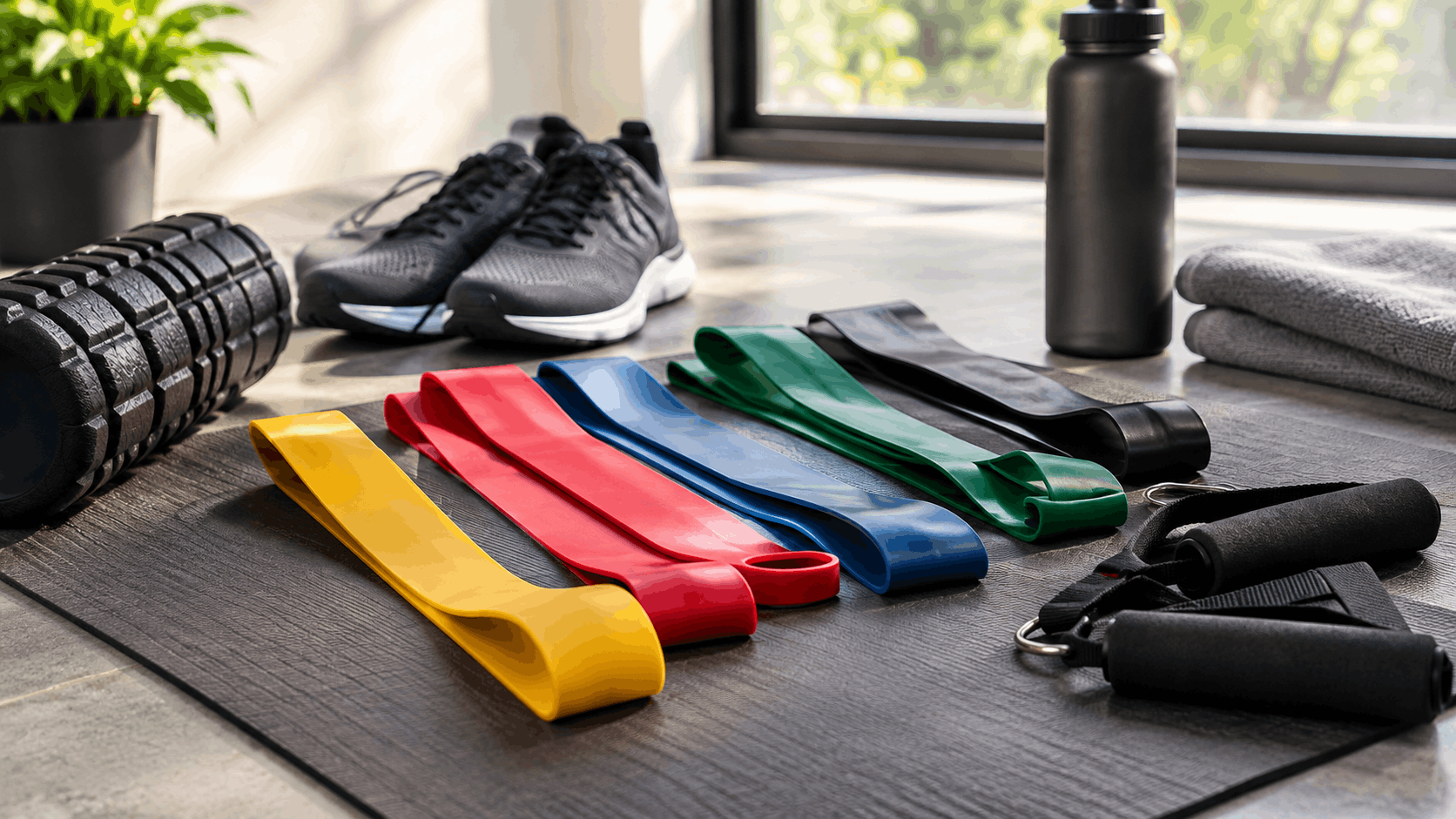
Resistance Bands Guide: Loop bands (sometimes called mini bands) are short, closed circles that go around your thighs, ankles or knees. They’re the go-to for glute work, lateral walks and warm-ups. In my experience, they’re the best first purchase for anyone training lower body at home.
Long loop bands, often called power bands, are big continuous loops that you can anchor around a pole or loop over a bar. They handle heavier work, like assisted pull-ups, banded squats and deadlifts. They’re also the type that surprises people with how much tension they produce.
Tube bands with handles feel the most like gym equipment. They come with handles and a door anchor, so you can do rows, chest presses and curls. If you want upper body variety, this style makes more sense than a loop.
Flat bands, the long, wide strips you often see in physical therapy offices, are lighter and better suited to rehab, mobility and gentle strengthening. They’re less convenient for heavy training, but they shine for shoulders and recovery work.
Which Resistance Bands Should You Buy?
Start with your goal instead of the product page. If you want stronger glutes and legs, buy a set of loop bands. If you want a full-body routine without a gym, a tube-band kit with a door anchor covers more ground. If you’re returning from an injury, a flat band set and a physical therapist’s guidance beat any guesswork.
My lean for most beginners is one loop set plus one tube set. That’s still a small investment compared with a gym membership, though prices vary a lot by brand and change often, so check current listings before buying.
Bands also come in latex and fabric. Latex is stretchier and usually cheaper, but it can roll up on your skin and isn’t suitable for anyone with a latex allergy. Fabric bands resist rolling and feel better against bare legs, though they stretch less. If you’re doing a lot of thigh work, fabric is worth the extra money.
Decoding Strength Levels
Here’s a frustrating fact: there’s no universal standard. A “medium” band from one brand can feel like a “heavy” from another. Colors don’t match across companies either.
So buy a set with a range, usually light to extra heavy, and use the manufacturer’s stated resistance ranges as a rough guide. As a rule, upper body and small muscles like the shoulders need lighter bands, while legs and back can handle much more.
One thing worth flagging is that resistance changes as you stretch the band. It’s easy at the start and harder at the end of the movement, which feels different from lifting a dumbbell. That’s fine, and it can actually be gentler on the joints, but it means you should judge difficulty by the last few reps, not the first.
Getting Started With Resistance Bands
You don’t need a long program. The World Health Organization recommends adults do muscle-strengthening activities involving the major muscle groups on two or more days a week, and bands can cover that comfortably.
A simple full-body session might include:
- Banded squats with a loop around the thighs, 10 to 15 reps.
- Glute bridges with the band above your knees, 12 to 15 reps.
- Bent-over or seated rows with a tube band, 10 to 15 reps.
- Chest presses with the band anchored behind you, 10 to 12 reps.
- Overhead presses, 8 to 12 reps with a lighter band.
- Lateral band walks, 10 to 15 steps each direction.
Do two or three rounds, resting about a minute between sets. That takes 25 to 35 minutes and works most of your body.
The Mayo Clinic’s strength training overview is a good primer on form and how often to train if you’re new to lifting in any format.
How to Make Bands Harder Without Buying More
Bands can feel limited once you get stronger, but there are easy ways around that. Use a thicker band, or step farther away from the anchor point so there’s more tension at the start. Slow the movement down, especially the return phase, which makes a lighter band feel much tougher.
You can also pause for a second at the hardest point, increase reps, shorten rest, or double up two bands. Together these follow the same idea as progressive overload in any strength program: gradually asking your muscles to do a bit more over time.
What tends to surprise people is how much tempo matters. A slow, controlled set of ten with a medium band often feels harder than a fast set of fifteen with a heavy one.
Mistakes That Cause Injuries or Wasted Workouts
Safety first. Inspect your bands before each session for tiny tears, nicks or thinning spots. A band that snaps under tension can whip back and hurt you, especially in the face. Replace any that look worn, and avoid stretching a band much farther than the manufacturer suggests.
Anchor points matter too. Door anchors should be used on a closed, sturdy door that opens away from you, and you should never loop a band around something that could slip or move. Wearing eye protection isn’t overkill during high-tension work with long bands.
On the training side, the common errors are using a band that’s too light and rushing through reps. People also let the band yank them back on the return, which wastes half the exercise. Control both directions.
And don’t ignore form because the equipment seems harmless. Poor posture on rows or presses still strains your back and shoulders, band or not.
Where Bands Beat Weights, and Where They Don’t
Bands win on cost, portability, and joint-friendliness. They travel in a suitcase, suit small spaces, and make a good warm-up tool even if you already lift. They’re also easy to scale for older adults or anyone rebuilding after a break.
Weights win for pure maximal strength and for measurable progress, since you can add exactly five pounds and track it. Bands make that harder because the resistance depends on how far you stretch them. If your goal is a heavy squat or a big deadlift, you’ll eventually want barbells or dumbbells.
Honestly, I’d call them a strong tool for general fitness, rehab, and home workouts, and a supplement rather than a replacement for heavy lifting. If you’re curious about how different methods fit together, the Wikipedia overview of strength training gives useful context, and the American College of Sports Medicine is a reliable source for exercise guidelines.
Who Should Buy Them, and Who Might Skip Them
Buy them if you’re starting a home routine, traveling often, rehabbing an injury (with professional guidance), or adding glute and shoulder activation work to your warm-ups. They’re a low-risk, low-cost way to build a habit.
Skip them as your only tool if you’re chasing maximum strength or powerlifting numbers. And talk to a doctor or physical therapist first if you have a recent injury, a heart condition or any pain that worsens with exercise.