





Baldwin Filters Review: Quality, Uses and Where to Buy
Baldwin Filters Review. Baldwin is a brand of Parker Hannifin’s Engine Mobile Aftermarket Division. Parker is a large industrial manufacturer, and you can read the company’s background on Parker Hannifin’s Wikipedia page. Baldwin has long been tied to heavy-duty filtration, and its home base is in Kearney, Nebraska, with additional manufacturing in places such as Yankton, South Dakota.
The company says its products cover light-, medium- and heavy-duty mobile applications. In plain terms, that means pickup trucks, over-the-road semis, construction machines, agricultural equipment and plenty in between.
One thing worth flagging is that corporate ownership and product lines can change. If a spec or availability matters for a purchase, confirm it on the official Baldwin Filters site before ordering.
What You Can Buy
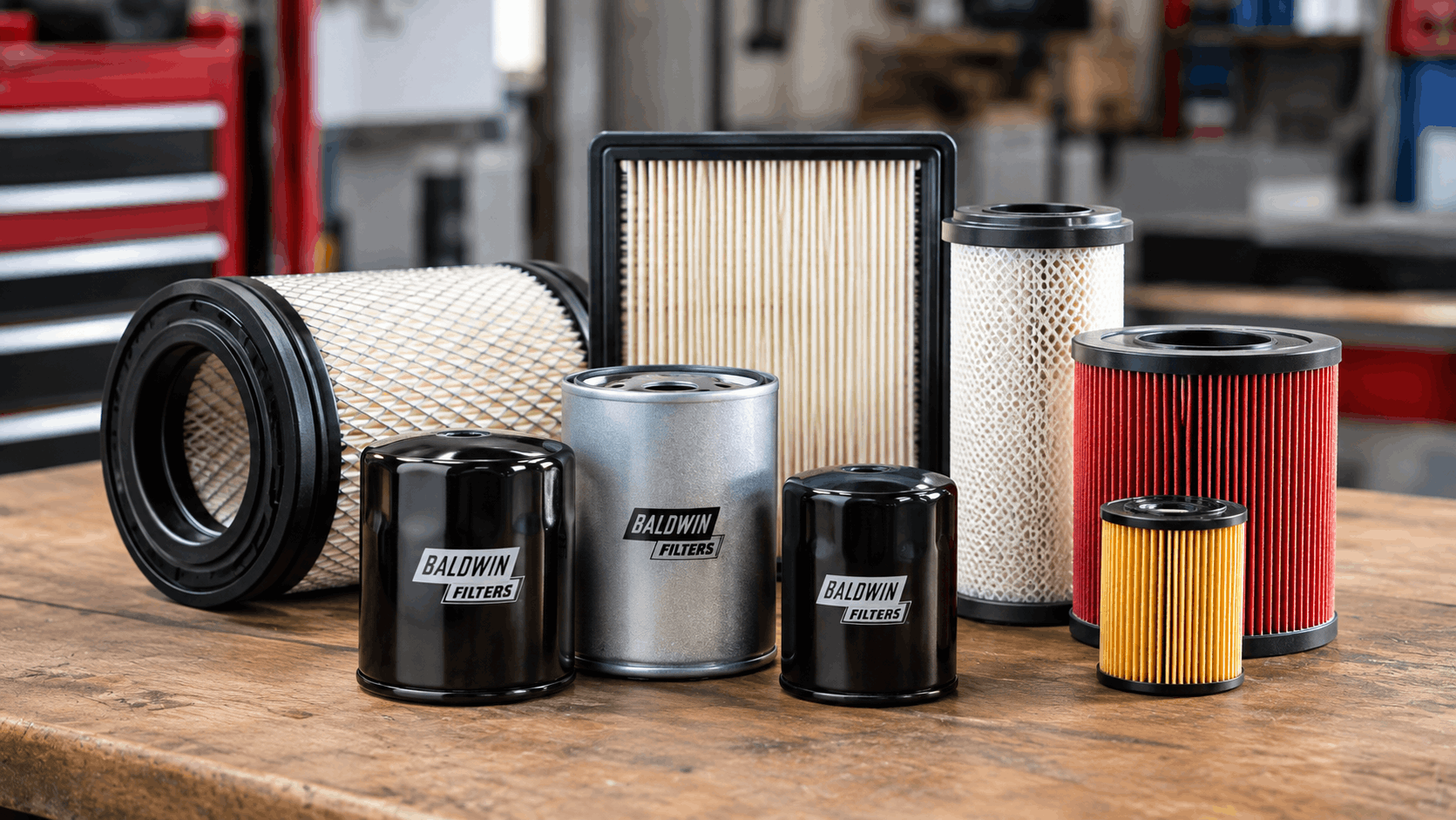
The range is wider than most people expect. Baldwin makes air filters, lube (oil) filters, fuel filters, fuel and water separators, coolant filters, hydraulic filters, crankcase ventilation filters and cabin air filters. There are also air cleaner assemblies for round and oval housings, which matter in dusty working environments.
The brand is especially associated with diesel applications. Fuel and water separation is a big deal on diesels because water in fuel damages injectors, and a good separator is one of the cheaper insurance policies you can buy. If you want a primer on how these parts work in general, the fuel filter overview on Wikipedia is a decent start.
For light vehicles, Baldwin sells oil and cabin filters too, though the company is clearly stronger in the heavy-duty world than in the aisle of a typical car parts store.
How Baldwin Filters Hold Up in Real Use
Baldwin leans on heavy-duty construction: sturdy housings, steel components in spin-on filters, and media designed to catch fine particles without clogging early. A good oil filter protects your engine from wear particles, and the structure of the filter matters as much as the media, since a weak canister or a faulty bypass valve causes trouble. The oil filter article on Wikipedia explains how bypass valves and media work if you’re curious.
In my experience, filter brands that build for commercial use tend to be overbuilt for a family sedan, and that’s a good thing. Fleet operators care about uptime, so the manufacturers serving them can’t afford to cut corners on housings or seals. That’s the case for Baldwin.
Owner opinions you’ll find online are generally positive on quality, with the occasional complaint that the products can cost more than basic store brands. I wouldn’t call any filter brand flawless, because counterfeit and misapplied parts cause more headaches than any brand-level defect.
Baldwin Filters Compared With Other Brands
You’ll hear Baldwin discussed alongside Donaldson, Fleetguard and WIX in heavy-duty circles, and alongside WIX, Mobil 1, Purolator and OEM parts in the passenger car world. Each has fans.
Donaldson and Fleetguard are heavyweights in commercial filtration, so the comparison is close on the truck side. WIX is a strong all-rounder and tends to be easier to find for cars. My lean is that for diesel pickups and commercial trucks, Baldwin is in the first tier. For a small car, the difference between a good filter from any major brand is small enough that availability and price should drive the decision.
Before you assume one brand is better, look at the part itself. A filter with the right fit, a quality gasket and a proper bypass valve beats a famous name that’s slightly wrong for your engine.
How to Find the Right Part
Baldwin provides a filter finder on its site that lets you search by application or cross-reference a competitor’s part number. That’s the safest route, because filter sizing and thread specs vary even within the same engine family.
Use your vehicle’s year, make, model and engine size, and double-check against the part number printed on your old filter. For heavy equipment, include the serial number if the lookup asks for it. Small differences, like a bypass valve pressure rating, change how the filter performs.
It’s also worth reading your owner’s manual or the engine maker’s service recommendations. Some modern diesel engines call for specific filter ratings, and installing the wrong one defeats the purpose.
Where to Buy (and What to Watch For)
You can buy through truck parts distributors, auto parts stores and online marketplaces. Pricing varies a lot, and I’d compare a local parts counter against online sellers before ordering, since online isn’t always cheaper. Prices change often, so I won’t quote specific numbers here.
Counterfeits are the real risk. Cheap listings on large marketplaces sometimes carry fake packaging. Buy from authorized distributors or well-known retailers, check that the packaging and printing look consistent, and be suspicious of prices far below everyone else’s.
Keep your receipt too. If a filter fails early, a documented purchase from a reputable seller makes warranty or return conversations much simpler.
Maintenance Tips That Matter More Than the Brand
Even the best filter does nothing if it stays on the engine too long. Follow the service intervals in your manual, and shorten them if you tow, idle a lot, drive in dust or run short trips.
Pre-fill fuel filters when the design allows, replace gaskets and O-rings where required, and never reuse a filter. Make sure the old gasket comes off with the old filter, because a double gasket is a classic cause of oil leaks.
For air filters, inspect them more often than the schedule suggests if you work in dirt, hay or construction dust. A clogged air filter quietly costs you power and fuel economy.
Who Should Buy Baldwin Filters, and Who Can Skip Them
Buy them if you run diesels, commercial vehicles, farm or construction equipment, or if you simply want a well-built filter from a company focused on engine protection. Fleet managers and owner-operators will appreciate the broad catalog and the cross-reference tools.
You can skip them if you drive a lightly used commuter car and a quality store-brand or competing filter costs noticeably less. At that point, it’s a matter of preference, not need.
Skip them also if you can’t find a verified seller for the exact part you need. A correct fit from another good brand is better than a doubtful Baldwin from a sketchy listing.