
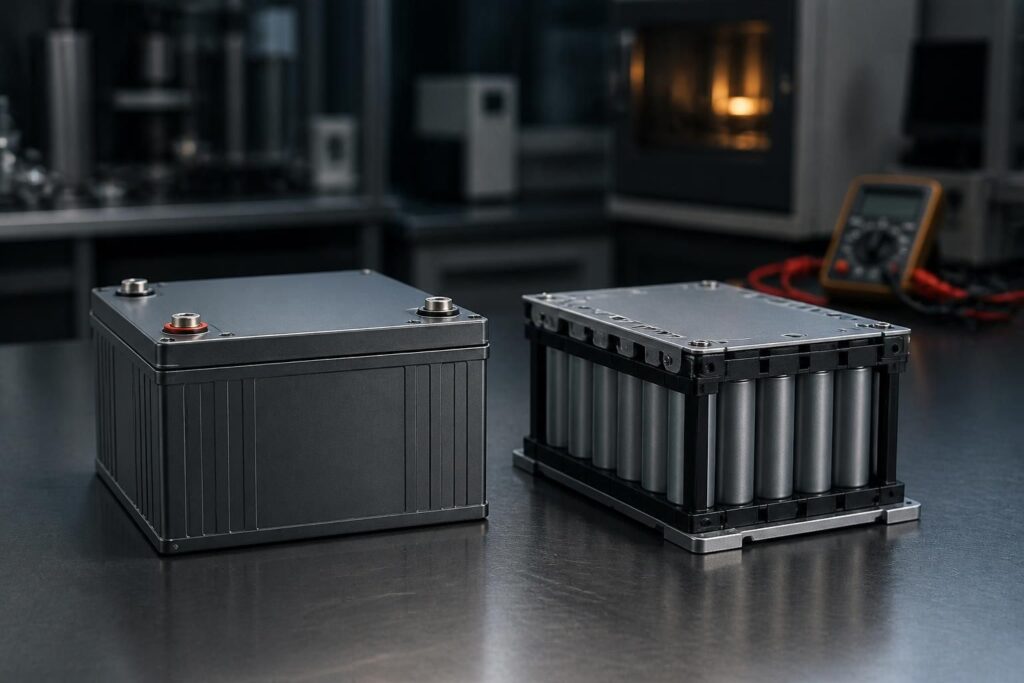

LiFePO4 (lithium iron phosphate, often shortened to LFP) is a type of lithium-ion battery, not a competitor to it. When people compare “LiFePO4 vs lithium-ion,” they usually mean LFP against the nickel-based lithium-ion cells (NMC or NCA) found in phones, laptops, power tools and most long-range electric cars. The short answer: LiFePO4 lasts much longer, is safer and costs less per kWh, while nickel-based lithium-ion stores more energy in less weight and space.
That trade-off decides which one you should buy. If weight and size matter most, nickel-based cells win. If the battery will sit in an RV, boat, solar system, power station or e-bike you plan to keep for years, LiFePO4 is usually the better value.
LiFePO4 vs Lithium-Ion at a Glance
| Feature | LiFePO4 (LFP) | Nickel-based lithium-ion (NMC) |
|---|---|---|
| Nominal cell voltage | 3.2 V | 3.6–3.7 V |
| Energy per kg (cell) | About 90–205 Wh/kg | About 150–300 Wh/kg |
| Typical cycle life | 2,000–6,000+ cycles | 1,000–2,500 cycles |
| Thermal runaway onset | Around 270°C | Around 150–210°C |
| Cell cost | Lower (about $80–90 per kWh) | Higher (about $100–120 per kWh) |
| Cold-weather charging | Should not be charged below 32°F (0°C) without a heater | Also limited, but holds range better in cold |
| Contains nickel or cobalt | No | Yes |
Figures are typical ranges from an August 2026 LFP vs NMC comparison and the lithium iron phosphate battery overview. Exact numbers vary by manufacturer and cell design.
Lifespan: LiFePO4 Wins Clearly
Cycle life is the biggest reason to choose LiFePO4. A good LFP battery is typically rated for 2,000 to 6,000 full charge cycles before it drops to about 80% of its original capacity, and some cells are rated far higher under gentle use. Nickel-based lithium-ion cells usually manage 1,000 to 2,500 cycles.
In practice, a LiFePO4 battery cycled once a day can last well over five years, while a nickel-based pack under the same load may need replacing in two to four. That longer life is why LFP now dominates home and grid energy storage and is a common lead-acid replacement in RVs and boats. Our LiFePO4 battery guide covers what to look for when buying one.
Energy Density: Nickel-Based Lithium-Ion Wins
Nickel-based cells pack more energy into the same weight and volume. At the cell level, NMC typically stores 150–300 Wh per kilogram against roughly 90–205 Wh/kg for LFP, and the gap is even larger by volume.
This is why phones, laptops, drones and premium long-range EVs still use nickel-based chemistries. For a device you carry, a battery that is 30–40% lighter for the same capacity is worth the shorter life. For a battery bolted into a van or a shed, the extra weight rarely matters.
Safety: LiFePO4 Is More Stable
All lithium batteries can fail if they are damaged, overcharged or poorly made. LiFePO4 is simply more forgiving. Its iron phosphate cathode holds on to oxygen much more tightly than nickel and cobalt oxides, so it resists thermal runaway, the chain reaction behind most battery fires.
Thermal runaway in LFP cells generally starts around 270°C, compared with roughly 150–210°C for NMC. LFP cells also release less heat if they do fail. That margin is a big reason LiFePO4 is preferred for batteries kept indoors, in living spaces like RVs, or near sleeping areas.
Cost: LiFePO4 Is Cheaper per kWh and per Cycle
LiFePO4 avoids nickel and cobalt, two of the most expensive and supply-constrained battery materials. Cell prices for LFP have fallen to roughly $80–90 per kWh, versus about $100–120 for NMC, according to the 2026 comparison above.
The real saving shows up over time. Because a LiFePO4 battery lasts two to three times as many cycles, its cost per cycle is often a fraction of a nickel-based pack, and far below lead-acid.
Cold Weather: Both Need Care
LiFePO4 handles heat well but dislikes charging in the cold. Most LFP batteries include a battery management system that blocks charging at around 32°F (0°C), because charging below freezing can cause lithium plating that permanently damages the cell, as one battery maker explains. Discharging is usually allowed down to about -4°F (-20°C), with reduced capacity.
If you camp or store a battery in freezing temperatures, look for a LiFePO4 model with a built-in heater or low-temperature charge protection. Nickel-based lithium-ion also loses range in the cold but generally holds up somewhat better.
Voltage: Why It Matters for Swaps
A LiFePO4 cell is 3.2 V nominal, so four cells in series make 12.8 V. That is very close to a 12 V lead-acid battery, which is why LiFePO4 is the go-to drop-in replacement for car-style 12 V systems in RVs, boats and solar setups. You should still check that your charger, solar controller and inverter have a lithium or LiFePO4 charging profile.
Nickel-based cells are 3.6–3.7 V nominal, which suits phones and laptops but does not map neatly onto 12 V systems.
Which Should You Choose?
- Choose LiFePO4 for RVs, boats, off-grid solar, home backup, portable power stations, golf carts and e-bikes you plan to keep for many years.
- Choose nickel-based lithium-ion when weight and size matter most: phones, laptops, drones, cordless tools and long-range EVs.
- Replacing lead-acid? LiFePO4 is the natural upgrade, offering several times the cycle life at a fraction of the weight.
Frequently Asked Questions
Is LiFePO4 better than lithium-ion? It depends on the job. LiFePO4 lasts longer, is safer and is cheaper per kWh. Nickel-based lithium-ion is lighter and more compact for the same capacity.
Is LiFePO4 a lithium-ion battery? Yes. It is one chemistry within the lithium-ion family. The name refers to its lithium iron phosphate cathode.
Can I replace a lithium-ion battery with LiFePO4? Only if the device and charger support it. The voltages differ, so a direct swap in a phone, laptop or power tool will not work. In 12 V systems, LiFePO4 is a common replacement for lead-acid.
Why is LiFePO4 heavier? Its cells store less energy per kilogram, so you need more cell mass for the same capacity.
Do LiFePO4 batteries catch fire? They are much less likely to than nickel-based cells, but no battery is fireproof. Buy from reputable brands with a proper battery management system and avoid damaged packs.