
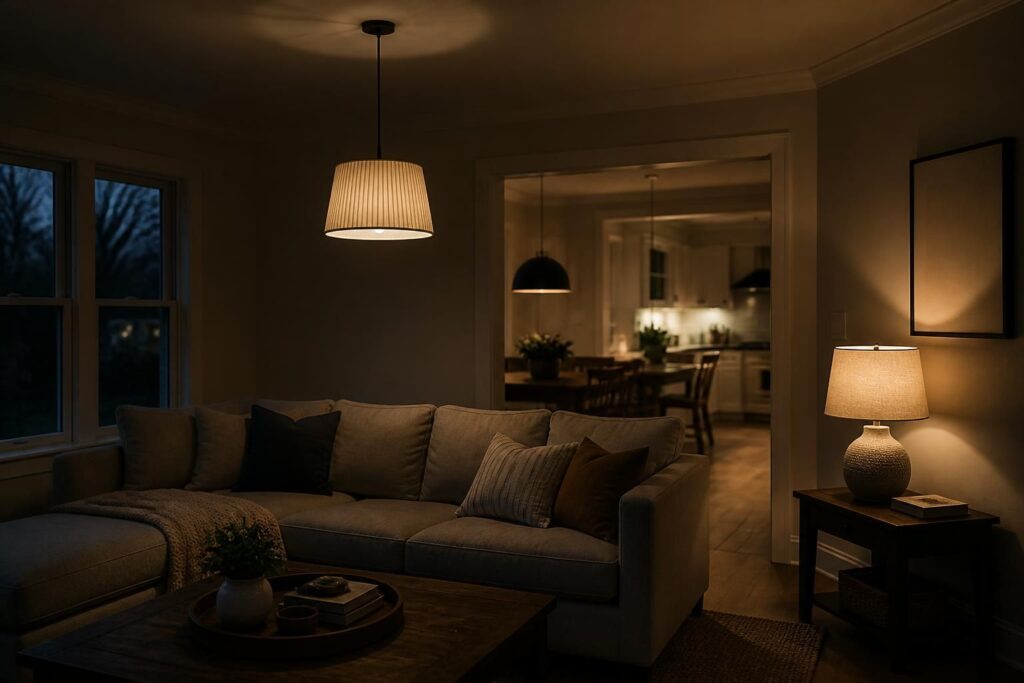

If the lights are flickering in only one room, the cause is almost always local to that room: a loose or failing bulb, an LED bulb on a dimmer it does not get along with, a worn wall switch, a loose wire in the fixture or switch box, or a big appliance sharing the same circuit. Whole-house flickering points to a different problem, usually with your service connection or main panel, and that needs an electrician or the utility.
Most single-room causes are cheap to check. Some are not safe to ignore. This guide walks through the likely causes in the order worth checking, how to tell them apart, and the warning signs that mean you should turn off the breaker and call a licensed electrician.
Quick Diagnosis: What the Flicker Tells You
| What you notice | Most likely cause | Can you fix it yourself? |
|---|---|---|
| One bulb flickers, others in the room are fine | Loose or failing bulb, or bad socket | Yes, tighten or replace the bulb |
| LED bulbs flicker when dimmed or at low settings | Dimmer not compatible with LEDs, or non-dimmable bulbs | Yes, with dimmable bulbs or an LED-rated dimmer |
| Flicker when you touch or wiggle the switch | Worn switch or loose switch connection | Electrician recommended |
| Lights dip when a space heater, microwave or vacuum starts | Circuit shared with a high-draw appliance | Move the appliance; ask an electrician about a dedicated circuit |
| Random flicker plus buzzing, warm switch plate or burning smell | Loose or damaged wiring | No. Turn off the breaker and call an electrician |
1. A Loose or Failing Bulb
Start with the simplest fix. With the light switched off and the bulb cool, make sure each bulb is screwed in firmly. A bulb that is slightly loose in its socket can lose contact and flicker, especially in ceiling fans and fixtures that vibrate.
If one bulb still flickers, swap it with a bulb that works fine in another lamp. If the problem follows the bulb, the bulb is failing. And If the new bulb flickers in the same socket, the socket or fixture wiring may be the problem. Cheap LED bulbs with low-quality drivers are a common source of flicker, so it is worth trying a reputable brand before blaming the wiring.
2. LED Bulbs on the Wrong Dimmer
This is the most common cause of flicker in rooms that were switched from incandescent to LED. Many older dimmers were designed for incandescent bulbs, and LED drivers do not always work well with them. A U.S. Department of Energy fact sheet on dimming LEDs notes that LEDs are not compatible with all incandescent dimmers and that a given LED fixture cannot be guaranteed to work with every dimmer.
Signs this is your problem: the flicker appears only at low dimmer settings, the bulbs hum, or the lights do not turn fully off. Fixes:
- Check the bulb box. Bulbs not marked “dimmable” should never be on a dimmer.
- Replace an old dimmer with one rated for LED loads, sometimes labeled “CL” or “LED+.”
- Check the dimmer maker’s compatibility list for your bulbs.
- Adjust the low-end trim setting if your dimmer has one.
3. A Worn Wall Switch
Switches wear out. If the lights flicker when you flip, tap or wiggle the switch, the contacts inside may be failing or a wire may be loose on the switch terminal. Replacing a standard switch is a common DIY job for experienced homeowners, but it requires turning off the breaker and confirming the power is off with a voltage tester. If you are not comfortable doing that, have an electrician replace it. A loose connection at a switch can heat up over time.
4. A High-Draw Appliance on the Same Circuit
If the lights dim or flicker when a space heater, hair dryer, microwave, window air conditioner or vacuum turns on, the room’s lighting probably shares a circuit with that appliance. When the appliance starts, it pulls a surge of current and the voltage briefly drops.
According to UL’s guide to wiring warning signs, flickering or dimming lights are rarely the fixture’s fault and are more often caused by major appliances or space heaters sharing the circuit. UL suggests asking an electrician about moving the lights to another circuit or giving large appliances dedicated lines. A brief dip when a motor starts is common. Constant flicker, or breakers that trip often, suggests the circuit is overloaded.
5. Loose Wiring in the Fixture or Box
This is the cause you should not ignore. Wires can work loose at the fixture, the switch, an outlet on the same circuit, or a junction box. A loose connection creates resistance and heat, which is a common starting point for electrical fires.
Turn off the breaker and call a licensed electrician if the flicker comes with any of these signs:
- A burning or hot-plastic smell from a switch, outlet or fixture
- Buzzing, crackling or sizzling sounds
- A switch plate or outlet that is hot to the touch
- Scorch marks or discoloration around a switch or outlet
- Sparks, or breakers that trip repeatedly
UL advises stopping use of an outlet that buzzes or smells odd until an electrician has checked it, and calling immediately for any sparking or smells from the breaker panel.
One Room vs the Whole House
If the flicker spreads beyond one room, especially if lights get brighter and dimmer across the house at the same time, the problem may be a loose neutral at the main panel or the utility’s service connection. That can damage electronics and is a safety hazard. Contact an electrician, and call your utility if the problem started after a storm or affects neighbors too. Our main guide on how to fix flickering lights covers whole-house causes in more detail.
A Simple Troubleshooting Order
- Tighten the bulb and swap in a known good bulb.
- Check whether the bulbs are dimmable and whether the dimmer is LED-rated.
- Note whether the flicker happens when a specific appliance turns on.
- Test whether touching the switch causes the flicker.
- If none of these explain it, or you notice heat, smells or buzzing, turn off the breaker and call an electrician.
Frequently Asked Questions
Are flickering lights in one room dangerous? Often not. A loose bulb or dimmer mismatch is harmless. But flicker caused by loose wiring can lead to overheating, so take it seriously if a bulb swap does not fix it or if you notice heat, smells or buzzing.
Why do my LED lights flicker when dimmed? Usually because the dimmer was designed for incandescent bulbs or the bulbs are not dimmable. An LED-rated dimmer and dimmable bulbs usually fix it.
Can a bad breaker cause lights to flicker in one room? It can, along with a loose connection at the breaker. Breaker work should be left to an electrician.
Why do lights flicker when the AC or a space heater turns on? Large motors and heaters draw a surge of current when they start, which briefly lowers the voltage on the circuit. A short dip can be normal. Frequent or strong flicker suggests an overloaded or shared circuit.
How much does it cost to fix flickering lights? A new bulb or LED-rated dimmer costs a few dollars to around $50. Electrician visits for switches, fixtures or wiring repairs vary widely by area, so get a quote.