





Tesla Solar Review: Cost, Pros, Cons and Alternatives
Tesla Solar Review: Tesla sells a complete system through its own solar page: panels, mounting hardware, inverter and monitoring through the Tesla app. Its sales process is mostly online, and you get a price after entering your address instead of waiting for a salesperson to visit.
That’s the appeal. Most solar companies make you sit through a pitch, then send three different quotes over two weeks. Tesla’s approach feels closer to buying a phone than hiring a contractor. In my experience, people who hate sales pressure tend to love this part and then discover the trade-off, which is that you get less hand-holding when something goes sideways.
The panels themselves are standard monocrystalline modules, and reviewers describe them as good rather than exceptional. Tesla’s mounting hardware is low profile, so panels sit close to the roof without the chunky rails you see on many installs. Warranty coverage is reported at 25 years, but warranty terms are exactly the kind of detail to confirm in your own contract.
How Much Tesla Solar Costs in 2026
Tesla’s panel systems have generally priced out around $2.30 to $3.10 per watt, depending on where you live, according to This Old House’s review. The national average they cite, from the Solar Energy Industries Association, is about $3.33 per watt. Prices are location-specific and change often, so treat these as a range and get your own number from Tesla.
Here’s a quick example. An 8 kW system at $2.70 per watt comes to about $21,600 before any incentives. If your electric bill runs $200 a month and the system covers 80% of it, you’d save roughly $1,920 a year, which puts payback near 11 years. Those are made-up inputs, but the method is real, and it’s the one worth doing with your actual bill.
Tesla also advertises a price match guarantee. I like it in principle, but read the conditions carefully. Matching usually applies to comparable systems from a licensed competitor, and “comparable” is doing a lot of work in that sentence.
The Tax Credit Change That Reshapes Everything
This is where many older articles about tesla solar mislead you. The 30% federal homeowner credit (Section 25D) ended on December 31, 2025, after the One Big Beautiful Bill became law. If you buy with cash or a loan in 2026, you don’t get that credit. Some pages still advertise it, and they’re out of date.
There’s a partial workaround. Leases and power purchase agreements are owned by a company, and that company can still claim the business credit (Section 48E), which the law keeps through 2027 for eligible projects. One report says Tesla launched a 25-year solar lease with a year-five buyout option in October 2025. The idea is that the credit lowers your monthly payment instead of your tax bill.
One thing worth flagging is that “includes the tax credit” is a sales phrase. Ask for the monthly rate, the annual escalator (if any), and the buyout terms in writing. Then compare the total over 25 years against what buying would cost. For current rules, check the IRS and a tax professional, since this area has changed twice in a year.
Should You Buy, Finance, or Lease?
Buying outright costs the most up front and gives you ownership, which makes the house easier to sell and lets you keep every dollar of savings. Financing spreads the cost but adds interest, and without the credit, interest matters more than it used to. Leasing means little or no money down, though you won’t own the system.
My lean for most people with solid credit and a long-term home is to price all three. Buying tends to win over 20-plus years, but a lease can be the better deal if your roof is good and you’d otherwise skip solar entirely. Just don’t sign a lease without a clear plan for what happens if you sell the house.
Tesla Solar vs. Tesla Solar Roof
These are different products with very different prices. Tesla’s standard panels run under about $3 per watt on the figures above. The Solar Roof, which replaces your roofing with solar shingles, is reported at $7 to $15 per watt depending on roof size and design.
The Solar Roof looks better, no question. But for most homeowners, the price difference is hard to justify unless you already need a full re-roof and care a lot about curb appeal. If you just want lower electric bills, panels are the sensible choice.
Where Tesla Solar Shines
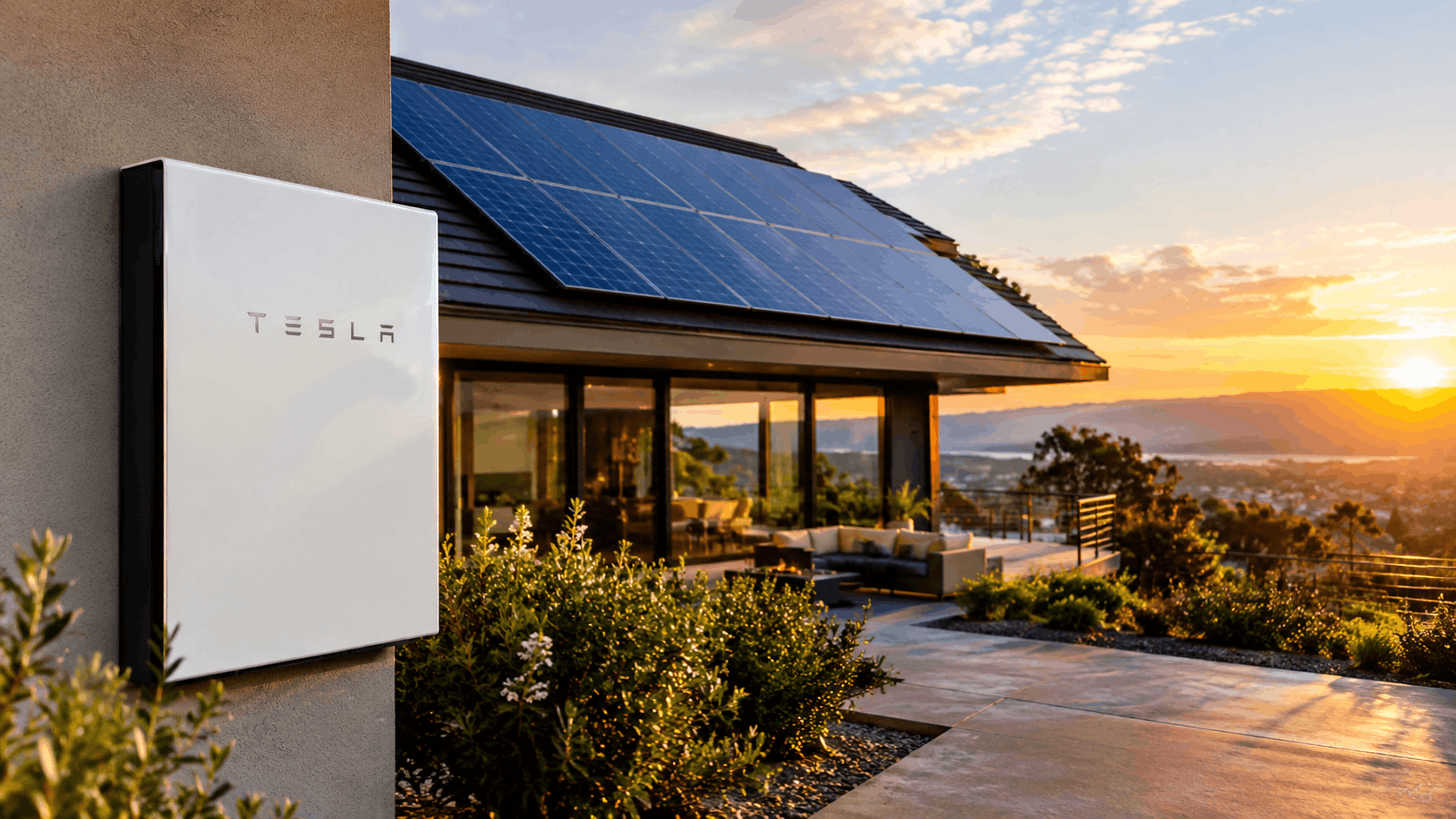
Pricing is the big one. Tesla usually lands below the national average, and the upfront online quote saves time. The Powerwall is the other draw. The Powerwall battery pairs naturally with Tesla’s panels, and the Tesla app shows your production, home usage and battery in one place. If you want backup power during outages, that tight integration is a real advantage.
And if you already own a Tesla EV, having the car and house in one ecosystem is convenient, even if it won’t save you money by itself.
Where It Falls Short
Customer service is the recurring complaint with large, volume-driven installers, and Tesla is no exception. Scheduling delays, slow permitting and hard-to-reach support turn up often in homeowner discussions. I’d weigh that heavily, because a cheap system with a bad service experience isn’t a bargain.
Customization is limited too. If your roof has odd angles, heavy shade or special requirements, a local installer may design a better system than Tesla’s standardized approach. Tesla also isn’t available everywhere, so check coverage for your address.
How to Get a Fair Deal
Before signing, run your address through NREL’s PVWatts calculator to see what a system should realistically produce. Compare that with Tesla’s estimate. Big gaps are a reason to ask questions.
Then get at least two other quotes from local installers. This is the single best use of an afternoon. Look up state and local incentives on the DSIRE database, since some states offer credits, rebates or net metering rules that change the math. Industry data from the Solar Energy Industries Association is also useful for checking whether a quote is in a normal range.
Pay attention to your utility’s net metering policy. In some areas, the rate you’re paid for excess power has dropped, which makes a battery more valuable and changes how big your system should be.
Alternatives Worth Pricing Out
Local and regional installers often give you more personal service and flexible designs, sometimes at a similar price. National companies like Sunrun focus on leasing and financing. Premium panel brands cost more per watt but offer higher efficiency, which matters if roof space is tight. For many homes, a good local installer using quality equipment ends up being the best match.
Who Should Choose It, and Who Should Skip It
Tesla solar suits homeowners with simple, sun-friendly roofs who want a transparent price, a fast online process and possibly a Powerwall. It also suits people who value the app and don’t need much hand-holding.
Skip it if your roof is complicated, if you want a personal installer relationship, or if you’re counting on the old 30% credit. And if you’re only comparing prices, make sure you’re comparing equal systems, because a cheaper per-watt cost with a smaller system isn’t necessarily cheaper.