





The Japanese Planner: Why These Notebooks Are Worth It
If you’ve ever watched someone flip through a notebook that seems to glide instead of scratch, chances are you were looking at a japanese planner. There’s a reason stationery fans get a little obsessive about these things, and it’s not just marketing. The paper feels different, the layouts are genuinely thought through, and the whole object tends to age well instead of falling apart after three months of daily use.
This isn’t a category invented by influencers, either. Japan has had a serious planner and notebook culture for decades, built around companies that treat paper the way some countries treat wine. So if you’re trying to figure out whether a japanese planner is worth the higher price tag compared to whatever’s sitting in the drawer at your local office supply store, here’s what actually matters.
What Makes a Japanese Planner Different
The short answer is paper quality and layout design, in that order.
Most mass-market planners use paper that’s fine for a few weeks and then starts feeling rough, ghosting ink from the other side, or bleeding with fountain pens. Japanese paper mills, the ones supplying brands like Hobonichi, tend to use thinner but denser paper that resists bleed-through even with wet inks. Tomoe River paper is probably the most famous example among pen enthusiasts, prized for how smooth it feels while still holding up to layered ink and fountain pens that would wreck a cheaper notebook.
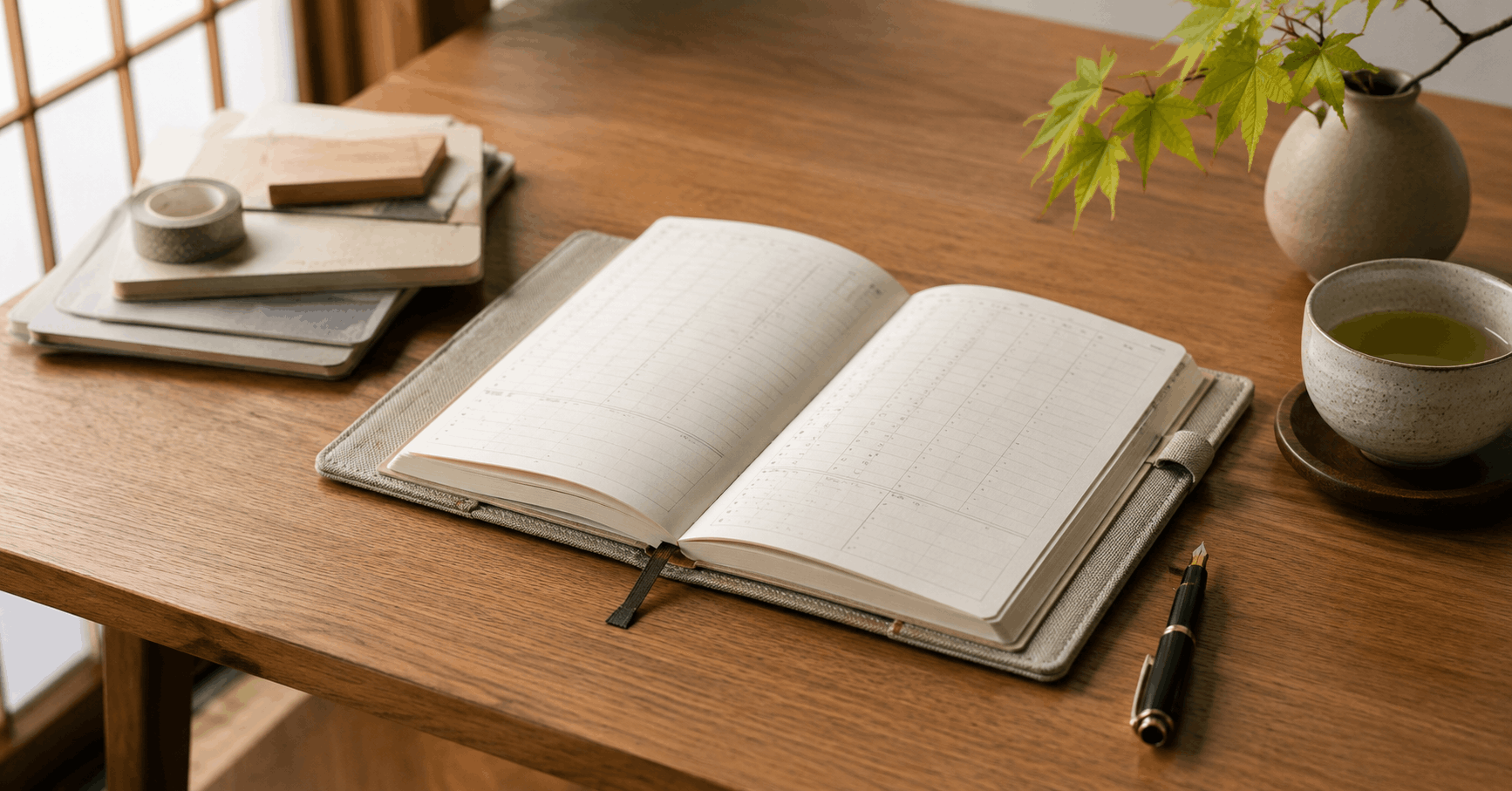
Layout is the other piece. A lot of Western planners assume you want big blocks for appointments and not much else. Japanese planners, in my experience, tend to build in more flexibility. You’ll see hourly grids next to free space for notes, weekly spreads that leave room for reflection, and daily pages that don’t box you into someone else’s idea of how your day should be structured. It’s less “fill in the blank” and more “here’s a canvas, use it how you want.”
The Big Names You’ll Run Into
Hobonichi
Hobonichi Techo is probably the most recognized name outside Japan at this point, largely because of how much attention it gets from planner communities online. It’s a one-page-per-day format with a grid layout on Tomoe River paper, and it comes in a few sizes, with the A6 being the most popular. Pricing usually lands somewhere in the $30 to $50 range for the cover and book combo, though covers alone can run higher depending on the material. Check the official Hobonichi site for current pricing since it shifts with exchange rates and new collections.
Traveler’s Notebook (by Traveler’s Company)
This one works differently. Instead of a fixed planner, you get a leather cover and swap in refill inserts, which can be a planner layout, a blank notebook, a grid, or even a zipper pouch for small items. It’s less structured out of the box, which some people love and others find annoying if they want something ready to use immediately. The system is modular by design, so you build it around your own habits rather than adapting to a preset format. You can browse the full range through Traveler’s Company.
Midori
Midori makes a range of planners and notebooks beyond the Traveler’s Notebook line, including the MD Notebook series, which is known for minimalist design and excellent paper without the leather cover investment. It’s a good entry point if you want the paper quality without committing to the whole Traveler’s ecosystem.
Muji
Muji planners are the budget-friendly, no-frills option. They’re not going to wow anyone with fancy paper, but they’re clean, functional, and cheap enough that trying one out isn’t a big commitment. If you’re not sure whether the whole japanese planner thing is for you, starting here makes sense before spending $40 on a Hobonichi. You can see current options at Muji.
Layout Styles Worth Knowing
Japanese planners generally fall into a few layout camps, and picking the wrong one is probably the most common reason people abandon a planner after a month.
Daily formats, like the classic Hobonichi Techo, give you a full page per day. Great if you journal, track habits, or just need more space than a typical planner offers. Weekly formats compress things into a spread per week, which works better if you’re mostly tracking appointments and don’t need room for notes. Some Japanese brands also offer a hybrid vertical format, where each day gets a narrow column across a two-page weekly spread, which is oddly satisfying once you get used to it.
One thing worth flagging: a lot of first-time buyers pick the daily format because it looks impressive online, then find it’s way more space than they actually use. If you’re not someone who writes long daily entries, a weekly layout will probably serve you better and cost less.
Pricing, Roughly
Prices vary a lot depending on cover material and where you’re buying from (direct from Japan versus a US or European retailer usually adds a markup for shipping and import costs).
- Muji planners: generally under $15
- Midori MD Notebooks: roughly $15–25 depending on size and format
- Hobonichi Techo (with cover): typically $30–60
- Traveler’s Notebook (leather cover only): often $50–70, before adding refills
As of mid-2026, these ranges are fairly consistent, but check official retailers directly since currency shifts and limited editions move pricing around, sometimes significantly during release windows.
Where the Paper Quality Actually Matters
If you use a ballpoint pen and never think twice about it, you honestly might not notice a huge difference between a japanese planner and a decent Western alternative. The paper quality mostly shines through with fountain pens, brush pens, or heavier gel inks that would bleed or feather on standard paper.
For pen and paper enthusiasts, retailers like JetPens are a solid resource for comparing paper weights, ink compatibility, and specific product reviews before buying, since specs alone don’t always tell you how a paper actually feels in daily use.
Who Should Actually Buy One
People who journal or write daily notes get the most out of these planners, especially the Hobonichi-style daily format. Fountain pen users benefit enormously from the paper quality alone. And anyone who’s tried a dozen planner apps and always drifts back to paper tends to appreciate the durability and thoughtful design here more than most.
On the other side, if you’re someone who needs heavy digital syncing, reminders, or shared calendars for work, a physical japanese planner isn’t going to replace that. It’s a standalone analog tool, and pairing it with a digital calendar for anything time-sensitive is usually the smarter move rather than trying to force one system to do both jobs.
A Few Common Mistakes
Buying the wrong size is probably the number one issue. The A6 Hobonichi is genuinely small, closer to a passport than a standard notebook, and some people find it too cramped for daily journaling. If you tend to write a lot, look at the A5 or Cousin sizes instead.
Another mistake is buying a planner mid-year and feeling like you “wasted” the first half. Most Japanese planners run on a fiscal-style year (often starting in either January or April, depending on the edition), so check the start date before ordering if timing matters to you.
And don’t underestimate how attached people get to the ritual around bullet journaling and analog planning in general. There’s a whole community and methodology built around structured notebook use, documented on Wikipedia’s bullet journal page, that overlaps heavily with japanese planner users even though the systems aren’t identical.
Frequently Asked Questions
Are Japanese planners worth the price compared to regular planners? For most casual users, probably not dramatically. For fountain pen users, heavy journalers, or people who genuinely care about paper feel, yes, the difference is noticeable enough to justify it.
Can I use a Japanese planner with a fountain pen? Yes, and it’s actually where these planners shine most. Tomoe River paper and similar Japanese papers handle fountain pen ink far better than standard notebook paper.
Do I need to buy accessories separately? For Hobonichi and Muji, usually not, they come mostly ready to use. Traveler’s Notebook requires buying refills separately since the cover alone is just a shell.
What size should a beginner start with? A5 or a standard weekly format is usually easier to adjust to than the smaller A6 daily formats, which take some getting used to.
Do these ship internationally? Most major brands ship worldwide, though shipping costs and delivery times from Japan can add up. Buying through a regional retailer sometimes works out cheaper once shipping is factored in.