






What Over Ear Headphones Should I Buy? Quiz Guide
You’ve probably typed “what over ear headphones should i buy quiz” into Google because scrolling through fifty “best headphones” lists left you more confused than when you started. Fair enough. Most of those lists rank gear by spec sheets instead of asking the one question that actually matters: what do you use headphones for?
This guide works like a quiz without forcing you through a clunky interactive form. Answer the questions honestly as you read, and by the end you’ll know which category fits you, plus a few real models worth looking at in each one.
Question 1: What’s Your Main Use Case?
Commuting, working from home, gaming, or just relaxing on the couch each call for different things from a headphone. Someone riding a noisy subway twice a day needs aggressive noise cancellation. Someone sitting at a desk all day cares more about comfort over long stretches and mic quality for calls. A gamer wants low latency and soundstage. These aren’t interchangeable priorities, and a pair built for one use case often disappoints in another.
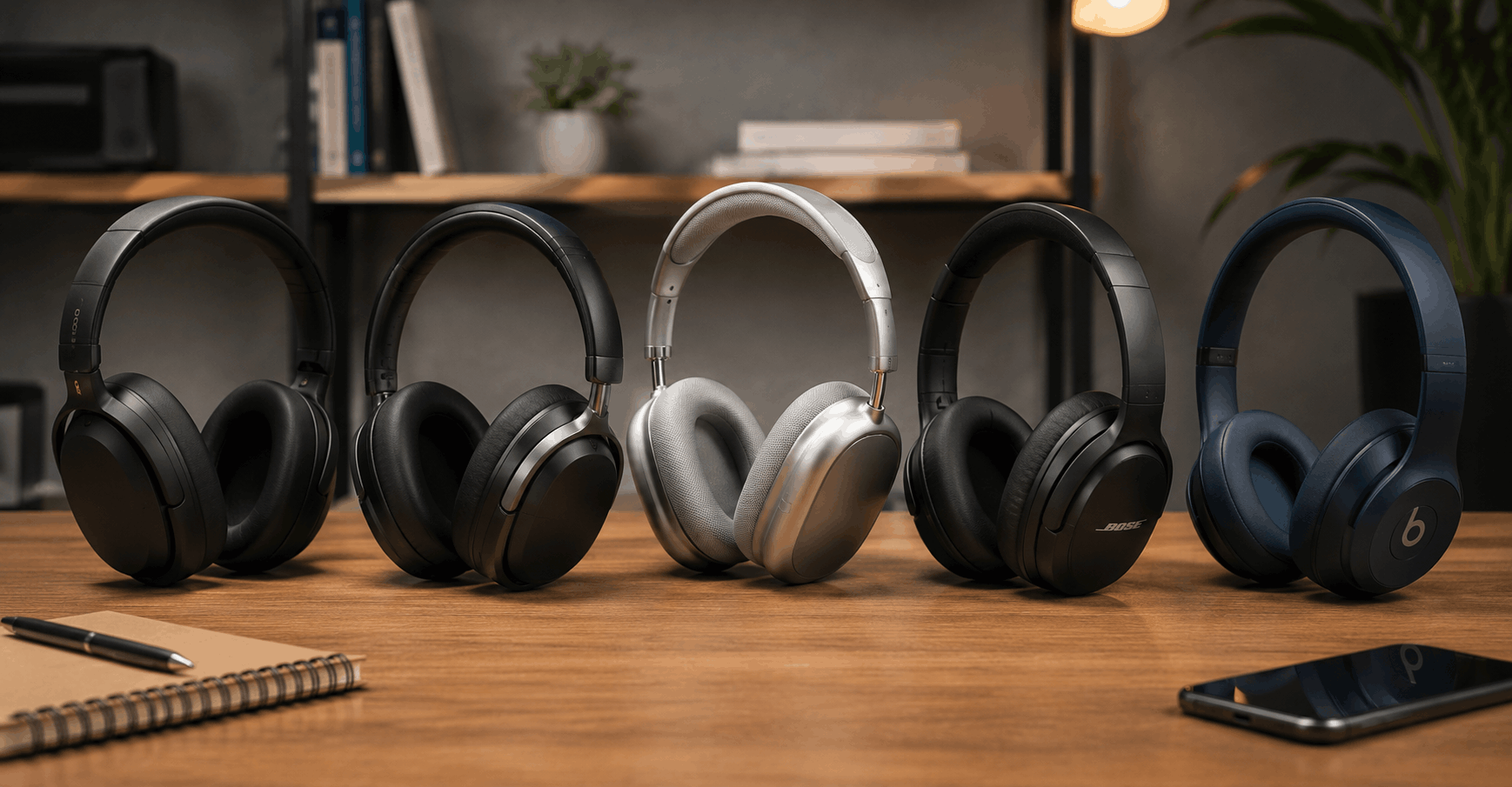
If commuting or travel is your answer, noise cancellation is non-negotiable. The Sony WH-1000XM5 has been a benchmark in this category for a while now, and in my experience, headphones in this tier tend to justify their price through the ANC alone rather than raw audio fidelity. The Bose QuietComfort Ultra is the other name that keeps coming up, and it leans slightly more toward comfort and a warmer sound signature.
If you’re mostly at a desk, comfort and mic clarity should outrank noise cancellation. Open-back designs, which don’t block outside noise at all, can actually be the better fit here because they tend to sound more natural over long sessions.
Question 2: How Much Do You Actually Care About Noise Cancellation?
This sounds obvious, but a lot of people buy ANC headphones and barely use the feature after the first week. If you work from a quiet home office or live somewhere calm, you might be paying for tech you won’t lean on. That money is better spent on drivers, build quality, or a wireless codec that supports higher-resolution audio.
On the flip side, if you fly often or work in an open office, ANC changes the experience enough that it’s worth prioritizing over almost everything else. What tends to surprise people here is how much ANC quality varies between “flagship” models and mid-range ones wearing the same marketing language. Cheaper ANC often only tackles low, steady frequencies like engine hum and does little for voices or sudden noise.
Question 3: Wired, Wireless, or Both?
Wireless is the default for most buyers now, and Bluetooth codecs have gotten good enough that the gap with wired audio is small for casual listening. But wireless still means charging, potential latency for gaming or video editing, and eventual battery degradation.
Wired headphones remain the better choice for studio work, serious gaming, or anyone who wants zero compression on the signal. The Sennheiser HD 650 is a long-standing favorite among people mixing music or just wanting reference-quality sound at home, though it requires a dedicated amp to really shine.
A middle ground exists too. Plenty of models offer both a Bluetooth mode and a wired 3.5mm input, so you’re not locked into one workflow. That flexibility matters more than people expect once the battery dies mid-flight and there’s no backup cable in the bag.
Question 4: Over-Ear or On-Ear, and Does Isolation Matter?
Over-ear cups that fully surround the ear are generally more comfortable for long wear and provide better passive isolation than on-ear designs that rest directly on the ear. If you’re wearing headphones for hours at a stretch, that difference adds up. On-ear models can be lighter and more portable, but they also tend to cause more ear fatigue on long days.
Isolation matters if you’re in shared spaces and don’t want sound leaking out, or if you want the outside world muted even with the ANC off. Foam and memory-foam ear cushions handle this differently than the thinner protein leather pads found on some budget models, so it’s worth checking cushion material before buying rather than assuming all pads perform the same.
Question 5: What’s Your Budget Range?
Budget shapes this decision more than any spec. Entry-level over-ear headphones in the $50 to $100 range, such as models from Audio-Technica, can deliver solid sound for casual listening but usually skip ANC or offer a weaker version of it. Mid-range options between $150 and $250 typically add better ANC, improved build materials, and companion apps with EQ control. Premium headphones above $300, including the Apple AirPods Max, bring flagship drivers, spatial audio features, and noticeably better construction, though the price jump doesn’t always match a proportional jump in sound quality.
Pricing on all of these shifts often, so check the official product page for current numbers before buying rather than trusting older price mentions floating around the web.
Putting Your Answers Together
If you answered commuter, care a lot about ANC, wireless, over-ear, mid-to-premium budget, you’re looking at something like the Sony WH-1000XM5 or Bose QuietComfort Ultra.
If you answered desk-bound, don’t care much about ANC, wired preferred, over-ear, mid budget, an open-back option or something like the Sennheiser HD 650 makes more sense.
If you answered gamer, ANC irrelevant, wired or low-latency wireless, over-ear, flexible budget, look toward gaming-specific brands like SteelSeries or HyperX instead of general consumer audio brands, since latency handling is built differently for that use case.
There’s no universal winner here, and that’s really the point of framing this as a quiz instead of a ranked list. A $400 flagship can be the wrong purchase for someone who just wants something comfortable for podcasts on the porch.
Common Mistakes When Buying Over-Ear Headphones
A few patterns show up again and again. People buy based on brand reputation alone and skip trying the headphones on, which matters a lot given how differently clamping force and cup size fit different head shapes. Others chase the highest ANC rating without checking mic quality, then get frustrated during calls. And a common one: assuming Bluetooth range and connection stability are the same across all models, when in practice cheaper Bluetooth chips drop connections more in crowded areas like offices or transit.
Reading a handful of user reviews on retailer sites, not just professional reviews, tends to surface these real-world quirks faster than spec sheets do.
Frequently Asked Questions
Do I need active noise cancellation if I mostly listen at home? Probably not. ANC adds cost and a small amount of audio coloration in exchange for blocking outside noise. If your environment is already quiet, that trade-off isn’t worth it.
Are wireless over-ear headphones as good as wired ones now? For most casual listening, yes, the gap has narrowed a lot. For critical listening or studio work, wired still has an edge because there’s no compression from Bluetooth codecs.
How long should over-ear headphones last? With reasonable care, two to four years is typical before battery degradation or cushion wear becomes noticeable, though build quality varies a lot between brands.
Is spending over $300 worth it? Only if you value the ANC quality, build materials, and companion features that come with flagship tiers. A lot of casual listeners are just as happy with a $150 pair.
If none of the models mentioned here feel like an exact match, that’s fine. Use the five questions as a filter next time you’re comparing options on a retail page, since matching a headphone to your actual habits, rather than its review score, is what determines whether you’ll still be happy with it six months in.