






How to Wash a Wool Blanket Without Shrinking It
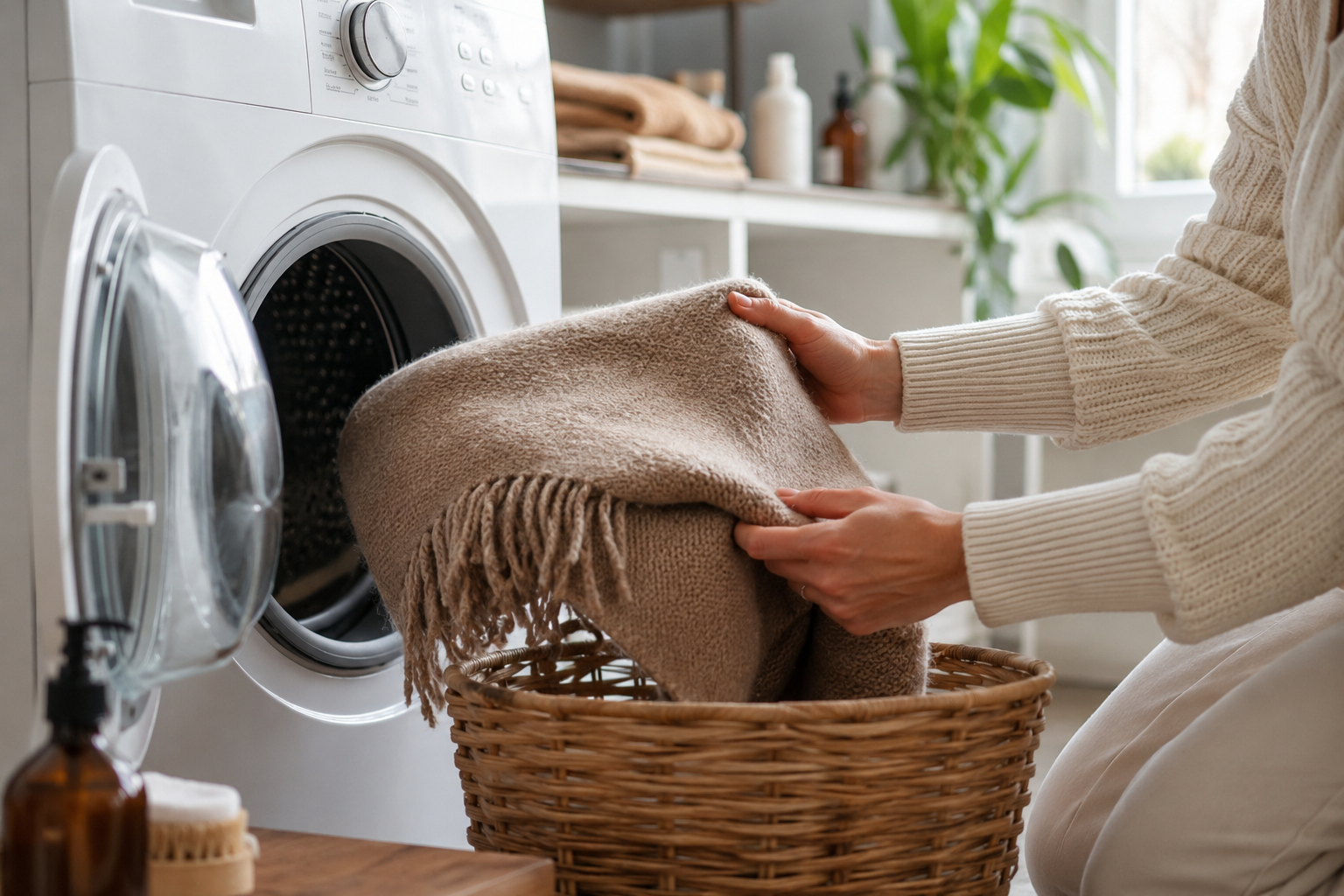
Before washing a wool blanket, read its care label. If it says dry clean only, do not put it in water or a washing machine. If it says hand wash, use cool or lukewarm water, wool-safe detergent, and almost no agitation. A blanket labeled machine washable can usually be washed separately in cold water on a wool or gentle cycle and then air-dried.
The care label matters more than generic internet advice. Some wool blankets receive a shrink-resistant treatment and can tolerate machine washing, while traditional, vintage, felted, lined, fringed, or loosely woven blankets may shrink, stiffen, stretch, or lose their finish when wet. Pendleton, for example, allows machine washing for its designated washable wool line but recommends professional dry cleaning for many traditional blankets. (Pendleton)
Choose the Correct Cleaning Method First
| Care label or blanket condition | Safest cleaning method |
|---|---|
| Machine washable | Cold water, wool or gentle cycle, wool-safe detergent |
| Hand wash | Cool or lukewarm water with minimal movement |
| Dry clean only | Take it to a professional cleaner |
| Do not wash | Do not use water; follow the manufacturer’s instructions |
| No label, modern blanket | Contact the manufacturer when possible |
| No label, vintage or valuable blanket | Use a cleaner experienced with wool textiles |
| Small fresh stain | Spot clean before considering a full wash |
| Light dust or odor | Air and brush the blanket instead of washing |
The FTC explains that a dry clean only label warns that washing can damage the item. Woolmark also advises following the exact care symbols because some wool is machine washable, some is hand washable, and some should not receive wet cleaning at all. (Woolmark)
Do You Need to Wash the Whole Blanket?
Wool usually needs less frequent washing than cotton or synthetic bedding. Light dust, mild odors, wrinkles, and loose surface dirt can often be handled without soaking the blanket.
Try these lower-risk methods first:
- Take the blanket outside and shake it gently.
- Air it in a shaded, well-ventilated place.
- Lay it flat and brush in one direction with a soft garment brush.
- Blot small spills before they spread.
- Wash the blanket only when airing and spot treatment are no longer enough.
Woolmark recommends airing, brushing, and spot cleaning before full washing. Pendleton also advises airing and brushing traditional blankets because repeated cleaning is usually unnecessary. (Woolmark)
What You Need
Prepare the following before beginning:
- A clean bathtub, large sink, or washing machine
- Mild detergent made for wool or delicate fibers
- Clean white towels
- A flat drying surface or sturdy drying rack
- A soft white cloth for spot treatment
- A clean sheet or mesh drying screen if needed
- Enough space to support the blanket while wet
Use a detergent specifically approved for wool when possible. Wool detergents are formulated for delicate animal fibers and can be used for hand washing or approved machine-washable wool products. Avoid bleach, fabric softener, heavy-duty alkaline detergents, and stain removers that are not approved for wool. (Woolmark)
Test for Color Transfer
Before wetting the entire blanket, test a hidden corner.
- Dampen a clean white cloth with cool water.
- Press it gently against an inconspicuous area.
- Check whether dye transfers to the cloth.
- Stop if the color runs noticeably.
Color transfer does not always mean the blanket cannot be cleaned, but it raises the risk of fading, bleeding, or uneven results. A valuable, patterned, vintage, or handmade blanket should be assessed by a professional cleaner when its dyes appear unstable.
How to Spot Clean a Wool Blanket
Spot cleaning is suitable for a small spill when the rest of the blanket remains clean.
Step 1: Blot the spill
Use a dry, absorbent white cloth to lift as much liquid as possible. Work from the outside of the spot toward the center.
Do not scrub. Rubbing can spread the stain, roughen the surface, or encourage the wool fibers to interlock.
Step 2: Prepare a mild cleaning solution
Mix a small amount of wool-safe detergent with cool or lukewarm water. Apply the solution to the cloth rather than pouring detergent directly onto the blanket.
Step 3: Blot gently
Press the damp cloth against the affected area. Lift and repeat instead of rubbing back and forth.
Step 4: Remove detergent residue
Use another cloth lightly dampened with clean water to blot away the remaining solution.
Step 5: Air-dry the area
Lay the blanket flat and allow the spot to dry completely before folding or using it.
Woolmark advises blotting liquid stains with water and mild detergent rather than scrubbing the fabric. Faribault Mill similarly recommends treating spots with cold water and a mild wool-approved cleaner before attempting a complete wash. (Woolmark)
How to Hand-Wash a Wool Blanket
Use this method only when the care label permits hand washing or the manufacturer confirms that wet cleaning is safe.
1. Clean the tub or basin
Remove any traces of bleach, bathroom cleaner, soap, or other laundry products. Residue can discolor or weaken wool.
2. Add cool or lukewarm water
Fill the tub with enough water to submerge the blanket. Keep the temperature steady throughout the wash and rinse.
Sudden temperature changes, heat, and agitation increase the risk of shrinkage and felting.
3. Dissolve the detergent
Add the recommended amount of wool-safe detergent to the water before putting in the blanket. More detergent does not produce a safer or cleaner result.
4. Lower the blanket into the water
Support its weight with both hands and press it gently beneath the surface. Do not drop it into the tub or bunch it into a tight ball.
5. Let it soak briefly
Allow the blanket to sit without vigorous movement. Gently press water through heavily soiled areas if necessary.
Do not rub, scrub, stretch, twist, or wring it. Woolmark’s hand-wash guidance recommends careful movement and pressing out water rather than pulling or wringing the fabric. (Woolmark)
6. Drain the water
Support the blanket as the tub drains. A fully wet wool blanket can be heavy enough to stretch under its own weight.
7. Rinse carefully
Refill the tub with water at approximately the same temperature. Press the water gently through the blanket.
Repeat only when necessary to remove visible detergent. Avoid repeatedly lifting and dropping the wet blanket.
8. Remove excess water
Press the blanket against the bottom of the tub without twisting it. Slide both hands underneath and lift it as one supported bundle.
Place it on clean towels, roll the towels around it, and press gently to absorb moisture.
How to Machine-Wash a Wool Blanket
Machine washing is appropriate only when the blanket’s label specifically allows it.
1. Inspect the machine
Make sure no bleach, fabric softener, or ordinary detergent remains in the dispenser. Check the drum for sharp edges or objects that could catch the weave.
A front-loading washer is generally gentler because it does not use a central agitator. Faribault recommends cold water, a gentle cycle, separate washing, and a wool-friendly cleaning product for its washable blankets. (Faribault Mill)
2. Wash the blanket separately
Do not combine it with towels, jeans, sheets, or clothing. Other items create friction, transfer lint, and may prevent the blanket from moving evenly.
3. Select the wool or delicate cycle
Use:
- Cold water
- Wool, hand-wash, or gentle cycle
- Low mechanical action
- Low spin speed when adjustable
A standard cycle can create too much rubbing and movement.
4. Add wool-safe detergent
Measure according to the detergent label and machine size. Do not use bleach or fabric softener.
5. Remove it promptly
Take the blanket out as soon as the cycle ends. Do not leave wet wool crumpled in the drum.
6. Reshape before drying
Lay it on a clean surface and gently return the corners, edges, and fringe to their natural position.
Machine-washable wool blankets are commonly washed separately in cold water on a gentle cycle, but the specific sewn-in label remains the final authority. (Pendleton)
How to Dry a Wool Blanket
Drying is often where preventable damage happens.
Lay it flat when possible
Spread the blanket on clean towels, a mesh screen, or a large drying rack. Smooth it into its original dimensions without pulling.
Turn or reposition it occasionally so both sides dry evenly.
Support the entire weight
Do not hang a soaking-wet blanket from one edge. The water weight can stretch the weave and distort the shape.
When line drying is permitted, distribute the blanket broadly across several lines or over a wide rail. Rotate it periodically to prevent one area from carrying the full weight.
Keep it away from strong heat
Avoid:
- Radiators
- Space heaters
- Hair dryers
- Hot direct sunlight
- High-temperature tumble drying
Woolmark advises drying wool blankets away from direct sunlight and avoiding the dryer unless the specific care label permits it. Some specially treated washable products may allow low tumble drying, so follow the label rather than assuming every wool blanket needs the same method. (Woolmark)
Do not fold or store the blanket until every section is fully dry. Trapped moisture can create musty odors and mildew.
Can You Put a Wool Blanket in the Dryer?
Only when the care label clearly says tumble drying is allowed.
Many wool blankets should not enter a dryer because heat and tumbling can cause shrinkage, felting, surface changes, and loss of shape. A blanket labeled do not tumble dry must be air-dried.
Some shrink-resistant wool products have special care instructions that permit low-temperature drying. Follow the exact manufacturer setting and remove the blanket promptly. (Woolmark)
What Causes Wool Blankets to Shrink?
Wool shrinkage is commonly associated with a combination of:
- Heat
- Friction
- Strong agitation
- Sudden water-temperature changes
- Aggressive wringing
- Hot tumble drying
- An unsuitable wash cycle
The surface of wool fibers contains overlapping scales. Moisture, heat, and movement can cause those fibers to catch and lock together, producing a denser, smaller fabric known as felt.
Once a blanket has severely felted, restoring its original size and texture may not be possible. This is why a gentle wash cannot be considered safe when the label says dry clean only.
How to Remove Common Wool-Blanket Stains
Food or drink
Blot liquids immediately. Use diluted wool detergent and avoid spreading the stain outward.
Mud
Let wet mud dry before brushing away loose particles. Treat the remaining mark with a damp cloth and wool-safe cleaner.
Grease
Blot without rubbing. Grease can be difficult to remove from wool without leaving a ring, so a professional cleaner is safer for large or valuable blankets.
Pet accidents
Blot quickly and follow the manufacturer’s cleaning instructions. Avoid chlorine bleach and strongly alkaline odor products. When contamination has soaked deeply into a dry-clean-only or valuable blanket, consult a professional cleaner.
Blood
Use cool water rather than hot water. Test any cleaning product on a hidden area and avoid scrubbing.
Do not combine stain removers or use a product simply because it is labeled “natural.” The relevant question is whether it is safe for wool and the blanket’s dyes.
Mistakes That Can Ruin a Wool Blanket
Avoid these common errors:
- Washing without reading the care label
- Assuming all 100% wool blankets are washable
- Using hot water
- Selecting a normal or heavy-duty cycle
- Using chlorine bleach
- Adding fabric softener
- Scrubbing stains
- Wringing the wet blanket
- Hanging it unsupported from one corner
- Placing it in a hot dryer
- Drying it against a radiator
- Storing it before it is completely dry
- Washing a valuable vintage blanket as an experiment
A missing label is not permission to machine wash. Pendleton recommends professional cleaning for inherited and vintage wool blankets when no care information is available. (Pendleton)
How Often Should You Wash a Wool Blanket?
Wash it only when airing, brushing, and spot treatment are no longer enough.
A blanket used over a top sheet or duvet may need full cleaning far less often than one used directly against the skin, around pets, or outdoors. Storage conditions, spills, smoke, humidity, and household allergies can also affect the schedule.
Reducing unnecessary full washes lowers the risk of fiber damage and saves water. Headlinza’s guide to reducing wastewater at home covers broader ways to limit avoidable household water use. The article is related to water-saving habits, although its main focus is fixtures and reusable household products rather than textile care. (HEADLINZA)
How to Store a Wool Blanket
Clean and fully dry the blanket before long-term storage.
Fold it loosely and place it in a clean, airtight container or sealed storage bag. Keep the container in a cool, dry, dark area.
Wool moth larvae are attracted to undisturbed wool, especially when it contains food residue, body oils, or other organic material. Regular airing, brushing, cleaning before storage, and sealed containers provide stronger protection than relying only on cedar fragrance. (Pendleton)
Inspect stored blankets periodically for:
- Small holes
- Loose fibers
- Webbing
- Larvae
- Musty odors
- Moisture
- Staining
Refold the blanket along different lines occasionally to prevent permanent creases.
Frequently Asked Questions
Can I wash a wool blanket in a washing machine?
Yes, but only when its care label says it is machine washable. Use cold water, a wool or gentle cycle, wool-safe detergent, and the drying method listed on the label. (Pendleton)
What detergent should I use for a wool blanket?
Use a mild detergent made or approved for wool. Avoid chlorine bleach, fabric softener, and strongly alkaline detergents. (Woolmark)
Can I use Woolite on a wool blanket?
Use it only when the product label states that it is suitable for wool and the blanket’s care instructions permit washing. Product formulas can change, so check the current detergent label instead of relying only on the brand name.
Can I wash a dry-clean-only wool blanket by hand?
Doing so creates a meaningful risk of shrinking, felting, color loss, or texture damage. A dry-clean-only instruction indicates that wet washing is not considered safe for the item. (Federal Trade Commission)
Can I hang a wool blanket to dry?
You can line-dry a washable blanket when its label permits it, but support and distribute the wet weight. Laying it flat is safer when hanging could stretch the weave.
How do I wash a wool blanket with no care label?
Contact the manufacturer when the blanket is identifiable. For vintage, valuable, handmade, lined, or unknown wool blankets, use a professional cleaner experienced with wool.
Can a shrunken wool blanket be restored?
Minor distortion may improve with gentle damp reshaping, but severe felting is usually permanent. Avoid aggressive stretching, which can tear or deform the wet fabric.
Final Takeaway
The safest way to wash a wool blanket is to let its care label choose the method.
Machine-wash only a blanket marked as washable. Use cold water, wool-safe detergent, a gentle cycle, and careful air drying unless the manufacturer specifically permits tumble drying.
Hand-wash only when wet cleaning is allowed, and avoid rubbing, twisting, wringing, or sudden temperature changes. A dry-clean-only, vintage, valuable, or unlabeled blanket should go to a professional rather than becoming a home-washing experiment.
For most wool blankets, airing, brushing, and prompt spot cleaning will delay the need for a full wash and preserve the original size, texture, and finish.
Browse more household-care and practical living guides in Headlinza’s Lifestyle section. (HEADLINZA)