
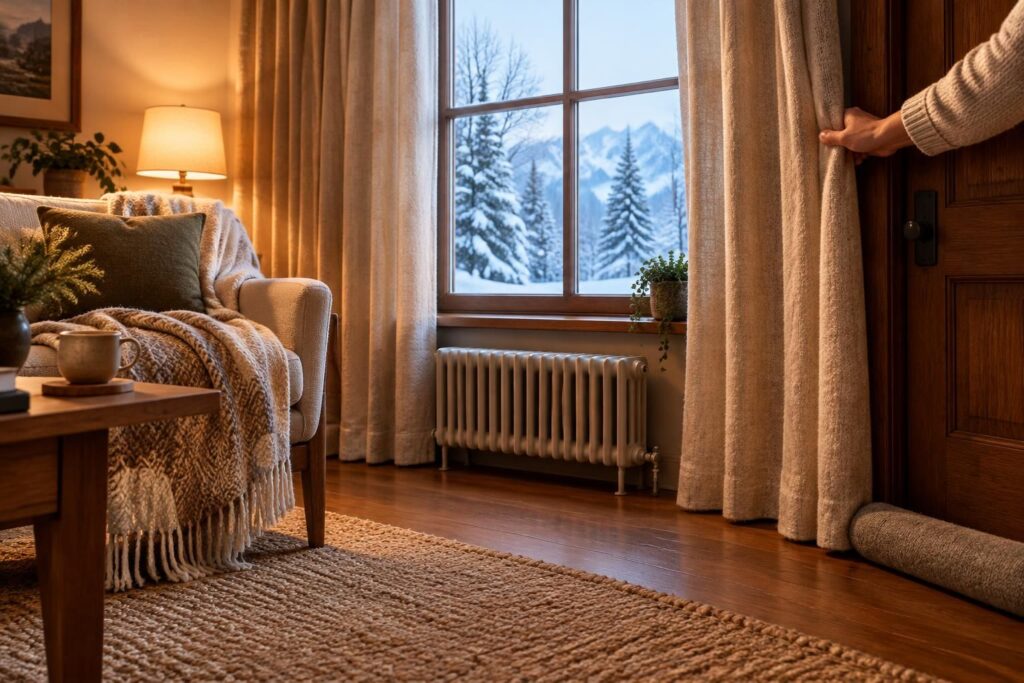

To keep your house warm without raising the bill, stop heat from escaping before you add more of it. Seal drafts around doors and windows, close curtains at night and open them on sunny days, set the thermostat around 68°F while you’re awake, and lower it when you sleep. Then warm the room you’re actually using, not the whole house.
Most of these fixes cost little or nothing. Here’s what works, in the order that usually pays off fastest.
Key Takeaways
- The U.S. Department of Energy says turning your thermostat back 7°F to 10°F for 8 hours a day can save up to 10% a year on heating and cooling.
- Drafts around doors, windows and outlets are the cheapest heat loss to fix, often with a few dollars of weatherstripping.
- Curtains work both ways: closed at night to hold heat, open on sunny days to let it in.
- Space heaters should sit at least three feet from anything that can burn and plug straight into a wall outlet.
Find and Seal the Drafts First
Warm air leaks out through gaps, and cold air rushes in to replace it. Before buying anything, find the leaks. On a windy day, hold a lit incense stick or a strip of tissue near door frames, window edges, outlets on outside walls and the attic hatch. If the smoke or tissue moves, you’ve found a draft.
- Doors: add a door sweep or a fabric draft stopper along the bottom, and replace worn weatherstripping around the frame.
- Windows: use removable caulk or rope caulk on old frames, or a clear shrink-film window kit for single-pane glass.
- Outlets and switches: foam gaskets behind the cover plates on exterior walls are cheap and take minutes.
- Attic hatch: glue foam weatherstripping around the edge and add a layer of insulation on top.
Use the Thermostat Smarter
The Department of Energy recommends around 68°F to 70°F while you’re awake and a cooler setting while you sleep or are away. Its guidance says a setback of 7°F to 10°F for 8 hours a day can save as much as 10% a year on heating and cooling.
Here’s what that looks like in practice. Say you keep the house at 69°F in the evening, drop it to 61°F from 11 p.m. to 7 a.m., and let a programmable or smart thermostat warm it back up before you wake. You sleep under a heavier blanket and barely notice the difference. One caution: households with babies, older adults or anyone with health issues may need a warmer setting, so adjust for the people at home.
Let the Sun In and Keep the Heat In
Windows lose a lot of heat at night, but south-facing windows also collect free warmth during the day. Open curtains and blinds when the sun hits them, then close them at dusk. Heavy or thermal-lined curtains make a noticeable difference, especially on older windows. If you’re shopping for decor anyway, our guide to washing a wool blanket covers how to care for one of the warmest throws you can keep on the sofa.
Help Your Heating System Work Better
- Change the furnace filter. A clogged filter makes the system work harder. Check it monthly in winter.
- Clear the vents. Move furniture, rugs and long curtains away from heat registers and radiators.
- Reverse ceiling fans. Set them to spin clockwise on low to push warm air near the ceiling back down.
- Bleed radiators. If you have hot-water radiators that are cold at the top, release trapped air with a radiator key.
- Book a tune-up. An annual service catches problems early and keeps the system running efficiently.
If your lights dim when the heat pump or furnace kicks on, that’s worth checking separately. Our article on lights that flicker when the AC turns on explains when that’s normal and when to call an electrician.
Heat the Room, Not the House
If you spend evenings in one room, warming just that space can be cheaper than heating everything. Close doors to unused rooms (but don’t shut off vents completely if your system’s installer advises against it). Use a space heater in the room you’re in, and turn it off when you leave.
Follow basic safety rules. The U.S. Fire Administration says to keep space heaters at least three feet from things that can burn, set them on a firm, level surface, and plug them directly into a wall outlet rather than an extension cord or power strip. Choose a model with tip-over and overheat shutoff, and never leave one running while you sleep.
Warm Yourself, Too
It’s easier to feel comfortable at 66°F than you’d think. Wear a thermal base layer and wool socks, use a heated blanket or mattress pad on the bed, and keep a throw on the couch. A warm drink and a draft-free seat away from windows help more than another degree on the thermostat. And for dry winter air, a humidifier can make a room feel warmer. Our pick of the best humidifiers for large rooms covers what size you need.
Bigger Upgrades Worth Considering
Once the cheap fixes are done, longer-term improvements can cut heating costs further. Adding attic insulation, sealing ductwork, replacing very old single-pane windows and upgrading to a heat pump all carry upfront costs. Check with your utility, since many offer free or discounted home energy audits and rebates that show which upgrades pay back fastest.
How to Keep Your House Warm This Winter: Where to Start
Start this weekend with the free and cheap fixes: find drafts, add door sweeps and weatherstripping, and set a nightly thermostat setback. Use curtains with the sun, change the furnace filter, and heat the room you’re in. These steps show you how to keep your house warm without paying for heat that leaks straight outside. Then look at insulation or an energy audit if bills are still high.
Frequently Asked Questions
What temperature should I keep my house in winter?
The Department of Energy suggests about 68°F to 70°F while you’re awake and a lower setting when you’re asleep or away. Homes with infants, older adults or people with certain health conditions may need it warmer. Find the lowest setting that still feels comfortable with warm clothing.
Is it cheaper to keep the heat on low all day?
Usually no. A house loses heat faster when it’s warmer inside, so lowering the temperature while you’re out or asleep saves energy overall. The DOE says a regular 7°F to 10°F setback can save up to 10% a year. Heat pumps may need smaller setbacks, so check your system’s guidance.
Do space heaters save money?
They can, if you use one to heat a single room while keeping the rest of the house cooler. They cost more than central heat if you run several at once. Always follow safety rules: three feet of clearance, a wall outlet, and off when you leave or sleep.
How can I keep my house warm without heating?
Seal drafts, close curtains at night, open them on sunny days, and close doors to unused rooms to trap warmth. Layer rugs on bare floors, wear thermal clothing and use extra blankets. These steps won’t replace heating in freezing weather, but they make a real difference on mild days.
Headlinza writes practical guides on home improvement and everyday living.