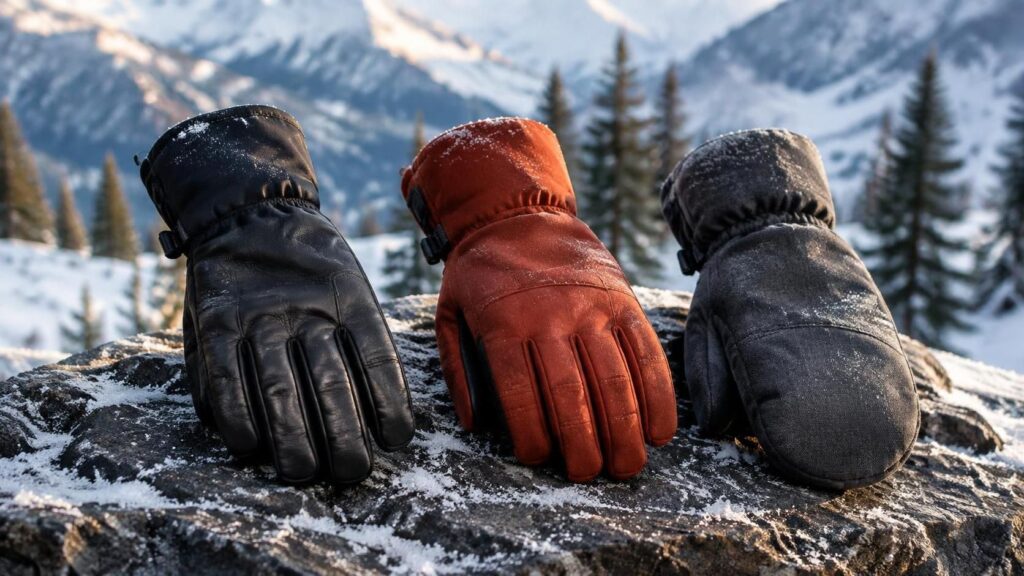

The best snowboarding gloves keep your hands warm and dry while still letting you work bindings and zippers. For most riders, a waterproof mitten or a 3-in-1 system is the smartest buy: the Burton GORE-TEX Mitten (about $85) covers most conditions, the Hestra Fall Line Mitt (about $190) is a comfortable leather upgrade, and the Give’r Expedition Split Mitt is the pick for brutal cold.
Below, you’ll find how mittens, gloves and lobster styles compare, which picks suit which rider, and how to make any pair last longer.
Key Takeaways
- Mittens are warmer than gloves because your fingers share heat. Gloves give more dexterity for spring days and phone use.
- A waterproof membrane such as GORE-TEX matters most for beginners, who spend more time with their hands in the snow.
- Snowboard gloves need tougher palms than ski gloves, since you grab the board and push off the snow.
- Most riders end up with two pairs: a warm mitten for cold days and a thin glove for warm ones.
How We Picked These Snowboarding Gloves
We didn’t test these ourselves. Instead, we leaned on hands-on results from Treeline Review’s 2026 snowboard glove testing, which rated each pair for warmth and dexterity, and we compared materials and features. Prices are list prices as of November 2026 and change often during the season.
Quick Comparison
| Pick | Type | Waterproofing | List price | Best for |
|---|---|---|---|---|
| Burton GORE-TEX Mitten | 3-in-1 mitten with liner gloves | GORE-TEX | $85 | Most riders, changing weather |
| Hestra Fall Line Mitt | Leather mitten | Water resistant leather | $190 | Comfort and long-term durability |
| Hestra Topo 3-Finger | Lobster (split finger) | Leather, not waterproof | $190 | Warmth with one free finger |
| Give’r Expedition Split Mitt | Split mitten | GORE-TEX | $180 | Extreme cold |
| evo Silver Fir Mittens | Synthetic mitten | Waterproof membrane | $55 | Budget buyers |
| Burton Park Glove | Thin glove | Waterproof 2-layer shell | $53 | Spring riding and park laps |
The Best Snowboarding Gloves and Mittens
Burton GORE-TEX Mitten: Best for Most Riders
This is a three-piece system: a GORE-TEX outer mitten plus a pair of thin liner gloves. Wear the liners alone on mild days, the mitten alone when it’s cold, or both when it’s freezing. Treeline’s testers liked the flexibility and noted the liners work with touchscreens. The trade-off is that loose liners are easy to lose in a lodge.
Choose it if: you ride in mixed weather and want one purchase that covers most days.
Hestra Fall Line Mitt: Best Leather Mitten
Hestra’s leather mitts have a loyal following for good reason. Treeline rated the Fall Line the most comfortable mitten it tested, with soft leather from day one and a removable liner that dries quickly. It isn’t waterproof out of the box. Instead, you treat the leather with Hestra’s balm to keep water out, and that needs repeating every few months.
Choose it if: you want a pair that lasts several seasons and you don’t mind basic leather care.
Hestra Topo 3-Finger: Best Lobster Style
Lobster mittens split your index finger from the rest, so you get most of a mitten’s warmth with better grip on straps and zippers. Treeline found the Topo warmer than many regular gloves. Like other Hestra leather models, it relies on treatment rather than a waterproof membrane.
Choose it if: mittens feel too clumsy but gloves leave your fingers cold.
Give’r Expedition Split Mitt: Best for Extreme Cold
This was the warmest pair in Treeline’s test, rated by the brand for -40°F. It combines a heat-reflective layer, Thinsulate and fleece with a GORE-TEX membrane. Dexterity is the price you pay, and it needs some break-in time.
Choose it if: you ride in the northern Rockies, New England or Canada in midwinter, or your hands always run cold.
evo Silver Fir Mittens: Best Budget Pick
At around $55, these synthetic mittens use PrimaLoft Gold insulation and a waterproof breathable membrane. They’re light and easy to care for. They aren’t the warmest, so add a liner glove on very cold days.
Choose it if: you ride a few days a season and want something dry and affordable.
Burton Park Glove: Best for Spring and Park
This thin, uninsulated glove gave testers full dexterity and stayed dry in rain thanks to its waterproof shell. It’s great for warm spring days and park laps. It’s the wrong choice for powder days or anything near zero.
Choose it if: you need a second pair for warm days or you ride mostly in the terrain park.
How to Choose Snowboarding Gloves
Mittens, gloves or lobster?
Mittens keep fingers together, so they stay warmer. Gloves let you adjust bindings and use your phone more easily. Lobster styles sit in between. If you only buy one pair, a mitten or 3-in-1 system is the safer bet for most of the season.
Waterproofing and insulation
Beginners fall more and sit on the snow while strapping in, so a waterproof membrane matters. Experienced riders on sunny days may prefer a breathable, water-resistant pair that doesn’t sweat out. For insulation, synthetic fills like PrimaLoft stay warm when damp, while leather mitts rely on a good liner.
Cuffs, palms and fit
Long gauntlet cuffs go over your jacket sleeve and seal out snow best. Shorter cuffs tuck under your sleeve and are quicker to put on. Check for reinforced palms, because grabbing the board’s edge wears gloves out fast. Fit should be snug but not tight, since squeezed fingers lose circulation and get cold sooner.
Pair them with the rest of your kit
Gloves are only one part of staying warm. A wrist leash keeps them from falling off the lift, and warm boots and layers matter just as much. Skiers shopping for similar gear can compare with our guide to warm ski mittens, which covers pole-friendly options.
How to Care for Snowboard Gloves
- Dry them fully after every day, liners out, away from direct heaters or fires that can crack leather and damage membranes.
- Treat leather every few months with the maker’s recommended balm or wax.
- Wash synthetic gloves gently by hand when they start to smell, then air dry.
- Store them clean and dry over summer, not balled up in a damp gear bag.
Which Snowboarding Gloves Should You Buy?
If you want one pair, get the Burton GORE-TEX Mitten for its mix of warmth, waterproofing and flexible liners. Step up to the Hestra Fall Line if you ride a lot and want leather that lasts, or the Give’r Expedition if cold is your main enemy. Then add a thin pair like the Burton Park Glove for spring. The right snowboarding gloves are the ones that match the coldest days you actually ride.
Frequently Asked Questions
Are mittens or gloves better for snowboarding?
Mittens are better for most snowboarders because they’re warmer and snowboarding doesn’t need fine finger control like holding ski poles. Gloves make more sense on warm days, in the terrain park or if you often use your phone. Many riders own one of each.
Can I use ski gloves for snowboarding?
Yes, ski gloves work for snowboarding, but snowboard-specific pairs often have tougher palms and more padding. Snowboarders touch the snow and grab the board edge more often, which wears palms quickly. If you use ski gloves, choose a pair with reinforced leather palms.
How much should I spend on snowboard gloves?
Expect about $50 to $90 for a solid waterproof pair and around $150 to $200 for premium leather or extreme-cold mittens. Spending more usually buys better warmth, durability and repairability. Beginners who ride a few days a year can do well in the $50 to $90 range.
Why do my hands still get cold in good gloves?
Cold hands often come from tight gloves, damp liners or a cold core. Make sure the fit isn’t squeezing your fingers, dry your gloves completely each night, and add a warmer mid-layer. Hand warmers inside a mitten also help on the coldest days.
Headlinza writes practical guides on sports gear and outdoor activities.