
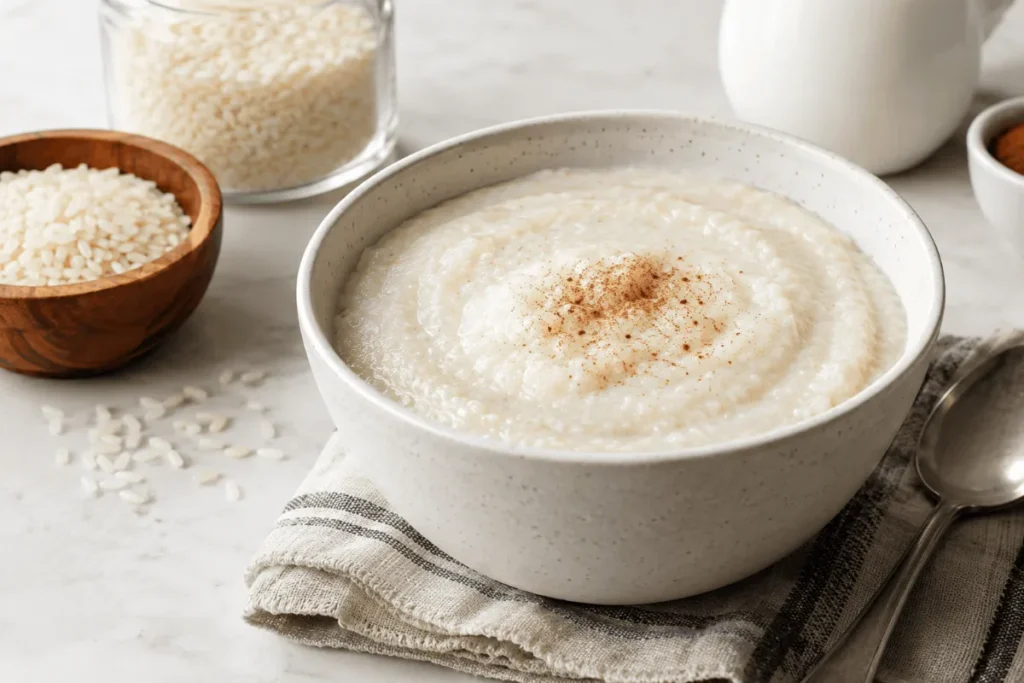

Cream of Rice. It’s a hot cereal made from granulated rice, the grain ground fine enough to cook into a creamy porridge. The best-known version is the B&G Foods product sold in a 14-ounce box, and you can see the company’s range on the B&G Foods site. It’s labeled gluten-free and kosher, and the ingredient list is short: granulated rice plus added calcium carbonate, iron, B vitamins, folic acid, and vitamin D3.
If you’ve eaten congee, the savory rice porridge popular across Asia, the texture is related, though cream of rice is much smoother because the grain is milled instead of cooked whole. And it’s built from rice, the same staple that feeds a huge share of the world, only processed for speed.
What tends to surprise people is how neutral it tastes. That’s the point. It’s a blank canvas, and you decide whether it ends up sweet, savory, or somewhere in between.
Nutrition: What You’re Getting
One serving is a quarter cup of dry cereal, about 45 grams, and the label lists roughly 150 calories. Nutrition databases show about 35 grams of carbohydrate, 2 grams of protein, and zero fat, sugar and sodium when it’s prepared plain. A 14-ounce box holds about nine servings.
That profile tells you what it’s good for. It’s a clean, fast-digesting carbohydrate with very little fiber, protein or fat. Those qualities make it easy on the stomach, but they also mean it won’t keep you full for long unless you build it into a bigger meal.
For exact numbers on any brand or flavor, check the package or the USDA FoodData Central database, since formulations change.
In my experience, people who treat it like oatmeal get disappointed by the hunger two hours later. People who treat it like a base for protein and toppings tend to love it.
How to Cook Cream of Rice
The box directions are simple, and I’d follow them as a starting point. For stovetop, bring 1 cup of water to a boil with an optional pinch of salt, then gradually add 1/4 cup of cereal while whisking constantly until smooth. For the microwave, stir together 1/4 cup of cereal, 1 cup cold water, and a dash of salt in a large microwaveable bowl and heat it, stirring partway through.
A step-by-step version for the stovetop:
- Bring the water to a boil in a small saucepan.
- Lower the heat and slowly sprinkle in the cereal while whisking.
- Keep whisking for a minute or two until it thickens.
- Remove from heat, let it sit briefly, and stir again before serving.
Use a deep bowl in the microwave, because overheating makes it boil over. The box warns about this, and I’d listen. Stir midway and watch it closely.
Getting the Texture Right
Lumps are the main complaint, and they come from dumping the cereal into hot water all at once. Sprinkle it slowly and whisk the whole time, or start with cold water and heat it gradually.
If it’s too thick, whisk in a splash of hot water or milk. If it’s too thin, cook it another minute or add a spoonful more of dry cereal. Remember that it thickens as it cools, so slightly runny is usually right.
Cooking it in milk instead of water gives a richer, creamier result. Just stir often, since milk scorches easily.
Flavor Ideas Beyond Brown Sugar
Sweet versions are the classic. Try cinnamon with sliced banana, peanut butter and jam, honey with berries, or a spoonful of cocoa and a little maple syrup. Stirring in an egg white while it cooks is a trick lifters use to add protein without changing the flavor much.
Savory versions work better than you’d expect. Treat it like grits or congee: a pat of butter and salt, a soft egg on top, sautéed greens, or a drizzle of soy sauce with scallions. A bowl of cream of rice with chicken broth and ginger is a comforting sick-day meal.
I lean toward savory when I want something filling, since the extra protein and fat make a real difference.
Why Athletes and Lifters Like It
Cream of rice has a following among people who train hard. It’s a quick-digesting, low-fiber carb that many find easy on the stomach before a workout, and it pairs well with whey protein stirred in after cooking. Mixing in protein powder while the cereal is still boiling can clump, so let it cool slightly first.
It isn’t magic. It’s a carbohydrate source like any other, and whether it suits you depends on your goals and digestion. If you’re managing a medical condition or a specific diet, talk to a registered dietitian before building a plan around it.
Is It Gentle on the Stomach?
The brand itself notes that it’s easy to digest and has been recommended by some doctors as a first solid food for babies. That’s why it shows up on lists of bland foods for upset stomachs, along with plain toast and bananas.
If you’re recovering from a stomach bug, a small bowl made with water and a pinch of salt is a reasonable thing to try. Go slowly and stop if it doesn’t sit well. For ongoing digestive problems, get medical advice instead of leaning on bland foods indefinitely.
A Note on Babies and Rice
Rice cereal has long been a common first food for infants, but rice can contain higher levels of inorganic arsenic than some other grains. U.S. health agencies suggest offering babies a variety of grains and not relying on rice alone. The FDA’s food safety information is a good place to read the current guidance, and your pediatrician can tell you what’s right for your child.
For adults, the same principle applies on a smaller scale. Eating rice as part of a varied diet is considered fine, so don’t make it your only grain.
Is It Really Gluten-Free?
The package states that it’s gluten-free, which makes it a popular pick for people avoiding gluten. If you have celiac disease or a serious sensitivity, check the current label and the manufacturer’s statements on cross-contact, since manufacturing practices and labeling can change. Don’t assume that every rice product is safe.
Cream of Rice vs. Other Hot Cereals
Oatmeal has more fiber and protein and keeps you full longer, but it contains oats, which some gluten-sensitive people avoid unless certified. Cream of Wheat is similar in texture but made from wheat, so it isn’t gluten-free. Grits are coarser and corn-based, with a more distinct flavor.
Cream of rice wins on smoothness and mildness. It loses on fiber and staying power. I’d call it a base, not a complete breakfast.
Storage and Mistakes to Avoid
Keep the box sealed in a cool, dry pantry. Reseal the bag after opening, and use it within the time listed on the package.
The common mistakes are using too little water, skipping the whisk, walking away from the microwave and eating it plain, then feeling hungry an hour later. Add a protein or fat source and it becomes a proper meal.
Prices and availability change by store, so compare current listings if you buy it regularly.