







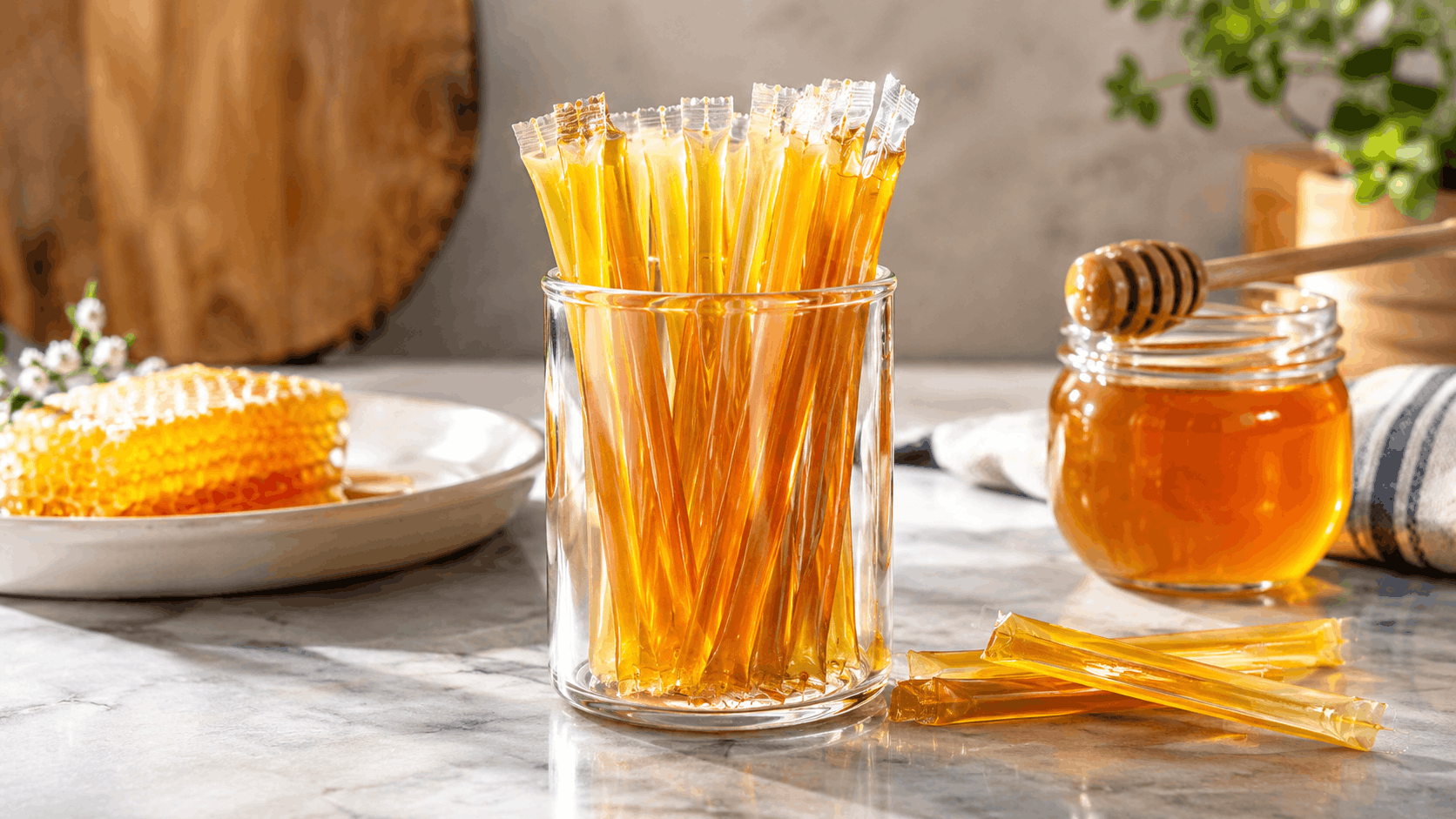
Honey Sticks Explained: What They Are and How to Use Them
Honey Sticks Explained: The process is pretty simple mechanically. Liquid honey gets filled into food-grade drinking straws, typically BPA-free plastic, and both ends are heat-sealed to lock the honey inside without air exposure. Since honey has natural antimicrobial properties and very low water content, it doesn’t need refrigeration once it’s sealed, which is a big part of why these travel so well in a lunchbox, gym bag, or glove compartment.
Each stick usually holds somewhere around 5 grams of honey, roughly a teaspoon, and runs about 6 to 7 inches long. Most commercial versions come in bulk packs of 50 or 100, which makes sense given how small a single serving actually is.
Plain Versus Flavored: What You’re Actually Getting
This is where it’s worth paying attention to the label. A plain clover honey stick typically contains nothing but honey, no additives, no coloring. Flavored versions — the strawberry, watermelon, cinnamon, and habanero varieties you’ll see at fairs and specialty shops — are usually made from a base honey with natural or artificial flavorings and sometimes food coloring added.
That doesn’t make flavored sticks bad, and plenty of people enjoy them purely as a fun novelty treat. But if you’re buying honey sticks specifically because you want the actual character and complexity of raw honey, a single-origin plain stick, made from a specific floral source like clover, wildflower, or orange blossom, is going to give you a more genuine sense of what that particular honey tastes like. A heavily flavored stick is closer to a honey-based candy than a way to taste honey itself.
Nutritional Basics
A single stick is a small serving, and the numbers reflect that. Based on typical commercial listings, one stick with about 5 grams of honey runs somewhere around 15 to 20 calories, all from natural sugars, mostly fructose and glucose. There’s no fat and no protein to speak of, so nutritionally it behaves like any other form of sugar, just in a more portable format.
Honey does carry trace amounts of antioxidants, enzymes, and minerals depending on its floral source, and the National Honey Board and other honey industry resources note these small nutritional differences between honey varieties. That said, in a serving this small, treat any health claims about honey sticks specifically with a healthy dose of skepticism. You’re eating roughly a teaspoon of sugar in a convenient package, not a superfood supplement.
Common Ways People Actually Use Them
Sweetening tea or coffee on the go is probably the single most common use, since a stick delivers a pre-measured amount without needing a spoon or risking a spill. Squeezing one directly into your mouth as a quick snack or energy boost is another popular use, and it’s a genuinely handy option for hikers or anyone who wants a compact, shelf-stable sugar source without carrying a jar.
They also show up a lot as small gifts, stocking stuffers, and gift basket fillers, especially from local honey producers and farmers markets, since a bundle of colorful sticks photographs well and costs relatively little per unit. And in the kitchen, a stick or two works fine drizzled over yogurt, oatmeal, or ice cream when you don’t want to dig out a full honey jar for a small amount.
What to Look For When Buying
Check the ingredient list before assuming a stick is pure honey. If “honey” is the only ingredient listed, that’s a genuine single-ingredient product. If you see added sugar, corn syrup, artificial flavors, or preservatives, you’re buying a honey-flavored candy stick rather than pure honey, which isn’t necessarily a problem but is worth knowing going in.
Source matters too, if that’s something you care about. Locally produced honey sticks from a regional apiary will generally reflect a specific floral source and season, while mass-produced flavored versions are usually blended from bulk clover honey regardless of what flavor is printed on the wrapper.
And check the seal. A properly heat-sealed stick shouldn’t leak, and if you notice sticky residue on the packaging before opening, that’s a sign of a compromised seal, which can lead to crystallization or contamination over time.
Storage and Crystallization
Honey sticks don’t need refrigeration and store well at room temperature for a long time, since honey’s low moisture content naturally resists spoilage. What they can do over time, especially in cooler storage, is crystallize, turning slightly grainy or cloudy inside the straw. This is a normal property of honey, not a sign it’s gone bad.
If a stick crystallizes, warming it gently, either in a cup of hot water for a few minutes or by leaving it in a warm, sunny spot, usually reliquifies it without affecting the flavor. Avoid microwaving a sealed straw directly, since trapped steam inside a small plastic tube can build pressure.
The One Safety Rule Worth Knowing
Here’s the part that genuinely matters if you have a baby at home. Honey, in any form, including honey sticks, should never be given to a child under 12 months old. According to the CDC, honey can contain Clostridium botulinum spores that a baby’s immature digestive system isn’t yet equipped to handle, which can lead to infant botulism, a serious illness. This isn’t a concern for older kids or adults, since a more developed gut microbiome prevents the spores from causing harm past that first year. But it’s worth being specific about, since flavored honey sticks are sometimes marketed with playful, kid-friendly packaging that doesn’t make this distinction obvious. If you have both an infant and older kids in the house, keep any honey product, sticks included, well out of a baby’s reach.
Are They Worth Buying Over Regular Honey?
This comes down to convenience versus value. Ounce for ounce, honey sticks cost meaningfully more than buying honey in a jar, since you’re paying for individual packaging and portioning. If you mainly use honey at home for cooking or regular tea-sweetening, a jar is the better value every time.
Where sticks earn their premium is portability and portion control. If you travel, keep honey at your desk, or want a mess-free way to sweeten a single cup of tea without committing to a whole jar sitting around, the convenience is genuinely worth paying a bit more for. It’s the honey equivalent of buying single-serve coffee pods instead of a bag of grounds, more expensive per unit, but solving a specific problem a jar doesn’t.