




Ford Truck Finance Deals: What to Know Before You Sign
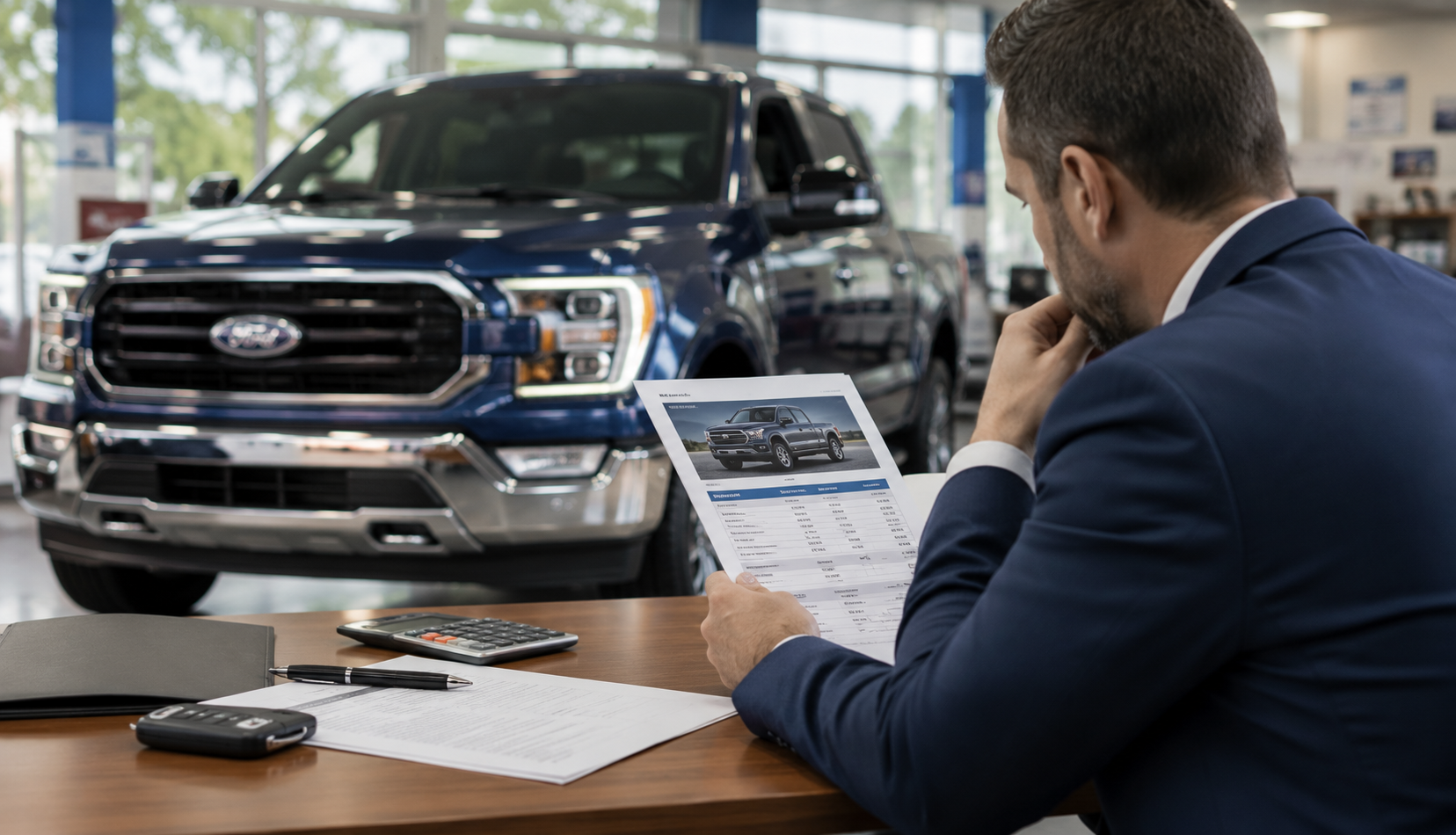
Shopping for a new F-150 or Super Duty and staring at a stack of finance paperwork is enough to make anyone’s eyes glaze over. Ford truck finance deals change month to month, they vary by region, and the number that gets advertised on a billboard is rarely the number you actually qualify for. This guide walks through how these deals typically work, what tends to trip people up, and how to figure out whether an offer in front of you is actually good or just good-looking.
How Ford Truck Finance Deals Actually Work
Most manufacturer finance offers come in one of two flavors: a low or zero percent APR through Ford Credit, or a cash rebate you can apply toward the purchase price. You almost never get both on the same vehicle. Ford (and most automakers) structure it this way because the low-APR offer costs the company money over the life of the loan, while a rebate is a one-time hit. Picking between them usually comes down to how much you’re financing and for how long.
If you’re putting a large amount down and financing a small balance over a short term, a low APR deal barely saves you anything in dollar terms. In that case, the cash rebate is often the better move, even if the interest rate on your loan ends up a bit higher. On the flip side, if you’re financing close to the full purchase price over 60 or 72 months, a 0% or near-0% APR offer can save you thousands compared to taking the rebate and financing at a standard rate.
In my experience, people default to whichever number sounds bigger on the sign, without running the actual math. It’s worth spending ten minutes with a loan calculator before you decide.
Who Qualifies for the Best Rates
The advertised rate on ford truck finance deals is almost always the “as low as” tier, reserved for buyers with strong credit, usually a score in the high 600s or above depending on the specific promotion. Dealers aren’t hiding this, but they also don’t always lead with it. If your credit is average or below, expect a higher rate than what’s on the ad, and don’t be surprised if the 0% offer simply isn’t available to you at all.
Ford Credit, like most captive lenders, also tends to restrict the very best offers to specific trims, model years, or even specific inventory sitting on a particular dealer’s lot. That’s part of why two Ford dealers twenty minutes apart can be running noticeably different promotions on what looks like the same truck.
What’s Usually Included in Current Promotions
Ford typically rotates a mix of the following across its truck lineup, F-150, Ranger, Maverick, and the Super Duty line:
- Low APR financing on select terms (36, 48, 60, or 72 months)
- Cash allowances or rebates, sometimes stacked with military, first responder, or loyalty bonuses
- Lease specials with a set monthly payment and due-at-signing amount
- Occasional bonus cash for trading in a competitor’s truck
Pricing and promotional structures shift often, sometimes monthly, so treat any specific number you read online (including in this article) as a starting point rather than a guarantee. Check Ford’s official incentives page or ask your local dealer for what’s currently running in your zip code before you get attached to a figure.
Reading the Fine Print
This is where a lot of good-sounding deals fall apart. A few things worth checking every single time:
Term length restrictions. A 0% offer is frequently only available on shorter loan terms, like 36 or 48 months. Stretch it to 72 months and the rate offer often disappears or drops to something less dramatic.
Trim and inventory limits. Some of the flashiest offers apply only to specific configurations Ford is trying to move, not the trim you actually want.
Stacking rules. Rebates sometimes can’t be combined with each other, or with the low APR offer. Loyalty cash, conquest cash, and standard incentives each have their own eligibility rules.
Down payment requirements. Some promotional rates require a minimum down payment to qualify, which isn’t always obvious from the headline number.
What tends to surprise people is how much these details vary between something as simple as a Regular Cab XL and a Lariat with the same drivetrain. Always ask the finance office to show you the specific offer that applies to the exact truck you’re signing for, in writing, before you agree to anything.
Financing Through Ford Credit vs. Your Own Bank or Credit Union
Ford Credit isn’t your only option, and it’s smart to shop it against outside lenders even if you end up going with the manufacturer offer in the end.
The advantage of Ford Credit is straightforward: promotional rates like 0% APR are only available through Ford’s captive lender, not through your local bank. If you qualify for one of these, it’s usually hard for an outside lender to beat, since a bank has to make money on the loan itself rather than on the sale of the vehicle.
The advantage of shopping outside lenders is leverage. Walking into the dealership with a pre-approved rate from your credit union gives you a real number to compare against, and it can push the dealer to match or beat it, especially on a vehicle that doesn’t qualify for the top promotional tier. Credit unions in particular tend to offer competitive rates on auto loans and are worth checking before you set foot on a lot.
The Consumer Financial Protection Bureau has a solid breakdown of how to shop and compare auto loan offers if you want a neutral, non-dealer perspective on the process.
Lease Deals vs. Buying With Financing
Ford also runs lease specials on trucks, and these get advertised right alongside the finance offers, which confuses a lot of shoppers. Leasing usually gets you a lower monthly payment and puts you in a new truck every few years, but you don’t build equity, and you’ll likely face mileage caps that don’t work well if you use your truck for work or long commutes.
Buying with financing costs more per month in most cases, but you own the truck outright once the loan is paid off, and there’s no mileage penalty. For a work truck that’s going to rack up miles hauling equipment or towing, financing is usually the more practical route. For someone who wants a new truck every three years and drives under 12,000-15,000 miles annually, leasing can make sense.
A Few Mistakes Worth Avoiding
One thing worth flagging: don’t negotiate the price and the financing terms as one combined number. Negotiate the truck’s price first, get that locked in, and only then discuss financing and any trade-in. Dealers can sometimes make a mediocre price look better by offering a slightly lower rate, or make a great rate look better while padding the purchase price. Keep the two conversations separate.
Another common misstep is focusing entirely on the monthly payment instead of the total cost. A dealer can hit almost any monthly number you want just by stretching the loan term out further, which usually means paying more in interest over time even if the rate itself looks fine. Sites like Kelley Blue Book and Edmunds publish current average transaction prices and loan terms that are useful for sanity-checking whether a deal is actually competitive.
And don’t skip getting pre-approved elsewhere just because a 0% offer looks unbeatable on paper. Sometimes it is unbeatable. But sometimes the trade-off is a higher purchase price or a shorter term than actually fits your budget, and you won’t know that until you’ve compared it against something else.
Timing Your Purchase
Ford, like other automakers, tends to push more aggressive incentives at certain points in the year, particularly toward the end of a model year when dealers need to clear out inventory ahead of the next year’s trucks arriving, and around major sales events tied to holidays. End-of-quarter and end-of-month timing can also work in your favor, since dealers and salespeople often have volume targets to hit.
That said, waiting purely for a “better” deal can backfire if truck supply is tight in your area, since limited inventory reduces a dealer’s incentive to negotiate at all, regardless of what the manufacturer is offering nationally. If you find a truck that fits what you need at a fair, verified price, it’s rarely worth gambling on a hypothetical better offer six months out.
FAQs
Are Ford truck finance deals the same at every dealership? No. The manufacturer sets regional and national offers, but individual dealers still have some flexibility on pricing, and not every dealer stocks the specific trims that qualify for the top promotional rate.
Can I combine a Ford rebate with 0% APR financing? Usually not. Most of the time it’s one or the other, though this can vary by specific promotion, so it’s worth asking directly.
Does my trade-in affect my finance rate? Not directly. A trade-in reduces the amount you need to finance, which can lower your monthly payment, but it typically doesn’t change the interest rate you’re offered.
Is it better to finance through Ford Credit or my bank? It depends on what you qualify for. If you’re eligible for a strong promotional rate through Ford Credit, it’s hard to beat. If not, comparing against your bank or credit union is worth the time.
How often do Ford’s finance offers change? Frequently, often on a monthly basis, and sometimes tied to specific sales events. Always confirm current terms through Ford’s official site or your local dealer rather than relying on older listings you find online.
Also Read: Functional Coffee: What It Is and Whether It’s Worth It