
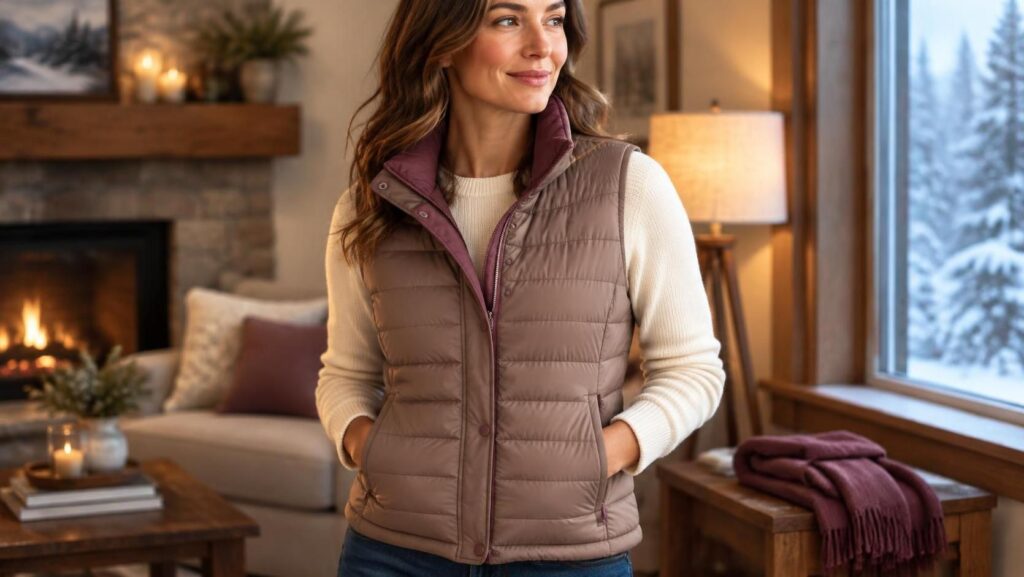

The best heated body warmer for ladies is a lightweight, battery-powered vest with heat at the collar, back and hand pockets, at least three heat settings, and a battery that lasts 8 to 10 hours on low. For everyday wear, the Ororo Women’s Classic Heated Vest is the easy pick. For deep cold, the Venustas hooded down vest adds real insulation, and the Milwaukee M12 vest suits anyone who already owns M12 tool batteries.
Below, you’ll find how these heated vests compare, what the run-time numbers really mean, and how to wash and charge one without damaging it.
Key Takeaways
- Heat zones matter more than wattage. Collar, mid-back and pocket panels keep you warmer than a single back panel.
- Advertised run times are almost always for the lowest setting. Expect roughly a third of that on high.
- Most fabric heated vests are machine washable with the battery removed, but drying rules vary by brand.
- Tool-battery vests from Milwaukee or DeWalt make sense only if you already own that battery system.
- Prices change often in winter. Check the brand’s own site before you buy.
How We Chose These Heated Vests for Women
We didn’t wear-test these vests. Instead, we compared them on the specs that decide how warm you’ll actually feel, using each manufacturer’s product page as of November 2026:
- Heat zones and placement: more panels near the core and neck mean more even warmth.
- Battery and run time: capacity, how long it lasts on each setting, and whether it can charge your phone.
- Insulation: a thin shell loses heat fast, while down or quilted fill holds it in.
- Care and warranty: washability, drying rules, and how long the heating elements and battery are covered.
Quick Comparison
| Vest | Heat zones | Battery | Run time (high / low) | Best for |
|---|---|---|---|---|
| Ororo Women’s Classic Heated Vest | 4 (collar, mid-back, 2 pockets) | 7.4V, 4,800 mAh | 3 hrs / 10 hrs | Everyday wear and layering |
| Venustas Women’s Heated Down Vest with Hood | 5 (adds lower back) | 7.2V, 5,000 mAh | 5 hrs / 12 hrs (listed) | Very cold days, standing outdoors |
| Milwaukee M12 Women’s Heated AXIS Vest | Chest and back | M12 tool battery | Up to 8 hrs on low (CP2.0 pack) | Job sites, M12 tool owners |
The Best Heated Body Warmers for Ladies
Ororo Women’s Classic Heated Vest: Best All-Rounder
This is the vest most people picture when they think of a heated body warmer. It’s slim enough to wear under a coat or over a sweater. According to Ororo’s product page, it has four carbon fiber heating panels at the collar, mid-back and both hand pockets, with high, medium and low settings.
The standard 7.4V, 4,800 mAh battery is rated for about 3 hours on high, 6 on medium and 10 on low. An optional larger battery stretches low to about 13.5 hours. As of November 2026, the vest was listed at $149.99 on sale (regular $179.99). Ororo says it’s machine washable on cold in a mesh bag, but you should line dry it and never put it in the dryer. Heating elements carry a three-year warranty and the battery a one-year warranty.
Good fit if: you want one vest for dog walks, commuting and the stands at a kid’s game.
Skip it if: you’ll stand still in deep cold for hours. It’s a light shell, so it won’t trap heat like down.
Venustas Women’s Heated Down Vest with Detachable Hood: Best for Serious Cold
If you’re out in real winter weather, insulation matters as much as the heating panels. The Venustas hooded vest pairs five heating zones (collar, both pockets, mid-back and lower back) with down fill and a removable hood.
Venustas lists three settings, from about 100°F on low to 131°F on high, plus a pre-heat mode. Its spec table gives 5 hours on high and up to 12 on low from a 5,000 mAh battery, though another part of the same page says up to 10 hours, so plan around the lower number. As of November 2026, the list price was $169.99, with an extra cart discount advertised. One caution: the page gives conflicting fill and drying details, so check the care label when it arrives and air dry it to be safe.
Good fit if: you watch outdoor sports, hunt or shovel snow often.
Skip it if: you want something thin to layer under a fitted coat.
Milwaukee M12 Women’s Heated AXIS Vest: Best for Tool-Battery Owners
This one runs on the same M12 batteries as Milwaukee’s power tools, which is handy if you already have a drawer full of them. Milwaukee’s spec page lists chest and back heat zones, three settings, and up to 8 hours on low with an M12 CP2.0 battery. The shell has a water-repellent coating and is rated wind and water resistant.
It’s also listed as washer and dryer safe, which is unusual for heated clothing and a real plus for work wear. Buying it without a battery only makes sense if you already own M12 packs. Otherwise, a kit with a battery and charger costs noticeably more, so compare prices at your local tool retailer.
Good fit if: you work outdoors or already use Milwaukee M12 tools.
Skip it if: you don’t own tool batteries and want a softer, everyday look.
What to Look for in a Women’s Heated Vest
Heat zones and where they sit
Your core and neck drive how warm you feel overall. Vests with a collar panel and pocket panels feel warmer than ones with only a back panel, even at the same setting. Hand-pocket heat is also the closest you’ll get to heated gloves without buying a second item. For truly cold hands, though, pair the vest with a good pair of warm ski mittens.
Battery capacity and real run time
Brands quote run time on the lowest setting. So a “10-hour” vest might give you three hours on high. Say you’re at a two-hour outdoor game on a 25°F night: you’ll likely run high for the first half hour, then medium. A 4,800 to 5,000 mAh battery handles that easily. For an all-day ski trip or long shift, look for a spare battery or a higher-capacity upgrade.
Fit and layering
Heat only works when the panels sit close to your body. Choose a snug fit over a thin base layer, not a baggy one. If you’re between sizes and plan to wear it over a thick sweater, size up. Otherwise, stick with your normal size.
Washing and charging
Always remove the battery and tuck the cable into its pocket before washing. Use a mesh bag and cold water, and air dry unless the brand clearly says the dryer is fine. Charge the battery with the charger or USB-C power the brand recommends. And store it partly charged over summer rather than completely flat.
Is a Heated Body Warmer Worth It?
For anyone who’s cold most of the winter, yes. Heated vests are one of the more practical kinds of tech-enabled clothing, simpler than a biometric smart shirt and useful every day. A heated vest lets you wear fewer bulky layers, and you can switch the heat off indoors. It’s less useful if you’re always active, since moving keeps you warm anyway. One safety note: if you have reduced feeling in your skin, ask your doctor before using heated clothing, because you might not notice if a panel gets too hot.
Which Heated Body Warmer for Ladies Should You Buy?
For most women, the Ororo Classic is the simplest heated body warmer to live with: slim, washable and well covered by warranty. If you spend long stretches outside in freezing weather, step up to the Venustas down vest for its extra insulation and lower-back panel. Choose the Milwaukee M12 only if you already own M12 batteries or need a tough, dryer-safe work layer. Whichever you pick, buy the battery capacity that matches the longest stretch you’ll spend outside.
Frequently Asked Questions
How long does a heated vest battery last?
Most heated vest batteries last about 8 to 12 hours on low and 3 to 5 hours on high. The exact time depends on battery capacity, the number of heat zones and the outside temperature. Batteries also lose some capacity in deep cold and as they age over several winters.
Can you wash a heated vest in the washing machine?
Many heated vests are machine washable once you remove the battery. Use cold water, a gentle cycle and a mesh laundry bag. Drying rules differ: Ororo says line dry only, while Milwaukee lists its M12 vest as dryer safe. Always follow the care label on your specific vest.
Can you wear a heated vest on a plane?
You can usually bring a heated vest on a plane, but the lithium battery should travel in your carry-on, not checked luggage. Airline and TSA rules on spare lithium batteries apply. Check the battery’s watt-hour rating, which is printed on most packs, against your airline’s limits before you fly.
Is a heated vest or a heated jacket better?
A heated vest is better for layering and moving your arms freely, and it’s usually cheaper. A heated jacket covers more of your body and blocks wind on your arms, so it suits very cold or windy days. Many people buy a vest first because it works under an existing winter coat.
Headlinza writes practical guides on clothing, gear and everyday living.