
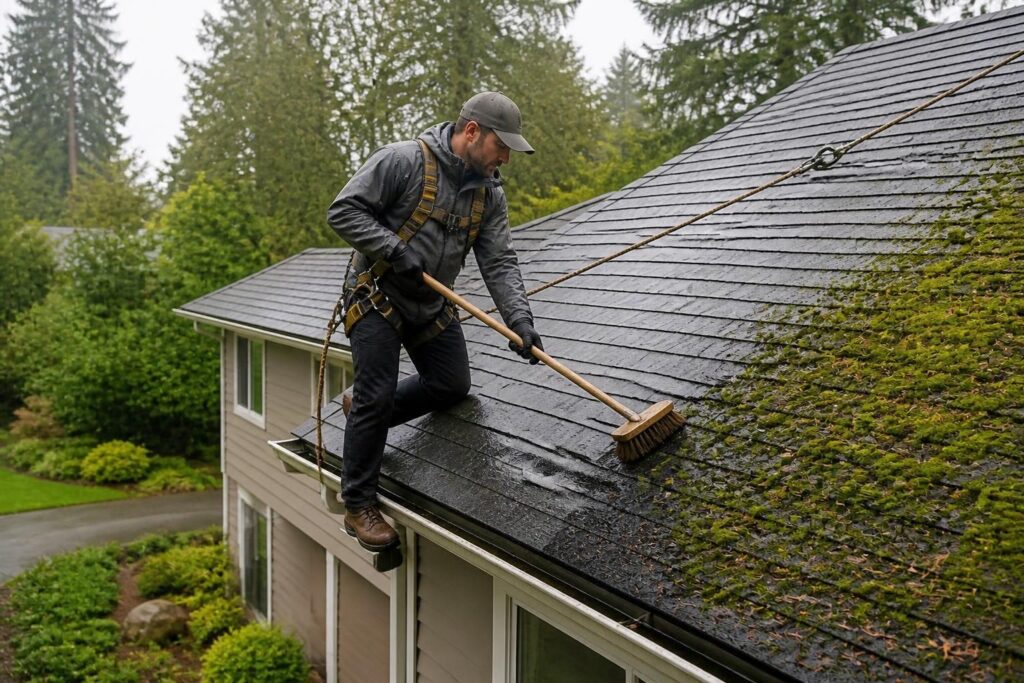

The safest way to remove moss from an asphalt shingle roof is to spray it with a moss-killing solution, let it work, then gently brush or blow off the dead moss, and never use a pressure washer. Moss lifts and holds water under shingles, which shortens roof life, but aggressive cleaning can do more damage than the moss itself by stripping the protective granules.
Below is the method recommended by the asphalt roofing industry and university extension experts, plus how to keep moss from coming back.
What You Need
- A pump or garden sprayer
- A moss treatment: a 50:50 mix of household liquid chlorine bleach and water, a zinc sulfate product, or a soap-based moss killer (potassium salts of fatty acids)
- A long-handled soft-bristle brush or a leaf blower
- A garden hose for low-pressure rinsing
- Non-slip shoes, gloves, eye protection, and fall protection on steep roofs
- Tarps or water to protect plants below
Step-by-Step: Removing Moss Without Damaging Shingles
- Pick a cool, overcast day. Treatments should not dry too fast in direct sun. Avoid days when rain is forecast within a few hours.
- Protect your plants. Wet down shrubs and beds below the roofline or cover them with tarps. Rinse any plants that get splashed.
- Apply the treatment. The Asphalt Roofing Manufacturers Association (ARMA) recommends spraying a 50:50 mix of laundry-strength liquid chlorine bleach and water and letting it sit for 15 to 20 minutes without drying completely (ARMA maintenance guidance). Oregon State University Extension also lists zinc sulfate and soap-based potassium fatty acid products as options.
- Rinse at low pressure. Use a regular garden hose, spraying from the top of the roof downward so water does not get pushed under shingles.
- Let the moss die and loosen. ARMA notes that moss loosens over time and can then be removed with a leaf blower. Heavy growth may need a second treatment.
- Brush gently, downhill only. Use a soft brush or blower and always work down the slope. Scraping upward lifts shingle edges and breaks the seal.
- Clean the gutters. Dead moss ends up in gutters and downspouts.
Why You Should Not Pressure Wash
ARMA is blunt: never use a pressure washer on an asphalt shingle roof. The force knocks off the granules that protect shingles from UV light, which can lead to early roof failure. Oregon State University Extension notes that experienced users sometimes pressure-wash but that improper pressure can damage shingles, and suggests a long-handled scrub brush or a professional instead (OSU Extension). Many shingle warranties also exclude damage from pressure washing.
Choosing a Moss Treatment
| Treatment | Pros | Watch out for |
|---|---|---|
| Bleach and water (50:50) | Cheap, works quickly on algae and moss | Harms plants and lawn; can corrode metal; wear eye protection |
| Zinc sulfate | Effective, slower-acting, longer lasting | Corrodes copper gutters and flashing; runoff can harm plants and waterways |
| Soap-based (potassium salts of fatty acids) | Biodegradable, noncorrosive, lower risk to people and pets | May need repeat applications |
OSU Extension’s mixing guidance for zinc sulfate monohydrate is about 3 pounds in 9 gallons of water to treat 600 to 1,000 square feet, and it warns not to use zinc products on roofs with copper gutters, downspouts or flashing. Always follow the label on any product you buy.
Stay Safe on the Roof
A wet roof with treatment on it is slippery. OSU Extension recommends shoes with strong traction, a ladder on stable ground extending at least three feet above the roofline, lifting tools with a bucket and rope instead of carrying them up the ladder, and safety lines on steep roofs or where eaves are higher than 16 feet. If your roof is steep, high or fragile, hire a roof cleaning professional. Our roof cleaning guide covers costs and what to ask a contractor.
How to Keep Moss From Coming Back
- Let the sun in. Moss thrives in shade. OSU Extension says trimming nearby trees is the key long-term fix.
- Keep the roof clear. Blow off leaves and needles regularly, working downhill.
- Clean gutters. Clogged gutters keep the roof edge damp.
- Redirect downspouts. ARMA suggests extending upper-roof downspouts into lower gutters instead of letting them drain onto a lower roof.
- Plan for the next roof. Zinc or copper strips and algae-resistant shingles are best added when the roof is replaced. ARMA advises against nailing strips onto an existing roof because it can cause leaks or break shingle seals.
Frequently Asked Questions
Is moss bad for my roof? Yes. It holds moisture against the shingles, can lift edges and lets water get underneath, which shortens roof life.
What kills roof moss naturally? Soap-based products made from potassium salts of fatty acids are the gentlest option. Removing shade is the most effective natural prevention.
Can I scrape moss off by hand? Gently, after it has been treated and loosened, working downhill. Scraping live moss off dry shingles tends to tear off granules.
How long does it take for moss to die after treatment? Bleach acts within days. Zinc and soap-based products can take several weeks, and the dead moss often washes off with rain.
When is the best time to treat roof moss? Many homeowners treat in early fall or spring, during dry, mild weather, before the wettest season.