





Olympus Pen F Review: The Half-Frame Classic Still Worth It
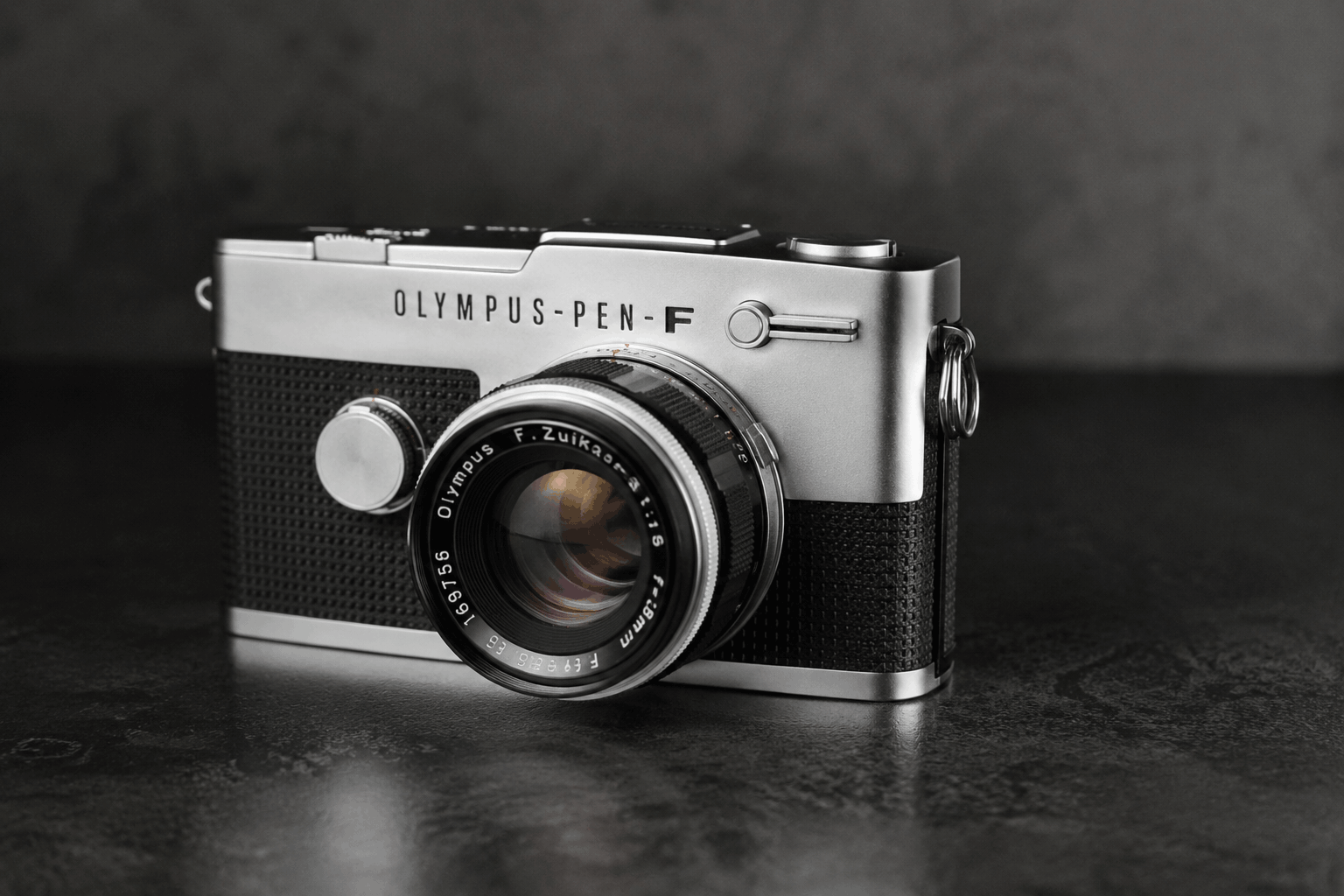
If you’ve spent any time browsing film camera forums, you’ve probably seen someone gushing about the olympus pen f like it’s some kind of secret handshake into serious analog photography. It’s not hype for the sake of hype. This is a genuinely odd, genuinely brilliant little camera that does something almost nothing else does well: it shoots half-frame, giving you double the shots per roll, and it does it through a design that still looks sharp sitting on a shelf sixty years later.
Let’s get the basics out of the way. The Olympus Pen F is a half-frame 35mm SLR, first released in 1963, designed by Yoshihisa Maitani, the same engineer behind the Olympus OM-1. It’s not a rangefinder, and it’s not a point-and-shoot. It’s a true single-lens reflex camera, just built around a frame size roughly half that of standard 35mm, which is where the “half-frame” name comes from.
What Makes the Olympus Pen F Different
Most 35mm cameras expose a frame that’s 24x36mm. The Pen F shoots 18x24mm frames, oriented vertically by default when you hold the camera horizontally. That single design choice changes almost everything about how the camera behaves in practice.
A standard 36-exposure roll gives you 72 shots on a Pen F. That’s a huge deal if you’re someone who shoots a lot of film and doesn’t love the cost of constantly buying and processing rolls. In my experience, half-frame cameras tend to change how people shoot too. You start thinking in pairs, sequences, and diptychs rather than single decisive moments, because two half-frames sit side by side on a contact sheet almost like a natural pairing.
The trade-off is grain and resolution. A half-frame negative is smaller, so when you blow it up large, you’ll see more grain and softer detail than a full-frame 35mm shot from the same film stock. For prints under 8×10 or web use, most people won’t notice or care. For big gallery prints, it starts to matter.
Build Quality and Design
Maitani’s design work shows here. The body is compact, dense, and covered in real leatherette, with a top plate that avoids the pentaprism hump entirely. Instead of a prism, the Pen F uses a porro-mirror system to route light to the viewfinder, which is part of why the top of the camera stays flat and low. It’s a clever bit of engineering, and it’s also part of why some Pen F units develop a hazy or dim viewfinder over the decades, since the mirror surfaces can degrade.
The shutter is another unusual piece. Rather than a cloth or metal focal-plane shutter, the Pen F uses a rotary titanium shutter, which was unusual for the era and contributes to a distinctive shutter sound. It’s quieter and has a different feel than the clack of a typical SLR shutter.
One thing worth flagging before you buy: the Pen F line actually has three variants. The original Pen F (1963), the Pen FT (1966), which added a coupled light meter and single-stroke wind lever, and the Pen FV (1967), a simplified FT without the meter. If you’re hunting one down, know which variant you’re actually looking at, because listings on eBay and other marketplaces aren’t always accurate about this.
Lenses and the Zuiko System
This is where the Pen F system gets genuinely fun for people who like collecting glass. Olympus built a dedicated line of lenses for the half-frame mount, ranging from a 20mm wide angle up through a 250mm telephoto, plus a couple of interesting oddballs like a 100-200mm zoom and even a 42mm f/1.2, which was fast for the period.
Because the sensor (or in this case, the negative area) is smaller, focal lengths behave differently than you’d expect from full-frame 35mm experience. A 38mm lens on the Pen F gives a field of view closer to a 50mm on standard 35mm. If you’re coming from full-frame shooting, budget some time to recalibrate your instincts here.
The lens mount is unique to the Pen F system and isn’t compatible with other Olympus mounts like OM. That’s a real limitation. You can’t cross-shop lenses from other Olympus film systems, and stepping-up adapters for modern mirrorless bodies exist but require some patience to source and use well.
Shooting Experience Today
Handling one of these cameras in 2026 is a mixed bag, and I’d rather be upfront about that than pretend it’s flawless. The compact size is genuinely great, it fits in a jacket pocket in a way that most SLRs never will. The viewfinder image, when clean, is bright and easy to compose in, though it will feel small compared to a full-frame SLR finder.
Meter accuracy on the FT variant is hit or miss depending on how well the selenium or CdS cell (depending on exact model and repair history) has held up. Many photographers just shoot with a handheld meter or an app instead of trusting the in-body meter blindly, and honestly that’s the safer bet on a camera this old regardless of brand.
Finding a working sample matters more than the specific variant, in my opinion. A clean Pen FT with an accurate meter beats a mechanically rough original Pen F every time, even though the original has a certain purist appeal since it has no electronics at all to fail.
Common Issues to Watch For
Buying one secondhand means going in with realistic expectations. Sticky shutters are common, since the older lubricants used in these cameras tend to gum up over decades of storage. Viewfinder haze from mirror degradation shows up often, and it ranges from a minor nuisance to genuinely hard to compose through. Meter inaccuracy on FT models is common enough that you should assume it needs checking, not assume it works.
None of this is unique to the Pen F specifically. It’s the reality of buying any 60-year-old mechanical camera. What tends to surprise people who are new to film photography is just how much a proper CLA (clean, lubricate, adjust) service can transform an old body. If you find a Pen F that seems mostly right but has a slow or sticky shutter, a service from a specialist repair shop is usually worth more than chasing a “perfect” unserviced unit at a premium price.
Pricing and Where to Find One
Prices vary a lot depending on condition, variant, and whether it comes with a lens. As of mid-2026, expect anywhere from roughly $100 for a rough, untested body up toward $300-400 or more for a clean, working Pen FT with a standard lens, sometimes higher for rarer lens combinations. These prices move constantly with film photography demand, so check current completed listings on eBay or specialist retailers like KEH for a more accurate current picture rather than trusting any number that’s more than a few months old.
Sites like Casual Photophile and Kosmo Foto regularly publish hands-on reviews and buying guides for cameras like this, and they’re worth reading before you commit money to a specific listing.
Olympus Pen F vs the Modern Digital PEN-F
Worth a quick note here because it trips people up in searches: Olympus also released a digital mirrorless camera called the PEN-F in 2016, styled to look like the original half-frame classic but built on the Micro Four Thirds system with a 20-megapixel sensor. It’s a completely different camera, digital rather than film, full working autofocus, and no relation mechanically to the 1963 original beyond the styling homage. If you’re shopping and see “Pen F” listings that look suspiciously modern and clean with a price tag over $500, double check whether it’s actually the digital PEN-F you’re looking at.
Who Should Actually Buy One
If you’re new to film photography entirely, I’d hesitate to recommend the Pen F as a first camera. The half-frame format is a fun creative constraint once you understand exposure and composition, but it adds a layer of complexity that a simple full-frame SLR like a Pentax K1000 avoids. If you already shoot film and want something compact, distinctive, and genuinely different from typical 35mm shooting, this is a great second or third camera to add to a kit.
Street photographers and people who like sequential or diptych-style compositions tend to get the most creative mileage out of the half-frame format specifically. If you mostly shoot portraits or want maximum resolution for large prints, this isn’t the tool for that job.
FAQs
Is the Olympus Pen F fully mechanical? The original Pen F has no light meter and is fully mechanical. The Pen FT adds a coupled meter that requires a battery, while the mechanics of the shutter and wind mechanism remain manual across all three variants.
Can I use standard 35mm lenses on a Pen F? No. The Pen F system uses its own dedicated lens mount that isn’t compatible with other Olympus lens systems, including the later OM mount.
How many photos does a roll of film give you on a Pen F? Roughly double the standard count, since each frame is half the size. A 36-exposure roll typically yields around 72 shots.
Where can I get one serviced? Specialist camera repair shops that handle vintage mechanical cameras are your best bet. A search through Wikipedia’s overview of the Pen F line or camera community forums usually turns up recommended technicians who work specifically on this system.
Also Read: Leveraged Finance News Today: Private Credit’s Big Test