






Payday Loans Online: What They Really Cost (2026)
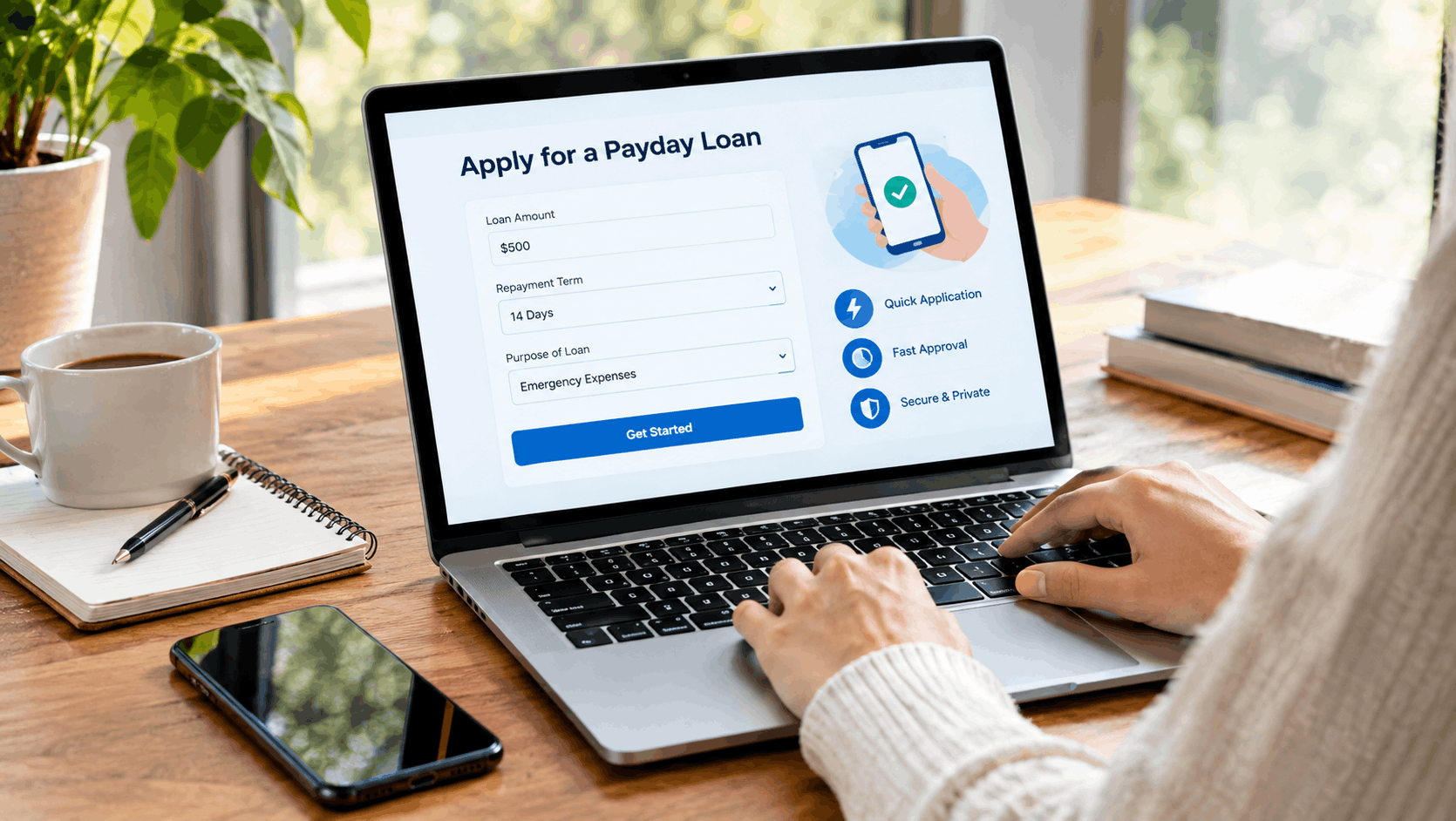
Payday loans online are small, short-term loans, usually a few hundred dollars, that’s due on your next payday. The Consumer Financial Protection Bureau explains that lenders typically charge a flat fee per $100 borrowed, and that fee often lands between $10 and $15. You give the lender access to your bank account or write a post-dated check, and they collect the full amount when the loan comes due.
Online versions work the same way, minus the storefront. You fill out a form, upload or confirm your income and bank details, and get a decision in minutes. If approved, the money arrives by direct deposit, often the next business day.
Here’s the part that catches people off guard. There’s usually no credit check in the traditional sense. The lender cares that you have income and an active checking account, because the loan is secured by their ability to pull the money back out. That’s why approval feels easy, and also why it can be dangerous.
The Math Nobody Shows You Up Front
Let’s use a simple example. You borrow $400 and the fee is $15 per $100. That’s $60, so you owe $460 in two weeks.
Sixty dollars for two weeks might sound tolerable. Translate it into an annual percentage rate, though, and it works out to roughly 390%. Compare that with a credit card at 25% and you can see the gap.
The bigger problem is the rollover. If you can’t repay the $460 when it’s due, many lenders let you pay just the fee and extend the loan. Do that three times and you’ve paid $240 in fees while still owing the original $400. In my experience, this is how most people get trapped. They aren’t borrowing carelessly. They’re borrowing during a month when their budget has no slack, and the next month has no more slack than the last one.
One thing worth flagging is that the loan isn’t what hurts; it’s the timing. Repaying $460 out of a single paycheck leaves a hole, and the temptation is to borrow again to fill it.
Are Payday Loans Online Legal Where You Live?
It depends on your state, and the rules vary a lot. Some states cap fees or interest rates so low that payday lending barely exists. Others allow high fees with few limits. A handful ban the product outright.
This matters more online than in a storefront, because a website can look perfectly professional while operating in a state where it has no license. Before you borrow, check your state’s financial regulator or attorney general site to see whether the lender is licensed to lend to you. If you can’t find the lender’s license information, treat that as a no.
Active-duty service members have extra protection. The Military Lending Act caps the cost of most consumer loans to covered borrowers at 36% APR, which effectively shuts out standard payday products.
Spotting a Scam Before It Costs You
The online payday space attracts bad actors, and some of them are subtle. These are the red flags I’d take seriously:
- They ask for an upfront fee, gift cards, or a wire transfer before releasing the loan.
- They guarantee approval for everyone, with no questions asked.
- They have no physical address, license number, or real contact info.
- They pressure you to sign immediately.
Another pattern that surprises people involves lead generators. Many sites that look like lenders are really forms that sell your personal data to whoever pays for it. You enter your Social Security number and bank details, and suddenly your phone and inbox are flooded. The Federal Trade Commission publishes consumer alerts on loan scams and is where you can report one. If you’re not sure a site is a direct lender, look for a clear “about us” page with a real company name and a state license number.
Cheaper Options to Try First
Before you apply for payday loans online, spend an hour on the following. It’s tedious, but it can save you hundreds of dollars.
Start with your credit union. Federal credit unions can offer Payday Alternative Loans (PALs), which cap interest at a much lower rate than a typical payday loan and give you longer to repay. The National Credit Union Administration explains the program, and you usually need to be a member for a short time before you qualify. A small personal loan from a local bank or credit union can also cost far less, even with a mediocre credit score.
Ask your employer about a paycheck advance. A growing number of employers offer one, sometimes free. Some earned-wage access apps work similarly, though you should check their fees and optional “tips” before assuming they’re cheap.
And call the people you owe. A landlord, utility company, or medical provider will often agree to a payment plan or a few extra days, which costs nothing. In my experience, people avoid this call out of embarrassment, and it’s often the single best move available. Dialing 211 can also connect you with local emergency assistance for rent, utilities, and food.
If You Decide to Borrow Anyway
Sometimes the alternatives don’t pan out. If you still need to borrow, a few habits will cut your risk.
Borrow the smallest amount that solves the problem, not the maximum the lender offers. Read the full agreement, especially the fee, the due date, and the rollover terms. Check that the repayment date lines up with money actually landing in your account, and set aside the full repayment amount the moment your paycheck arrives. If you can see you won’t be able to repay on time, contact the lender before the due date and ask about a no-fee extended payment plan. Some states require lenders to offer one.
Also think hard about the bank access. When a lender can pull money from your account automatically, a failed pull can trigger overdraft fees from your bank on top of the lender’s own late fee. You can usually revoke that authorization in writing, and your bank can help you do it.
Payday Loans Online: Who They Fit, and Who Should Skip Them
They fit a narrow situation. You face a true one-time emergency, you know exactly where the repayment money is coming from, and you’ve already ruled out cheaper sources. A car repair that gets you to work, with next week’s paycheck already covering the full payback, is a reasonable example.
Skip them if the shortfall is recurring, if you’d need to borrow again to cover the repayment, or if you’re using the loan to pay off another debt. In those cases, the loan doesn’t solve the problem. It moves it two weeks down the road and adds a fee.
My honest lean is that these loans are a last resort, and a rarely good one. If you’re using one more than a couple of times a year, the better move is to look at the budget itself, ideally with a nonprofit credit counselor, rather than at a bigger or better loan. Rules and fees change by state and by lender, so always check current terms with your state regulator. The general background at Wikipedia’s overview of payday loans is also a handy starting point for understanding how the industry operates.