







Litterbox Cam Guide: How Cat Health Monitors Actually Work
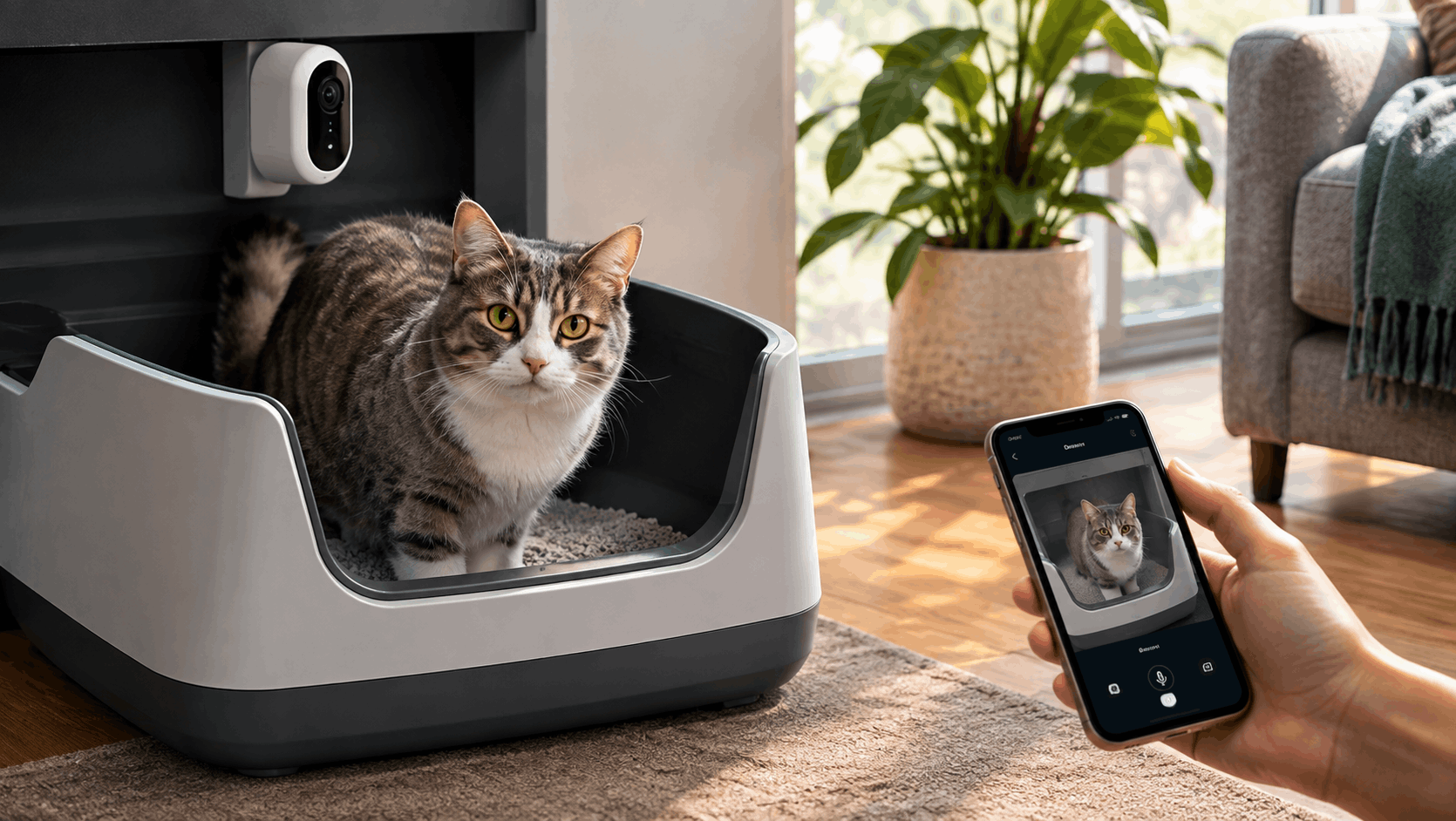
Before comparing specific products, it helps to know that “litterbox cam” actually covers two different approaches. The first is a standalone camera accessory that clips onto or sits near a litter box you already own. The second is a full self-cleaning litter box with a camera built directly into the unit itself.
The SiiPet LitterLens is the clearest example of the standalone approach, an owl-shaped camera priced at $99.99 that attaches to your existing litter box setup rather than replacing it. It uses AI-assisted monitoring to track how many times your cat visits per day, how long each visit lasts, and flags stool irregularities like diarrhea, blood, or unusually hard pellets. It runs on a battery rated for about a month per charge, which matters for a device tucked into a spot you don’t want to think about recharging constantly.
On the full-unit side, CATLINK’s Scooper Pro Ultra and PETKIT’s Purobot Max Pro 2 both integrate cameras directly into self-cleaning litter boxes. CATLINK’s version includes a 1080p camera with two-way audio and identifies individual cats visually rather than by weight alone, supporting up to five cats in one household with separate usage profiles for each. PETKIT’s Purobot Max Pro 2 goes further with a 180-degree auto-tracking camera, facial recognition combined with weight sensors, stool and clump image capture during cleaning cycles, and even urine pH detection when paired with compatible litter.
What These Devices Actually Track
The core value proposition across all of these products is the same: catching subtle pattern changes that indicate a developing health problem before it becomes an emergency. Frequent litter box visits with little output can signal a urinary blockage or infection, a genuinely serious and sometimes life-threatening issue in cats, particularly male cats, and closely tied to conditions like feline lower urinary tract disease. Changes in stool consistency or frequency can point toward digestive issues, parasites, or dietary problems. A sudden drop in visits altogether is its own warning sign worth flagging.
What tends to surprise first-time buyers is how much of the value comes from the pattern-tracking over time rather than any single observation. A camera that just shows you one strange-looking visit isn’t nearly as useful as a system that’s logged weeks of baseline behavior and can tell you this particular visit deviates meaningfully from what’s normal for your specific cat. That’s the actual point of the AI layer in these prlitterbox-cam oducts, building a personalized baseline rather than applying a generic standard across every cat.
Multi-Cat Households Change the Calculation
If you only have one cat, any of these approaches works fine, since every visit is automatically attributed to the right animal. Multi-cat households are where the camera-based systems pull ahead of older, sensor-only smart litter boxes. Weight-based identification, which older smart litter boxes relied on exclusively, gets unreliable when you have cats of similar size, since the system is essentially guessing based on a number that can overlap between two different animals. Camera-based visual identification, like what CATLINK and PETKIT both use, solves that specific problem by actually recognizing which cat is in the box rather than inferring it from weight alone.
One thing worth flagging if you’re shopping specifically for a multi-cat household: check how many cats a given product officially supports before buying. CATLINK’s Scooper Pro Ultra is rated for up to five cats, and going beyond a manufacturer’s stated limit tends to reduce both hygiene and tracking accuracy, according to guidance from the company itself.
Privacy and Practical Considerations
A camera watching a spot in your home 24/7 is worth thinking through before you buy, even when the camera’s job is watching a cat rather than people. Check whether the app lets you disable the camera on demand, which some products, including PETKIT’s Purobot Crystal Duo, specifically build in as a stated feature. Also check whether footage and health data get stored locally or in the cloud, and whether that storage is encrypted, since this is genuinely sensitive data about your home even if the subject is a cat rather than a person.
Placement matters more than people initially expect too. Litter boxes tend to live in bathrooms, basements, or closets, spaces with less consistent lighting and sometimes weaker WiFi signal than the rest of the house. Night vision and dual-band WiFi support, features present on several of the products mentioned here, aren’t just marketing checkboxes. They directly affect whether the device actually works reliably in a typical litter box location.
What These Devices Don’t Replace
This is the most important limitation to understand clearly: a litterbox cam is a monitoring tool, not a diagnostic one, and it’s not a substitute for an actual veterinarian. These products are built to flag pattern changes and prompt you to pay closer attention or schedule a vet visit, not to diagnose what’s actually wrong. If your litterbox cam flags a concerning change, the appropriate next step is contacting your vet, not trying to interpret the alert as a diagnosis yourself. Organizations like the American Veterinary Medical Association emphasize that any sudden change in a cat’s litter box habits, camera-detected or otherwise, warrants a professional evaluation rather than a wait-and-see approach, given how quickly some feline urinary issues can become emergencies.
Who Actually Needs One
Cats with a known history of urinary issues, kidney disease, or digestive sensitivity are the clearest case for investing in this kind of monitoring, since early detection genuinely matters more for these conditions than most others. Multi-cat households benefit specifically from the camera-based identification that solves the weight-ambiguity problem older smart litter boxes struggled with. And owners who travel frequently or work long hours away from home get real value from remote monitoring, catching a problem days earlier than they otherwise would by simply observing behavior in person each evening.
If your cat is young, healthy, and has no history of litter box or urinary issues, a full AI-powered self-cleaning litter box with a built-in camera is a genuinely nice convenience but not a necessity. A standalone camera accessory like the LitterLens offers a lower-cost way to add monitoring to a box you already own, without committing to a full litter box replacement.