






Permanent Holiday Lights: Worth the Cost or Overhyped?
Every fall, the ladder comes out, someone’s balancing on a roofline in the cold, and by January the lights are either still up out of laziness or taken down in the rain. Permanent holiday lights exist specifically to end that cycle, and the category has grown fast enough that it’s worth a real look at whether the hype matches the actual experience.
What Permanent Holiday Lights Actually Are
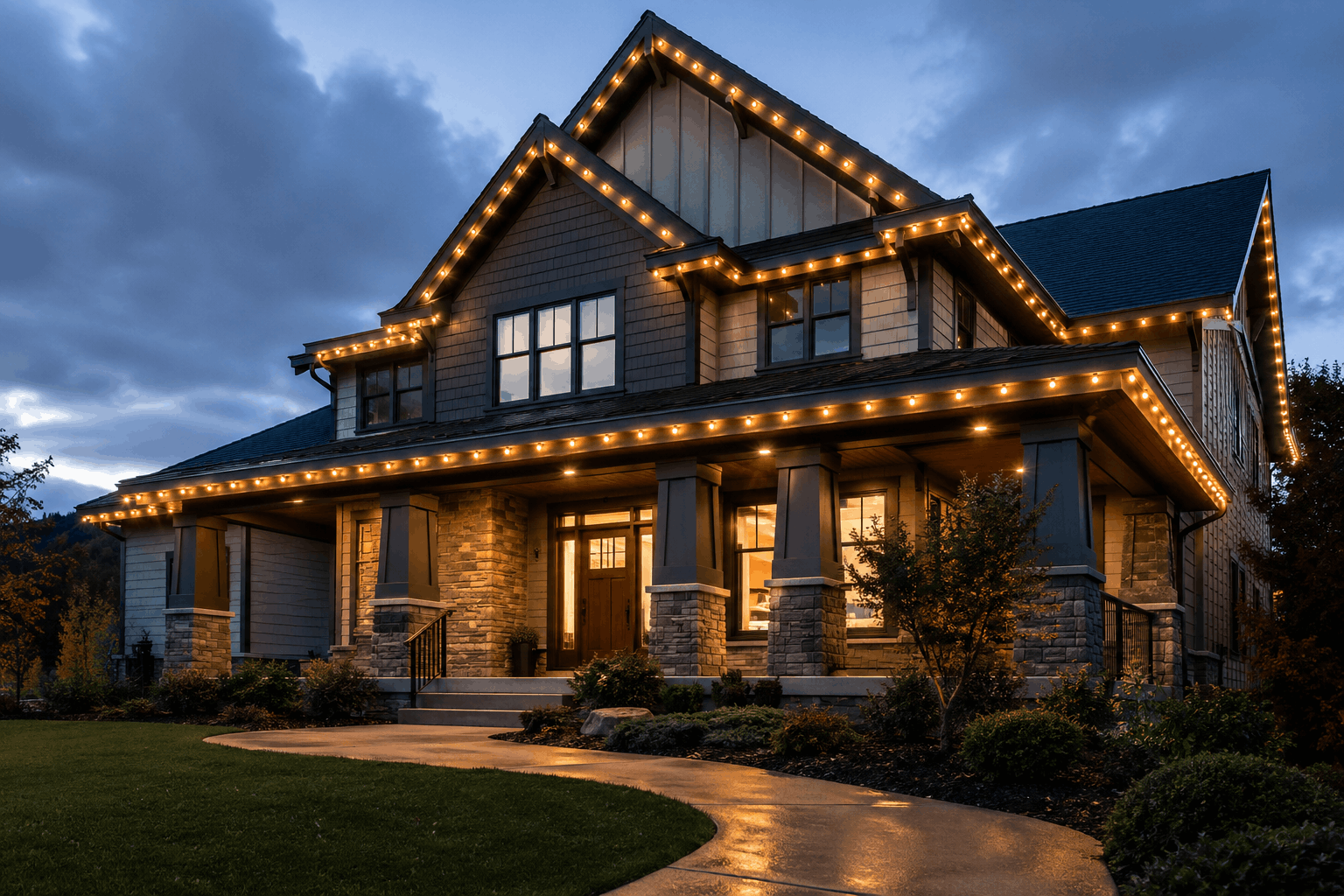
These are LED light strips installed once, usually tucked into a track or channel along your roofline, soffits, or eaves, and left there year-round. Unlike the string lights you drag out of a bin every November, they’re app-controlled and can be set to warm white for everyday use, then switched to red and green for December, orange for Halloween, or pastel colors for a birthday party. Companies like Trimlight and Gemstone Lights built entire businesses around this exact idea, and more traditional lighting brands like Kichler have added their own permanent lighting lines as demand grew.
The core tech isn’t new. It’s addressable RGB LED lighting, similar to what’s used in smart home lighting elsewhere, just weatherproofed and mounted in a track system designed to handle sun, rain, and snow for years without needing replacement.
Pricing: What This Actually Costs
As of mid 2026, professionally installed permanent holiday lights typically run somewhere between $2,500 and $6,000 for an average single-family home, with the final number depending heavily on the linear footage of roofline, the complexity of the trim work, and which brand does the install. Larger homes or ones with a lot of dormers and angles push toward the higher end. DIY kits exist too, often in the $500 to $1,500 range for a modest home, though the install labor then falls entirely on you.
That’s a real gap between DIY and professional pricing, and it’s the first thing to nail down before deciding whether this project makes sense for your budget. Pricing shifts by region and by contractor, so getting two or three local quotes before committing is worth the extra week it takes.
Pros
Permanent holiday lights solve the actual annoying part of holiday lighting, which isn’t the lights themselves but the labor of installing and removing them every single year. Once they’re up, changing the color scheme is a phone tap, not a ladder trip. In my experience, this is the single biggest selling point for most buyers, more than the aesthetic itself.
They also tend to outlast a season or two of cheap string lights, since the components are built for permanent outdoor exposure rather than a few weeks of use each year. And beyond the holidays, a lot of homeowners end up using them for far more than Christmas, lighting the house for birthdays, sports team colors on game day, or just a warm white glow on a regular Tuesday night.
Cons
The upfront cost is the obvious one, and it’s a real barrier for a lot of households compared to a $40 box of string lights from a hardware store. There’s also an electrical and installation quality question. A poorly installed track system can look worse than temporary lights, with visible gaps or crooked runs along the roofline, so contractor quality matters more here than people expect going in.
One thing worth flagging is longevity claims. Most brands advertise long lifespans for the LEDs themselves, sometimes framed in decades, but real-world weather exposure, storm damage, and the eventual need for app or hub updates mean “install once, forget forever” isn’t quite the full picture. Treat it as a long-term investment with occasional maintenance, not a truly zero-upkeep purchase.
DIY vs. Professional Installation
DIY kits save real money but ask a lot of the installer. Running consistent, level track along a roofline, especially one with multiple stories or steep pitches, is genuinely tricky work, and a bad DIY job is one of the most common regrets people mention after going this route. If your home has a simple, single-story roofline, DIY is more realistic. Anything with dormers, multiple angles, or a second story is where professional installation earns its price difference.
Professional installers also typically handle the electrical tie-in properly and often include warranties on both the hardware and the labor, which DIY kits don’t offer in the same way.
Who Should Buy Permanent Holiday Lights
If you’re the household that puts up lights every year without fail and dreads the ladder each time, this is built for exactly that situation. It’s also a strong fit if you like the idea of using exterior lighting for more than just December, since the ability to switch to team colors or a simple warm glow the rest of the year adds ongoing value beyond the holiday season. Homeowners planning to stay in a house long-term get the best return on the investment, since the cost amortizes better over years rather than a single season.
Who Should Skip Them
If you’re renting, planning to move within a year or two, or you only put up lights occasionally rather than every year, the cost doesn’t pencil out well. It’s also worth skipping if your roofline is unusually complex or your budget is tight, since a rushed or bargain install is one of the more common sources of buyer’s remorse in this category. A well-reviewed roundup from Better Homes & Gardens on exterior lighting options is worth a browse if you want to compare against traditional and semi-permanent alternatives before committing to the bigger investment.
A Few Buying Tips
Ask any contractor for photos of past installs on similar rooflines to yours, not just a generic portfolio. Confirm what happens with warranty service, since some brands operate through local franchise installers rather than a single national company, and support quality can vary by region as a result. And ask directly about the app or hub, since some systems require ongoing connectivity or occasional firmware updates to keep working properly, which is a maintenance detail a lot of first-time buyers don’t think to ask about.
FAQs
Do permanent holiday lights use a lot of electricity? LED lighting draws relatively little power compared to older incandescent string lights, so running costs are generally lower even with year-round use, though exact numbers depend on the length of your roofline and how often you run them.
Can permanent holiday lights handle snow and ice? Most systems are built and rated for year-round outdoor exposure, including snow, since they’re designed to stay mounted permanently rather than come down each season. Heavy ice buildup can still stress any exterior lighting system, so it’s worth asking your installer about weather ratings specific to your climate.
How long does installation typically take? Professional installs on an average home usually take one to two days, depending on roofline complexity and crew size.
Are permanent holiday lights worth it if I only decorate for one holiday? It’s a harder case to make financially if you only use them for a few weeks a year. The value goes up significantly if you plan to use the color-changing feature for multiple occasions throughout the year.
Is there a difference between “permanent lights” and standard smart home lighting? Yes. Standard smart bulbs and strips aren’t typically rated for the same level of permanent outdoor exposure, and they usually aren’t installed in a fixed track system the way dedicated permanent holiday lighting is.
Also Read: Best Pixel 10 Case Options: What Actually Fits and Works