
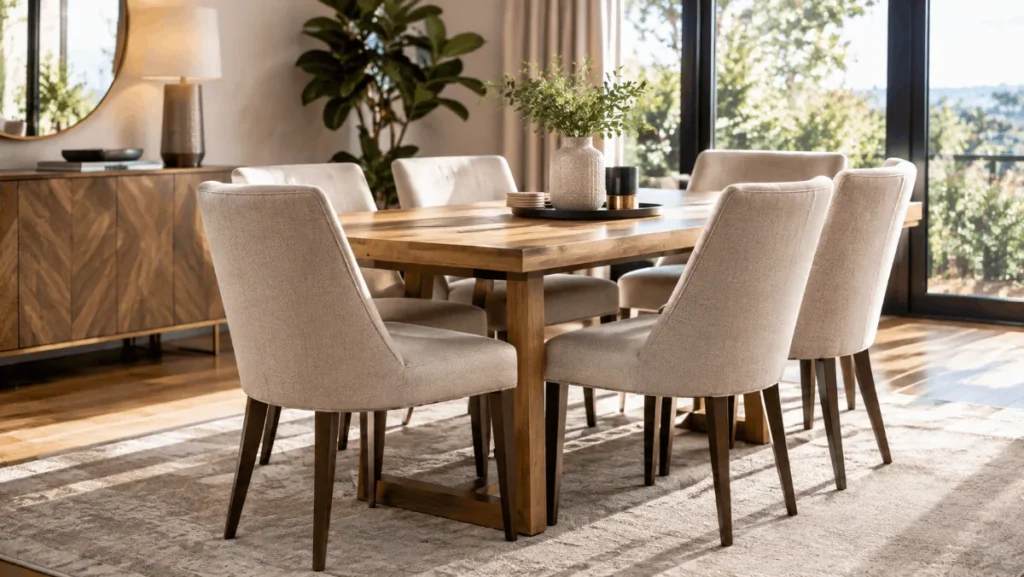

Seat height is the number that matters most. For a standard dining table around 28 to 30 inches tall, chairs with a seat height of about 17 to 19 inches work for most adults. The classic guideline is to leave roughly 10 to 12 inches between the seat and the underside of the tabletop (or apron), so thighs have room to slide under.
Width and depth matter too. A seat roughly 17 to 22 inches wide is comfortable for most people, and a depth of about 16 to 20 inches lets you sit back against the backrest without the seat edge pressing behind your knees. Armchairs are wider and need more space.
Count the room, too. Allow about 24 inches of table edge per person so elbows don’t collide, and leave around 36 inches behind each chair so people can pull it out and walk behind it. The general principles behind chair proportions are covered in human factors and ergonomics, and the basic idea is that furniture should fit people, not the other way around.
In my experience, the single most common error is buying chairs that look great online but don’t clear the table apron. Measure your table first, then the chairs.
Choosing a Style That Matches How You Sit
A chair is a simple object with an enormous range of designs. Here’s how the common types compare for dining use.
| Type | Comfort | Space needed | Best for |
|---|---|---|---|
| Side chair (no arms) | Good for short to medium meals | Least | Most tables, tight rooms |
| Armchair or captain’s chair | High | More | Table heads, long dinners |
| Fully upholstered | High | Medium | Lingering meals, formal dining |
| Wood or metal (no padding) | Lower | Least | Casual, high-turnover use |
| Bench | Flexible seating | Varies | Families, tight spaces |
Many people mix them, with armchairs at the ends and side chairs along the sides. That’s a classic arrangement, and it gives extra comfort where people sit longest.
Wood, Metal, Plastic or Upholstered
Solid hardwood frames in oak, maple, walnut or beech are the long-term choice. They’re strong, repairable, and age well. Softer woods like pine are cheaper but dent easily. Veneer over engineered wood can look good, but check the joints, since cheap versions crack under stress.
Metal frames suit modern and industrial looks, and they handle heavy use well. They can feel cold or hard without a cushion, and cheap welds are a weak point. Molded plastic or polypropylene chairs are lightweight, stackable, and easy to clean, which is great for casual spaces and kids, though quality varies a lot.
If sustainability matters to you, look for wood certified by the Forest Stewardship Council, which tracks responsibly managed sources.
Upholstery: Comfort vs. Cleanability
Padding makes a big difference over a two-hour dinner, but fabric on dining chairs takes a beating from spills and crumbs. Performance fabrics and microfiber are designed to resist stains and wipe clean, and they’re popular for families. Leather and faux leather clean easily and age well, though real leather costs more and faux versions can crack over time.
Light linen or velvet look gorgeous and show every spill. If you love them, consider removable, washable seat covers or choose a darker color.
A trick worth remembering is to test the seat foam. Press your hand into it. Thin foam bottoms out quickly, while higher-density foam springs back. Cheap padding flattens within a year.
Construction: The Wobble Test
Sit in the chair and shift your weight. Rock it forward and back, then side to side. Any creaking, twisting or give means weak joints. Look under the seat for corner blocks, which are small braces that reinforce joints, and for stretchers (the rungs between legs) that add stability.
Good joinery methods include dowels, mortise-and-tenon, and screws combined with glue. Stapled or only glued joints tend to loosen. Check that the legs are firmly attached and the back doesn’t flex excessively.
Weight capacity is worth checking, especially if the chairs will see regular use by adults. Commercial furniture is often tested to standards from groups like BIFMA, the industry association, which is a useful signal if you want chairs built for heavy use. Home chairs vary more, so read the specs.
One thing worth flagging is that a chair that feels solid in a store can feel different after a few months of daily use. Reviews that mention how chairs held up over a year are more helpful than first-impression comments.
Sets, Mixing and Matching
A matching set is simple and looks cohesive, but it’s not the only way. Mixing chairs in different styles or finishes can create a relaxed, collected look. The trick is to keep one element consistent, like color, material or height, so the mix feels intentional.
If you buy a set, ask whether you can purchase extra chairs later. Designs get discontinued, and finding a match years down the line is difficult. Order a spare if you can, especially for pieces with a distinctive finish.
For benches, make sure the length suits the table and that the seat height matches your other chairs. A bench gives you extra seating but offers less back support.
Kids, Pets and High-Traffic Homes
Choose chairs that can handle abuse. Smooth, wipeable surfaces, sturdy frames, and washable fabrics earn their keep. Avoid delicate legs that kids can tip, and think about rubber or felt pads on the feet so floors don’t get scratched.
For kids, booster seats and chairs that fit smaller bodies make mealtimes easier, and check safety guidelines for children’s furniture. The Consumer Product Safety Commission publishes recall notices, and it’s smart to check them for any secondhand chairs.
Pets can wreck some fabrics. Tight weaves, leather, and microfiber hold up better than loose weaves that snag.
Budget and Where to Spend
Prices vary widely, from inexpensive flat-pack chairs to handcrafted solid wood sets. Compare current listings, and expect higher prices for solid wood and quality joinery. If you can’t afford a full set of premium chairs, spend more on the ones that get used most and choose simpler options for occasional seating.
Check delivery times, return policies, and assembly requirements before ordering. Some furniture has long lead times, and returns can be costly because of size and shipping.
Common Mistakes
Buying chairs that are too tall or short for the table is the biggest. Ignoring the rear clearance, picking unsuitable fabric and skipping the wobble test come next. Another is choosing a style that doesn’t match how you sit. A beautiful backless stool may be great for a breakfast bar, but it’s torture at a long dinner.
Don’t forget the room itself. Chair arms can hit the table apron, and tall backs can block sightlines in open-plan spaces.
My Recommendation
For most households, a solid wood or sturdy metal frame, a seat height of about 18 inches, and a medium-density padded seat in a wipeable fabric is the safest bet. Add armchairs at the ends if you host often, and test the construction before you commit.
If you can, sit in the chairs. Fifteen minutes in a showroom tells you more than any product description.