
Studded Belt Guide: Studs on leather have a long history, but the look people picture today comes from rock and punk fashion, where metal hardware on black leather became a visual shorthand for rebellion. From there, it moved into mainstream style, showing up on everything from dresses to workwear, in toned-down versions as well as the full spiked version.
What’s interesting is how flexible it’s become. A single row of small studs reads as quietly edgy, while a full pyramid-studded band reads as a statement. The same basic accessory handles both ends of that range.
In my experience, the belts that survive years in a wardrobe are the ones that match the rest of your clothes, not the ones with the most hardware.
Stud Styles and What They Say
The shape of the stud sets the tone. Here’s a quick guide.
| Stud style | Look | Best for |
|---|---|---|
| Small round or dome | Subtle, polished | Everyday wear, work-casual outfits |
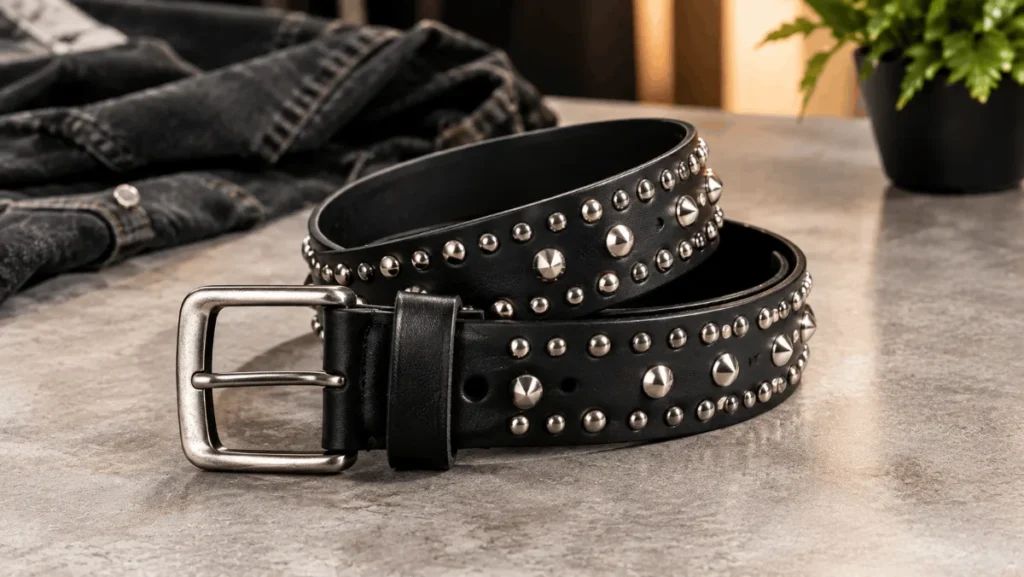
| Cone | Classic punk feel | Jeans, band tees, boots |
| Pyramid | Bold, geometric | Statement looks, jackets |
| Spike | Aggressive, theatrical | Costumes, concerts, edgy styling |
Spikes look dramatic, but they snag fabric, scratch furniture and can poke you when you sit. For daily wear, I’d go with smaller domed or pyramid studs.
Density matters too. A belt with studs spaced widely looks lighter and more modern, while closely packed studs create a heavy band that can overwhelm a small frame.
Materials: What a Good Studded Belt Is Made Of
The belt itself is usually leather, and quality varies wildly. Full-grain leather is the top tier, the strongest and most durable, and it develops a nice patina over time. Top-grain is a close second. “Genuine leather” sounds impressive but often means a lower grade, and bonded leather is scraps glued together that tends to crack and peel.
Faux leather, such as polyurethane, is common in cheaper belts. It’s fine for a trend piece and animal-free, but it doesn’t age as gracefully and can crack along the holes. Canvas and fabric belts with studs exist too, and they’re lighter and more casual.
The studs are typically brass, steel, nickel-plated or zinc alloy. Solid brass and stainless steel resist corrosion best. Plated studs can wear, flake or tarnish, especially in humid weather.
If you’re sensitive to metals, check the finish. A nickel allergy is common, and some belts use nickel in the buckle or the studs. Look for nickel-free hardware if your skin reacts.
How the Studs Are Attached
This is the single best predictor of durability. Prong-back studs have two small legs that push through the leather and bend flat on the other side. They’re cheap and fast, but the prongs can loosen and pull out over time. Screw-back studs, often called Chicago screws, thread together through the belt and hold much more securely. Rivets are the strongest, with a permanent hold.
Flip the belt over and look at the back. Neat, flat prongs or screws with clean finishing are a good sign. Bent, scratchy or uneven prongs mean poor assembly and a belt that will shed studs. Those exposed ends can also scratch your pants.
I’d choose screw-back or riveted studs for any belt you plan to wear often. Prong-back is acceptable for occasional wear, but expect to tap a few prongs back down eventually.
Getting the Size and Width Right
A common rule is to pick a belt size about two inches bigger than your pant waist, because belt sizing measures from the buckle to the center hole while pants are measured at the waist. Check each brand’s size chart, since they vary. You want to buckle on the middle hole so you have room to adjust up or down.
Width changes the whole look. Belts around one inch wide suit dresses, high-waisted trousers and slim builds. A 1.25 to 1.5-inch band is the usual jeans width and fits most belt loops. Wider statement belts need loops that can handle them, or they won’t pass through.
Measure your best-fitting belt or pants, and check the loop width before you buy. A belt that doesn’t fit the loops is a recurring annoyance.
Prices vary and change often, so compare current listings, and don’t assume a high price means better construction. Check the details yourself.
How to Wear a Studded Belt
With jeans, it’s the classic pairing. A black studded belt with dark denim, boots and a plain tee is nearly foolproof, and a brown belt with studs works with lighter washes and casual shirts.
For dresses, a thin studded belt at the waist adds structure and a bit of attitude to a shapeless or soft dress. It’s an easy way to make a floral or slip dress feel less sweet.
For blazers and tailoring, go subtle. A belt with small, tonal studs over a tailored coat or cinching a blazer looks sharp. It keeps the edge without clashing with formal pieces.
Match your hardware where possible. If the belt has silver studs, silver jewelry and zippers tie it together. Mixing metals can work, but it takes a deliberate eye.
One thing worth flagging is balance. If the belt is the statement piece, keep the rest of the outfit simpler. Studs on the belt, the jacket, the boots and the bag is a lot.
Care and Maintenance
Treat leather like skin. Wipe it with a dry cloth, and condition it every few months with a leather conditioner to prevent cracking. Avoid soaking it, and let it dry naturally if it gets wet.
Polish metal studs gently with a soft cloth, and keep them away from harsh chemicals that can strip plating. Check the attachments occasionally and tighten screws or press back loosened prongs.
Store the belt flat or hung by the buckle, not tightly coiled, so the leather doesn’t crease. Don’t leave it in a hot car, where heat warps leather and loosens glue.
Practical Annoyances
Studded belts can set off metal detectors at airports, and wearing one through security may mean taking it off. Check the screening rules at TSA’s website if you’re flying, and consider a simpler belt for travel days.
They also scratch car seats, laptop bags and furniture if the studs catch. If you sit a lot, a belt with flatter or smaller studs is kinder to your surroundings.
And watch out for the hardware near your stomach. A heavy buckle or exposed prongs can dig in if you sit for long periods.
Mistakes to Avoid
Buying on photos alone is the biggest. Look for close-up shots of the back and the attachment method, and read reviews that mention studs falling out. Going too wide for your belt loops, choosing the wrong size and picking spikes for everyday wear are the other classics.
Also avoid cheap plating if you sweat or live somewhere humid. It flakes quickly and can stain clothes.
For a good overview of belt types and construction, the Wikipedia article on belts covers the basics, and rivets are worth reading about if you want to understand why they hold so well.
My Recommendation
For most people, a black or brown full-grain leather belt, about 1.25 inches wide, with domed or pyramid studs on screw-back or riveted fittings, covers nearly every outfit. Spend more on construction than on the studs themselves, and skip anything with sharp spikes unless it’s for a specific look.
If you just want to try the trend, a faux leather belt at a low price is a fine experiment, as long as you accept it may not last.