






Roof Cleaning Guide: Methods, Costs, and Safety
Roof cleaning should remove algae, moss, lichen, leaves, and other buildup without stripping protective material, forcing water beneath the roof covering, or putting someone at risk of a fall.
For an asphalt-shingle roof, that normally means a manufacturer-approved cleaning solution applied and rinsed at low pressure. The Asphalt Roofing Manufacturers Association warns homeowners not to use a power washer, brush, or broom on asphalt shingles because these methods can loosen protective granules and contribute to premature damage. ARMA also recommends that roof work be performed by trained professionals because wet roofing becomes extremely slippery.
The correct method changes with the roofing material. A process suitable for concrete tile may damage asphalt shingles, while a chemical safe for one metal coating may discolor another. Identify the roof and check its manufacturer’s care instructions before accepting any cleaning proposal.
Roof-Cleaning Methods at a Glance
| Roofing material | Appropriate starting method | Main risk to avoid |
|---|---|---|
| Asphalt shingles | Manufacturer-approved solution and gentle low-pressure rinse | Power washing, scrubbing, and granule loss |
| Concrete or clay tile | Cleaning by an experienced roofing professional using a material-appropriate process | Walking damage, broken tiles, excessive pressure |
| Metal roofing | Mild cleaning method compatible with the panel coating | Abrasives, harsh chemicals, and scratched finishes |
| Slate | Specialist low-pressure cleaning | Cracked slate and unsafe foot traffic |
| Wood shakes or shingles | Roof specialist using material-specific treatment | Fiber damage, trapped moisture, and aggressive washing |
| Flat or membrane roof | Membrane manufacturer’s maintenance procedure | Punctures, damaged seams, and incompatible chemicals |
The Tile Roofing Industry Alliance recommends professional work on concrete and clay tile roofs, while the Metal Roofing Alliance advises following the metal-roof manufacturer’s specific maintenance instructions. “Soft washing” should not be treated as one universal chemical recipe for every roof. (Metal Roofing Alliance)
What Is Growing on the Roof?
A roof that looks dirty may contain several different forms of buildup. Identifying the problem helps determine whether cleaning, maintenance, or repair is required.
Black streaks are commonly algae
Brown or black streaks on asphalt shingles are frequently caused by airborne algae. ARMA identifies Gloeocapsa magma as one of the most common species associated with roof discoloration. It is especially noticeable on lighter shingles and in warm or humid areas, although staining can occur throughout the United States.
Algae staining is not automatically evidence that the roof is leaking or structurally failing. It may still justify cleaning for appearance and maintenance, but the contractor should first confirm that the discoloration is biological growth rather than soot, tree debris, material deterioration, or another stain.
Moss forms thicker patches
Moss typically creates raised green clumps rather than long black streaks. It tends to develop where the roof remains shaded and damp.
Established moss should not be pulled aggressively from asphalt shingles. Rough removal can lift or tear shingles and detach granules. GAF recommends professional chemical treatment and warns against pressure washers or ordinary weed killers not intended for the roofing material. (GAF)
Lichen attaches firmly
Lichen often appears as flat, crusty patches in gray, green, yellow, or white tones. Its attachment can make immediate removal difficult.
A professional may treat the growth and allow it to loosen gradually rather than scraping the roof until the surface appears clean on the same day. A slower visible result can be safer than aggressive mechanical removal.
Leaves and branches create drainage problems
Leaves, pine needles, seed pods, and small branches can collect in valleys, behind chimneys, around skylights, and inside gutters. The debris may retain moisture or interfere with water drainage.
Cleaning should include an inspection of valleys, gutters, downspouts, flashing, roof drains, and areas where branches contact the roof. ARMA recommends keeping gutters clear, removing accumulated debris through nonabrasive methods, and trimming branches to improve sunlight and airflow. (ARMA)
Does the Roof Need Cleaning or Repair?
Cleaning changes the roof’s surface condition. It does not repair failed roofing materials.
Request an inspection before cleaning when you notice:
- Missing, curled, cracked, or loose shingles
- Exposed fasteners
- Soft or sagging roof areas
- Active interior leaks
- Damaged flashing
- Heavy granule accumulation in gutters
- Broken or displaced tiles
- Rusted or separated metal panels
- Damaged membrane seams
- Moss lifting the edges of shingles
- A roof near the end of its expected service period
Applying chemicals to an already failing roof may hide the appearance temporarily without addressing water intrusion or structural damage. ARMA recommends periodic inspection by a qualified roofing contractor so that damaged asphalt shingles and related components can be repaired correctly. (ARMA)
Ask the contractor to separate the quote into cleaning and repair work. A vague proposal that promises to “restore” a worn roof without identifying failed components deserves caution.
How Professional Roof Cleaning Should Work
A responsible contractor should adapt the process to the roof instead of arriving with one pressure setting and chemical mixture for every property.
1. Identify the roofing material
The cleaner should determine:
- Roof material and manufacturer, when identifiable
- Roof age
- Pitch and number of stories
- Existing damage
- Type and extent of biological growth
- Drainage routes
- Nearby plants, pools, ponds, siding, and painted surfaces
- Solar panels, skylights, vents, antennas, or permanent lighting
The contractor should also check whether the manufacturer publishes cleaning instructions or warranty restrictions.
2. Inspect before applying chemicals
The contractor should look for cracked shingles, broken tiles, loose flashing, open seams, exposed wiring, clogged drains, and areas where water could enter.
Cleaning should stop until serious defects are repaired. Low pressure does not make an open flashing joint waterproof.
3. Protect the property
Roof-cleaning runoff can reach:
- Gutters and downspouts
- Garden beds
- Lawns
- Rain barrels
- Vehicles
- Outdoor furniture
- Painted walls
- Metal flashing
- Ponds and swimming pools
A written proposal should explain how workers will protect landscaping, control overspray, handle runoff, and isolate rainwater-storage systems. ARMA specifically warns that cleaning solutions must be applied carefully to prevent damage to the building and surrounding landscape.
Homeowners who collect water from their gutters should disconnect or bypass the storage barrel before treatment. Headlinza’s guide to reducing wastewater at home explains that roof runoff collected in a rain barrel already requires careful handling and is not drinking water without suitable treatment. (HEADLINZA)
4. Apply a roof-compatible treatment
For algae on asphalt shingles, ARMA advises gently applying a bleach-and-water treatment that follows the shingle manufacturer’s directions. Manufacturer instructions may differ according to the product and severity of staining, so a universal mixture should not be assumed.
The applicator should use the product exactly as labeled, including required protective equipment, dilution, dwell time, environmental precautions, and rinsing instructions.
Never combine bleach with ammonia, acids, vinegar, glass cleaners, or another cleaning chemical. These mixtures can release dangerous gases. (Poison Control)
5. Use a gentle rinse where required
ARMA’s current asphalt-shingle guidance describes gently spraying the roof with water after the approved treatment period. It explicitly warns against high-pressure systems, brushes, and brooms.
Water should travel in the roof’s normal drainage direction. Spraying upward can push water beneath overlapping shingles or tiles.
Some no-rinse products are designed to work gradually through weather exposure. Use them only when the product label and roof manufacturer permit that procedure.
6. Inspect and document the result
The contractor should provide before-and-after photographs showing:
- Major roof slopes
- Valleys
- Flashing
- Skylights and penetrations
- Gutters
- Remaining moss or lichen
- Damage discovered during cleaning
Not every roof should look completely new immediately. Moss and lichen may need time to release after treatment, and repeated aggressive cleaning can be more damaging than accepting a gradual result.
Why Pressure Washing Can Damage Asphalt Shingles
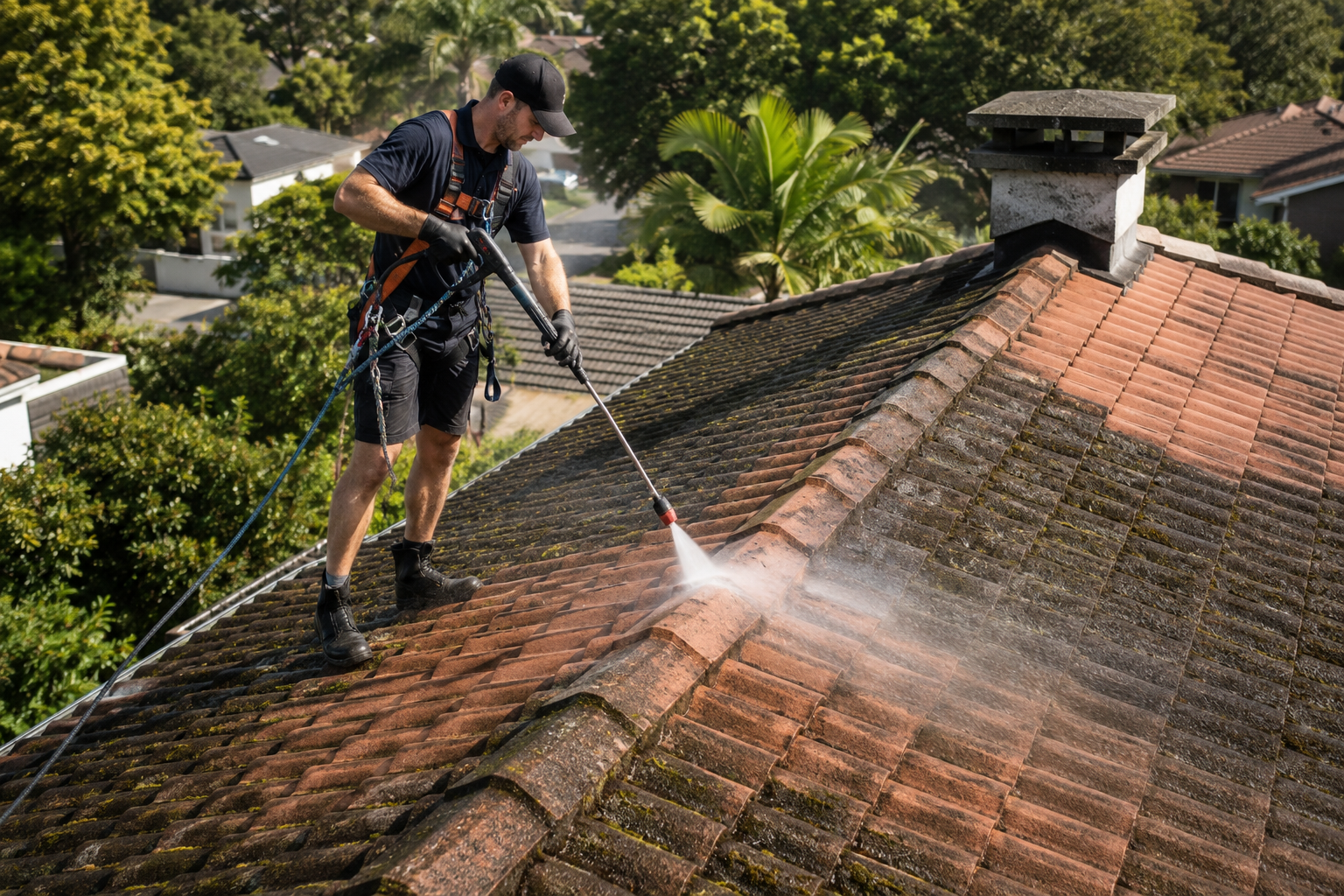
Asphalt shingles rely on embedded surface granules for protection from sunlight and weathering. A concentrated pressure-washer stream can remove those granules, disturb shingle edges, and force water into places it would not normally travel.
ARMA states that high-pressure washing systems are likely to damage asphalt roofing and should not be used for algae, dirt, or other stains. GAF provides similar guidance, warning that pressure washing may dislodge granules and contribute to premature shingle failure.
The term soft wash generally describes chemical cleaning with low-pressure application, but the name alone does not prove that a service is safe. Ask for:
- Application pressure
- Rinse pressure
- Cleaning-product name
- Active ingredients
- Compatibility with your roof
- Manufacturer approval
- Landscaping protections
- Worker fall-protection plan
A company can advertise “soft washing” while still using an unsuitable chemical concentration or an aggressive rinse.
Are Tile and Metal Roofs Pressure-Washable?
Some concrete-tile and metal roofs can tolerate cleaning methods that would damage asphalt shingles. That does not mean every tile or metal roof should be pressure washed.
The Tile Roofing Industry Alliance states that professional low-intensity pressure washing may be used on concrete tile, while also recommending that homeowners hire experienced roofing professionals. Tile can crack under foot traffic, and water directed incorrectly may enter through overlaps or damaged underlayment. (Tile Roofing Industry Alliance)
For metal roofing, the coating manufacturer’s instructions control the method. Industry guidance commonly favors removing debris and using gentle soap-and-water cleaning rather than abrasive tools or harsh chemicals. Coating type, corrosion, fasteners, seams, and previous repairs can change what is safe. (Metal Roofing Alliance)
Do not hire a contractor who claims one pressure setting is safe for asphalt, clay, concrete, slate, wood, painted metal, and membrane roofing.
Should You Clean a Roof Yourself?
For most steep, high, multi-story, fragile, or heavily contaminated roofs, professional cleaning is the safer choice.
OSHA identifies falls as a common cause of serious workplace injuries and deaths. Its fall-protection resources emphasize controlling elevated work hazards, keeping working surfaces as dry as possible, using suitable equipment, and training workers to recognize risks. Although OSHA rules apply to workplaces rather than ordinary homeowners, the hazards do not disappear during a DIY project. (OSHA)
Roof-cleaning risks include:
- Ladder falls
- Sliding on wet algae, moss, or cleaning solution
- Stepping through weak decking
- Breaking tiles
- Damaging shingles through foot traffic
- Chemical exposure
- Overspray entering eyes or lungs
- Contact with overhead electrical lines
- Water reaching electrical equipment
- An unsecured hose pulling the user off balance
ARMA recommends that only trained professionals walk, climb, or work on a roof.
A homeowner can safely handle some ground-level preparation, such as moving vehicles, closing windows, disconnecting a rain barrel, identifying irrigation zones, and providing the contractor with roof documents. Roof access, chemical application, and treatment of a wet slope should not become an improvised weekend task.
Headlinza’s permanent holiday lights guide discusses another common roofline project where multi-story access and complex roof shapes make professional work more practical than repeated ladder use. (HEADLINZA)
How Much Does Professional Roof Cleaning Cost?
As of July 2026, Angi reports that professional roof cleaning commonly costs $296 to $625, with an average of about $461. Its wider observed range is approximately $150 to $1,000, depending on roof size, material, pitch, access, cleaning method, and the extent of buildup. (Angi)
Example planning ranges for an accessible roof include:
| Roof area | Typical planning range |
|---|---|
| 1,000 square feet | $200–$600 |
| 1,500 square feet | $300–$900 |
| 2,000 square feet | $400–$1,200 |
| 2,500 square feet | $500–$1,500 |
These are national estimates, not fixed prices. A steep three-story roof with heavy moss, delicate material, complex valleys, solar panels, or difficult ladder access may cost much more than a simple one-story roof of the same area. (Angi)
What can increase the quote?
Common price factors include:
- Total roof area
- Pitch
- Building height
- Roof complexity
- Type of roofing
- Amount of moss or lichen
- Chemical and rinse requirements
- Difficult access
- Landscaping protection
- Gutter and downspout work
- Solar-panel obstructions
- Required repairs
- Local labor and insurance costs
A low quote may exclude gutters, plant protection, cleanup, inspection, or repeat treatment. Request an itemized total rather than comparing only the headline price.
How Often Should a Roof Be Cleaned?
There is no reliable cleaning schedule that suits every roof.
A shaded asphalt roof in a humid climate may develop visible staining sooner than a sun-exposed metal roof in a dry region. Tree coverage, roof orientation, ventilation, drainage, material, local rainfall, and algae-resistant manufacturing features all influence buildup.
Use condition-based maintenance:
- Inspect from the ground after major storms.
- Check for debris, black streaking, moss, and blocked drainage.
- Arrange a professional inspection when growth becomes established.
- Clean only through a method approved for the roof.
- Avoid unnecessary repeated washing.
ARMA recommends routine professional inspections, often in spring and fall, along with keeping gutters, downspouts, and roof surfaces free of debris. An inspection does not mean the roof must be chemically cleaned every season. (ARMA)
How to Choose a Roof-Cleaning Contractor
Ask each company the same questions so that the quotes can be compared properly.
Verify the business
Request:
- Business name and physical contact information
- Liability-insurance documentation
- Workers’ compensation coverage where applicable
- Required state or local licensing
- References for the same roof material
- Photos of comparable projects
Ask about the exact method
The contractor should explain:
- How the roofing material was identified
- Whether the manufacturer’s guidance was checked
- The name of the cleaning product
- How it will be applied
- Whether it requires rinsing
- How pressure will be controlled
- How landscaping and runoff will be managed
- Whether workers will walk on the roof
- What fall protection will be used
- Which areas are included in the price
Reject vague answers such as “commercial chemicals,” “industry-strength wash,” or “we use the same method on every house.”
Get the scope in writing
The proposal should state:
- Total price
- Roof areas included
- Gutter cleaning inclusion or exclusion
- Moss and lichen expectations
- Plant and property protection
- Cleanup responsibilities
- Repair exclusions
- Payment schedule
- Workmanship warranty
- Procedure if staining remains
Angi recommends confirming the method, supplies, included services, total cost, and before-and-after documentation before hiring. (Angi)
How to Reduce Future Algae and Moss Growth
Cleaning removes current buildup but may not eliminate the conditions that allowed it to grow.
Practical prevention includes:
- Trimming branches away from the roof
- Increasing sunlight and airflow
- Removing leaves from valleys
- Keeping gutters and downspouts clear
- Correcting drainage problems
- Repairing leaks
- Preventing irrigation sprinklers from wetting the roof
- Scheduling roof inspections
- Considering algae-resistant shingles during replacement
ARMA and GAF both recommend reducing shade and debris. Copper- or zinc-based prevention components may be considered during suitable roofing work, but installation must be compatible with the roof, flashing, drainage system, and manufacturer’s instructions. (GAF)
Do not apply a roof coating or “rejuvenator” simply because it promises to prevent future growth. ARMA advises against field-applied coatings over installed asphalt shingles unless the shingle manufacturer specifically supports the treatment. (ARMA)
Frequently Asked Questions
Can you pressure wash an asphalt-shingle roof?
No. ARMA warns that power washing can remove protective granules and damage asphalt roofing. Use a manufacturer-approved low-pressure process instead.
Is soft washing safe for a roof?
It can be appropriate when the solution, concentration, application pressure, rinse method, and dwell time are compatible with the exact roofing product. The phrase “soft wash” alone is not proof of safe work.
Will roof cleaning remove moss immediately?
Not always. A suitable treatment may kill or loosen moss gradually. Forcing every patch off during the appointment can damage the roof beneath it.
Can roof cleaning stop a leak?
No. Cleaning may expose a damaged area, but it does not replace missing shingles, failed flashing, damaged underlayment, broken tiles, open seams, or deteriorated decking.
Can cleaning chemicals damage landscaping?
Yes. Overspray or runoff can affect plants and other surfaces. The contractor should explain how landscaping, downspouts, rain barrels, ponds, and nearby materials will be protected.
Can improper cleaning affect a roof warranty?
It can. Cleaning requirements and exclusions vary by manufacturer. Request the roof manufacturer’s current instructions before approving power washing, chemicals, coatings, or mechanical scrubbing. (ARMA)
Final Takeaway
Roof cleaning is not ordinary pressure washing.
For asphalt shingles, use a trained professional who follows the roof manufacturer’s chemical and low-pressure instructions. Do not allow power washing, aggressive brushing, or scraping simply to create a dramatic same-day result.
Tile, metal, slate, wood, and membrane roofs require their own procedures. The contractor should identify the material, inspect for damage, protect the property, explain the cleaning product, control runoff, and document the finished work.
Budget roughly $296 to $625 for a common professional project, while expecting steep, complex, large, or heavily contaminated roofs to cost more. (Angi)
Most importantly, treat a dirty roof and a failing roof as separate problems. Cleaning can improve appearance and remove buildup. It cannot repair structural deterioration, leaks, broken materials, or an aging roof system.
- How to Hire a Roofing Contractor
Suggested Update Frequency:
Review annually. Update sooner if ARMA guidance, manufacturer procedures, contractor-safety requirements, or national pricing changes materially.
Category Setup Required:
None
Professional Review Recommended:
None
Content Mode Notes:
This is a new research-based safety and home-maintenance guide. It does not claim hands-on roof cleaning, roofing-contractor experience, chemical application, inspection, or testing on a specific roof.
The live website currently has a Home & Garden archive, but the governing Headlinza master prompt lists Lifestyle as the approved primary category for home and living content. Lifestyle was therefore retained as the primary category. (HEADLINZA)