







Mahjong Online Free: Best Ways to Play Without Paying
Mahjong online free. The version most people see first is mahjong solitaire. You get a stack of tiles arranged in a pattern, and you clear the board by matching identical pairs that are free (not covered, and open on at least one side). It became widely known through computer games in the 1980s, and it borrows its tiles from the older game but not its rules.
The original is mahjong proper, a four-player game where you draw and discard tiles to build a winning hand. If you’ve played rummy, the core idea will feel familiar. It’s social, tactical, and full of decisions about what to keep and what to throw away.
What tends to surprise people is how little the two have in common. Solitaire is about pattern recognition and speed. Real mahjong is about reading opponents and managing risk. Neither is better, but they suit different moods.
Where to play mahjong online free (solitaire)
If you just want tiles, a timer, and a satisfying cleared board, browser-based solitaire is the easy answer. Arkadium’s free tile-matching version, which appears on several major sites, works with no download. You click matching pairs of unblocked tiles, and the flower and season tiles can match each other, a small quirk that catches new players off guard.
In my experience, these free versions vary mostly in layouts, difficulty, and how many ads sit around the board. The gameplay itself barely changes. So pick the one that loads fast and doesn’t bury the board under pop-ups.
A quick tip for solitaire: don’t grab the first matching pair you see. Look for tiles that are blocking others and clear those first. Rushing leaves you stuck with unmatched tiles underneath, and that’s how most games end in a dead board.
Playing real mahjong online for free
Mahjong Soul
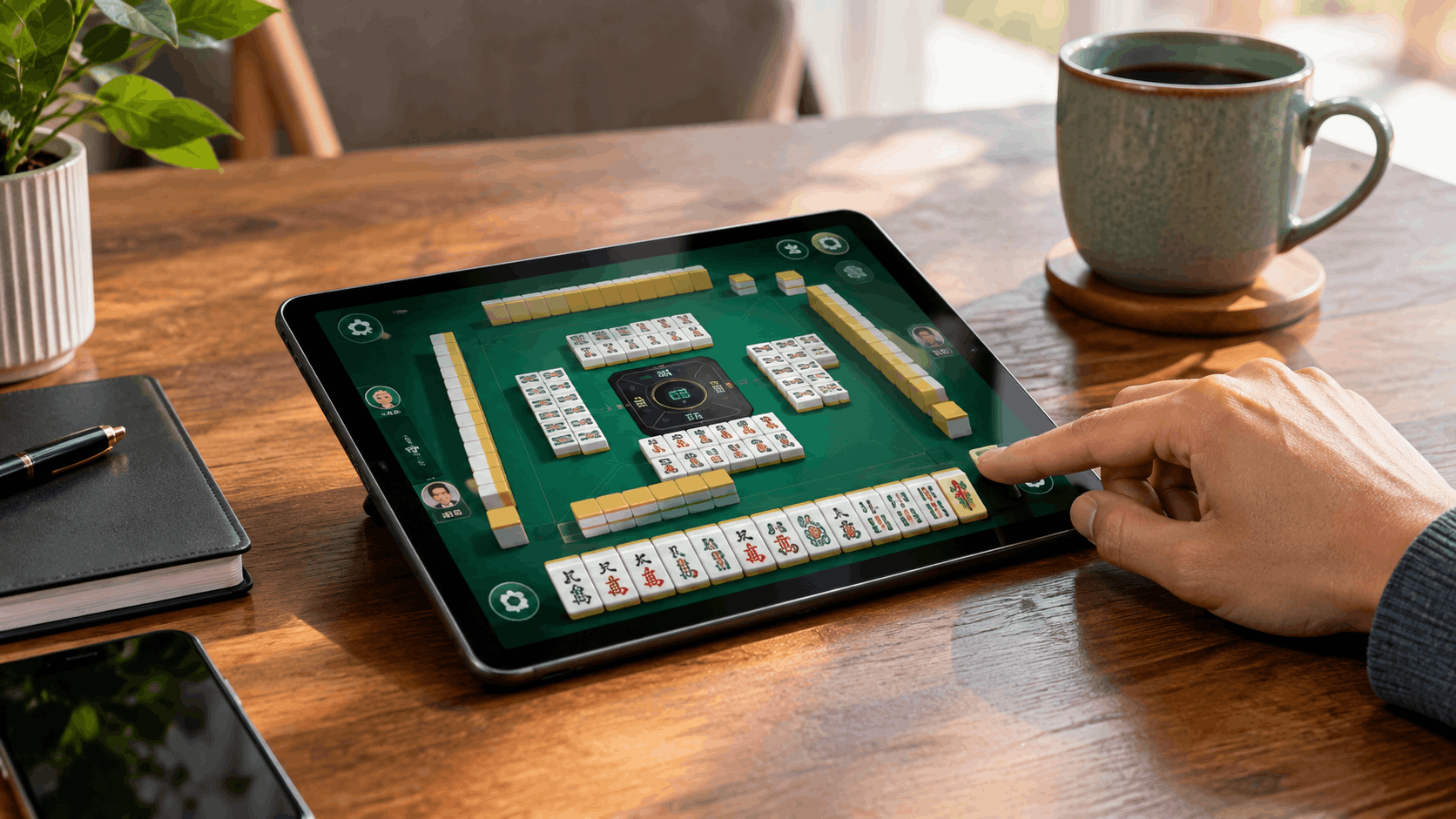
For the four-player game, Mahjong Soul is the name most people bring up first. It’s a free-to-play platform built around Japanese mahjong (also called Riichi), and its Steam page lists it as free to play. It offers a beginner tutorial and lets you play against people from around the world at similar skill levels. Reviews of the platform also point to a browser version and mobile apps, though check the store listings for your device.
The catch is that it only teaches Riichi rules. If you learn there and later sit down at a table using American or Hong Kong rules, you’ll need to adjust. One thing worth flagging: the anime-style presentation is a love-it-or-leave-it feature. It’s part of the appeal for many players and a distraction for others.
Mahjong Time
If you care about rule variety, Mahjong Time is often described as supporting several rule sets, including Chinese, Japanese, and American styles. That’s useful if you already know one style and want to play it online. I’d treat the exact list of variants as something to confirm on the site itself, since platforms change what they offer.
Which one is right for you
If you’re brand new and want to learn the real game with a good tutorial, Mahjong Soul is the easiest place to begin. If you already play a particular style, look at a platform that supports your rules before you commit time to an account.
A quick comparison
| Option | Type | Best for | Cost (as of September 2026) |
|---|---|---|---|
| Arkadium-powered solitaire | Tile-matching puzzle | Quick breaks, no signup | Free, ad-supported |
| Mahjong Soul | Four-player Riichi | Learning the real game | Free to play, with cosmetics |
| Mahjong Time | Multiple rule sets | Players who know a specific style | Free with premium options |
Pricing and features shift, so check each site for current terms.
The real rules in plain English
If you’re going to try the four-player game, a few ideas will save you hours of confusion.
You play with a set of tiles that includes numbered suits, honor tiles (winds and dragons), and in many rule sets bonus tiles like flowers and seasons. A classic set has 144 tiles, though Japanese sets drop some of them. Each turn you draw a tile and discard one, aiming to complete a hand of sets and a pair. Sets are usually runs of consecutive tiles in one suit or three of a kind.
Rules for what counts as a winning hand, how points work, and which special hands are allowed differ a lot between styles. That’s the main reason I’d pick one style and stick with it early on. Bouncing between Riichi, Hong Kong, and American rules while you’re still learning tile efficiency is a recipe for confusion.
Getting better without spending a cent
Beginners sink hours into free mahjong without improving because they don’t review their mistakes. A few habits speed things up.
Play slower than you think you should at first. Most early losses come from discarding a tile you needed or handing an opponent their winning tile. If the platform has a replay feature, watch a couple of your losses and see where the hand went wrong.
Learn tile efficiency before fancy hands. Rare, high-scoring hands look exciting, but steady, simple wins beat chasing jackpots. And pay attention to what your opponents discard. Their discards tell you what they’re not collecting, which helps you avoid feeding them.
Safety and sanity checks
Free doesn’t mean risk-free. Stick to well-known platforms, and be careful with sites that ask you to download unfamiliar software for a simple browser game. If a site demands payment details for something advertised as free, walk away. And watch for cosmetic purchases that sneak up on you, since some free platforms make money that way.
Also check the age rating on any gambling-style skins or mini-games. Mahjong itself isn’t gambling, but the game has a long association with betting in some places, and some apps blur the line. Keep an eye on what you’re actually agreeing to.
Common mistakes new players make
Assuming solitaire teaches you real mahjong is number one. It doesn’t. The tiles look the same, but the skills barely overlap.
Another is jumping into ranked play too early. You’ll lose a lot at first, and that’s normal. Start with the tutorial and low-stakes games until the rules feel automatic.
And finally, ignoring the rule set. Before you join a table, know which version you’re playing. A hand that wins in one style might not count in another.
My recommendation
If your goal is a calm puzzle, go with free browser solitaire and enjoy it. If you want a real game with real opponents, start with Mahjong Soul, work through the tutorial, and commit to one rule set for a few weeks before you branch out.
I’d also suggest giving yourself a small goal, like completing the tutorial and playing ten games, before you decide whether it’s for you. That’s enough to tell whether the game clicks.