




Subaru and Mitsubishi: Are They Related, and How Do They Compare?
No. Subaru Corporation and Mitsubishi Motors are two completely separate companies with different ownership structures, different histories, and no shared parent entity. The confusion likely comes from the fact that both are Japanese, both built early reputations on rally-bred all-wheel-drive performance, and both have that vaguely “adventurous” brand image that gets lumped together in casual conversation.
Subaru traces its roots to Fuji Heavy Industries, an aircraft manufacturer that pivoted into cars after World War II. Mitsubishi Motors, meanwhile, spun out of the massive Mitsubishi conglomerate, which also has divisions in shipbuilding, electronics, and heavy machinery. In my experience, people also confuse the two because Subaru and Mitsubishi both had genuinely famous rally programs in the 1990s and 2000s. The Subaru Impreza WRX STI and Mitsubishi Lancer Evolution were direct rivals on rally stages and in showrooms, which probably did more to cement the “these brands are basically siblings” idea than anything else.
Ownership-wise, the two aren’t tangled up with each other at all. Mitsubishi Motors is part of the Renault-Nissan-Mitsubishi Alliance, a partnership formed after Nissan took a controlling stake in the automaker back in 2016. Subaru, on the other hand, operates independently, with Toyota holding a meaningful but non-controlling stake, generally reported in the high teens to around 20 percent. Neither company owns any part of the other, and their engineering teams don’t share platforms.
Where the Two Brands Actually Diverge
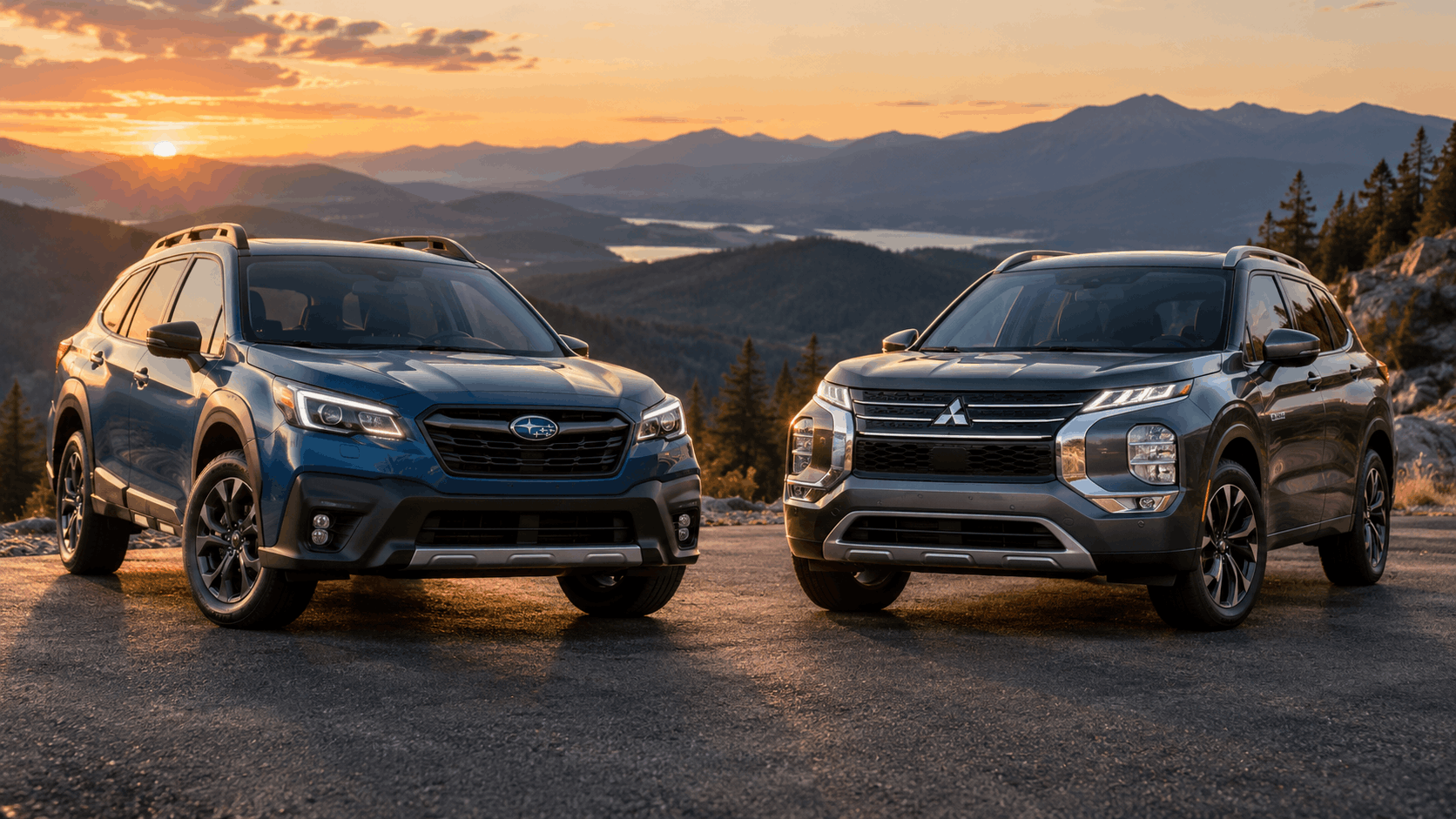
Once you get past the ownership question, subaru and mitsubishi start looking pretty different as brands, especially in markets like the US.
Subaru has leaned hard into a specific identity: symmetrical all-wheel drive as standard on nearly every model, boxer engines, and a lineup built around outdoorsy, practical buyers. Models like the Outback and Forester dominate that space, and Subaru’s reputation for safety ratings and resale value has become a genuine selling point rather than just marketing language.
Mitsubishi’s US lineup looks thinner these days by comparison. The brand pulled back from several markets over the past decade and now sells a smaller range of models, mostly crossovers like the Outlander and Eclipse Cross, plus a few sedans and the Mirage. What tends to surprise people is how much smaller Mitsubishi’s American footprint has become relative to its reputation from the Evo era. The performance halo cars are gone, and the current lineup leans toward value and practicality rather than driving excitement.
One thing worth flagging: warranty coverage is genuinely one of Mitsubishi’s stronger selling points. The brand has historically offered longer powertrain warranty terms than most competitors, which matters a lot if you’re buying used or keeping a car for a decade. Subaru’s warranty coverage is more standard for the segment, but the brand makes up for it with strong resale value, so total ownership cost often ends up comparable either way.
Reliability and Ownership Experience
Neither brand tops the reliability charts the way Toyota or Honda tends to, but they’re not far off either, and the gap between them isn’t huge. Subaru’s boxer engines have had known issues with head gaskets on older models, particularly in the 2000s and early 2010s, though that’s largely been addressed in more recent generations. Mitsubishi’s reliability record is decent but less scrutinized simply because sales volumes are lower, so there’s less real-world data floating around.
If you’re cross-shopping the two, dealer network size matters more than people expect. Subaru has a much larger US dealer footprint, and that translates into easier access to parts, service appointments, and trade-in offers. Mitsubishi dealers exist but are noticeably sparser in a lot of regions, which is worth checking before you fall in love with a specific trim.
Which One Should You Actually Buy?
If all-weather capability and resale value matter most to you, Subaru is the stronger pick almost across the board. Standard all-wheel drive on most trims genuinely changes how these cars handle in snow and rain, and that reputation is well earned rather than just brand mythology.
If you’re shopping on a tighter budget and want a longer warranty as a safety net, Mitsubishi deserves a serious look, especially on something like the Outlander. It won’t match Subaru’s resale numbers, but the upfront value and coverage can make sense for buyers who plan to keep a car until it’s genuinely worn out rather than trading it in every few years.
Neither brand makes sense if raw performance or driving excitement is the priority. Both companies have moved away from their rally-era personalities toward practical, family-oriented lineups, and neither currently sells anything close to the old WRX STI or Evo in spirit.