





Dr Melaxin Peel Sho (Peel Shot) Review: Is It Worth It?
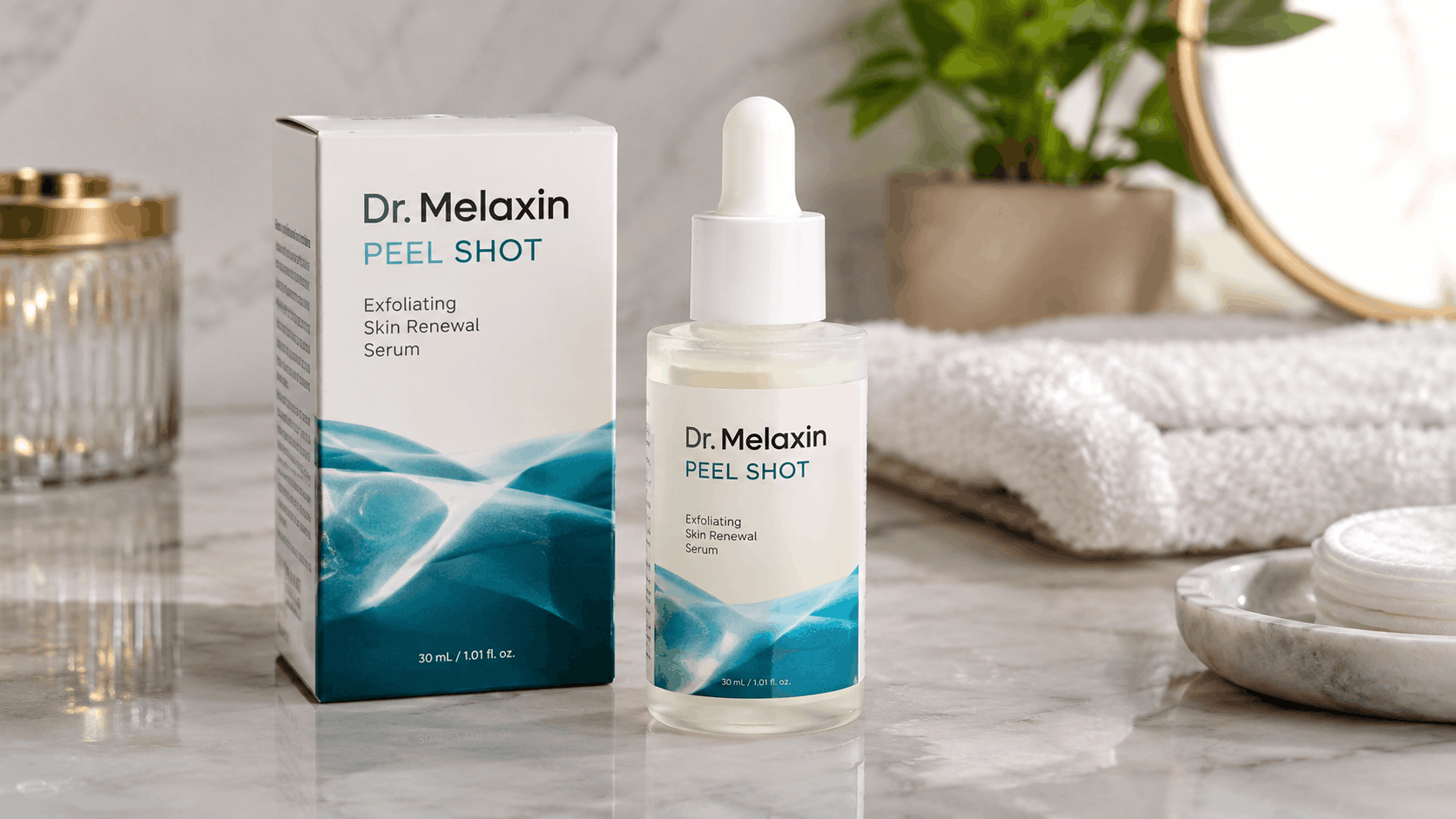
Dr Melaxin Peel Sho. The search term is a clipped version of “Dr. Melaxin Peel Shot,” so that’s the name I’ll use from here. It’s not one single product. Dr. Melaxin sells several Peel Shot items, including a Black Rice exfoliating ampoule, a White Rice exfoliating ampoule, a body exfoliating spray and a vitamin C, vitamin E and ferulic acid serum sold under the Peel Shot name.
The face ampoules are the ones most people mean. One beauty blog review from March 2026 described the Black Rice version as built around black rice, rice bran water and a niacinamide complex. The White Rice version was described as blending rice bran water, a rice-and-Pentavitin ingredient and niacinamide. That same review listed each at $26 for 2.7 oz, but prices change by seller and over time, so check a current listing.
I haven’t verified the full ingredient list for every version, and formulas get tweaked. Read the actual label on the box you’re holding, especially if you have allergies.
How the Gommage Texture Works
The reason these went viral is the texture. Dr. Melaxin Peel Shot products are often described as gommage-style exfoliants. You apply them, massage gently, and watch the product ball up into small flakes as it lifts away dead skin. It’s oddly satisfying, which explains the social media buzz.
That rolling action is a physical-feeling exfoliation, though the formulas are marketed as gentle and low-irritation. The general idea behind exfoliation is to remove dead surface cells so skin looks smoother and brighter. Done lightly and not too often, it works. Done aggressively, it wrecks your skin barrier.
In my experience, products with a “peel” label tempt people to scrub harder than needed. The texture does the work. Your job is to be gentle.
How to Use It Without Overdoing It
Brand directions vary by product, so follow the box. For the face ampoules, the typical routine is to apply to clean skin, massage lightly, rinse well and follow with moisturizer. The body spray is described as being sprayed onto dry skin, rubbed gently, then rinsed off.
Start slowly. Once or twice a week is plenty for a new exfoliant, especially if your skin is sensitive or you already use retinol or acids. You can increase frequency if your skin stays calm, but I’d rarely go beyond a few times a week.
A quick sequence that works for most people:
- Patch test on your jawline or inner arm for a day or two.
- Apply to clean skin, avoiding the eye area.
- Massage lightly for the time the label suggests.
- Rinse thoroughly with lukewarm water.
- Moisturize, and use sunscreen the next morning.
One thing worth flagging is sunscreen. Exfoliated skin is more vulnerable to UV damage, and the American Academy of Dermatology recommends daily broad-spectrum protection. Skipping it undoes the point of brightening products.
The Ingredients Worth Knowing About
Niacinamide shows up across the line, and it’s one of the better-studied cosmetic ingredients. Niacinamide is a form of vitamin B3 commonly used for oil balance, tone and barrier support. It’s generally well tolerated, though some people get flushing or irritation at higher concentrations.
Rice-derived ingredients, such as rice bran water, are staples of K-beauty, valued for hydration and a soft feel. They’re not magic, but they’re pleasant and rarely cause trouble. The vitamin C, E and ferulic serum is a different kind of product, aimed at brightening and antioxidant protection, so don’t assume it behaves like the ampoules.
If you want more background on the broader category, the Korean cosmetics overview explains why layered, hydration-focused routines became so popular.
Is Dr Melaxin Peel Sho Worth the Hype?
My lean is a qualified yes, for the right person. If you have dull, rough or congested-looking skin and you want a gentle weekly exfoliation step that feels more fun than a chemical toner, this is a good fit. It’s quick, it rinses off, and it doesn’t require long contact time.
It’s less impressive if you expect dramatic changes. Brand claims about visibly reduced pores, smoother texture and fewer blackheads sound big, but pores don’t shrink permanently, and results from exfoliation fade without regular maintenance. Think of it as a polish, not a treatment for acne or deep pigmentation.
What tends to surprise people is how fast the smoothness shows up and how fast it goes away if you stop. That’s normal for any exfoliant.
Who Should Skip It or Go Slowly
If your skin is reactive, eczema-prone, sunburned or dealing with a broken barrier, skip it for now. The same goes for active acne with open lesions, where scrubbing and massaging can spread irritation. If you use prescription retinoids or strong acids, ask your dermatologist before adding another exfoliating step.
Pregnant or nursing? Check ingredient lists with your doctor, because skincare actives vary. And if you have a known fragrance or plant-extract sensitivity, patch test carefully.
I’d also avoid layering this with other exfoliants on the same day. Pairing it with a glycolic toner or a retinol is the fastest route to a stinging, flaky face.
Where to Buy and How to Avoid Fakes
Viral beauty products attract counterfeits. Buy from the brand’s official storefront or from large, established retailers, and be suspicious of prices far below everyone else’s. Packaging inconsistencies, odd smells or textures and missing batch codes are warning signs.
The FDA’s cosmetics page is a useful place to learn about product safety and how to report adverse reactions in the U.S. Availability and pricing differ by country, and shipping from third-party sellers can add risk, so stick with trusted channels.
Keep your receipt and take a photo of the batch code. If you get a reaction, stop using it, rinse with water and talk to a doctor if the irritation doesn’t settle.
Quick Alternatives If It Doesn’t Suit You
If gommage-style products feel too active, a gentle lactic or PHA exfoliant used once a week may suit you better. If your main goal is tone and texture without scrubbing, niacinamide serums and daily sunscreen do a lot of quiet work. For dark spots or acne marks, a dermatologist-guided plan beats any viral product.
None of these is better in every case. It depends on your skin type, how much irritation you can tolerate, and whether you enjoy the ritual of massaging a product on.