






T-Mobile Starlink Review: Is T-Satellite Worth It?
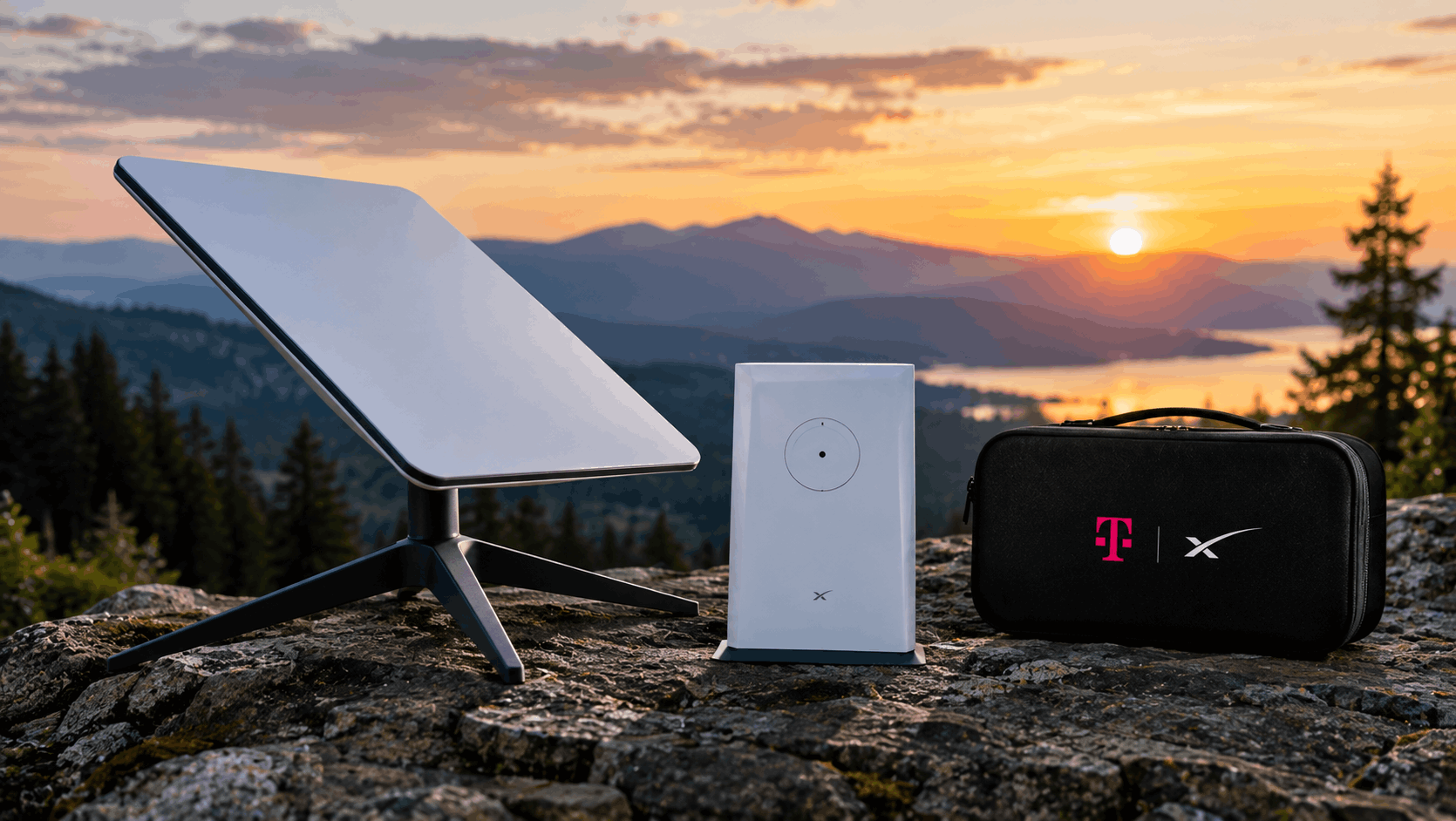
T-Mobile Starlink Review: T-Satellite is a direct-to-cell service built through a partnership between T-Mobile and Starlink, SpaceX’s satellite internet company. Instead of needing a dedicated satellite phone or bulky external antenna, your regular smartphone connects straight to Starlink satellites overhead when you’re outside normal cell tower range. No new hardware, no app to download. If your phone loses signal and a satellite is available, it steps in automatically.
The service launched commercially on July 23, 2025, after a beta period, and it’s genuinely carrier-agnostic. You don’t have to be a T-Mobile customer to use it. AT&T and Verizon customers can sign up too, as long as their phone is unlocked and has a free eSIM slot available. That’s a meaningfully different approach than most carrier add-ons, which usually lock you into their own network.
What It Actually Supports Right Now
Here’s where I’d push back a little on some of the marketing language floating around. T-Satellite is not a replacement for full cellular data. At launch, it supported basic SMS text messaging and location sharing over satellite, and that’s still the core of what most users will experience day to day.
Data support has since rolled out for a specific, curated set of apps rather than general browsing. Right now that list includes WhatsApp (including voice and video calls through the app), Google Maps, AllTrails, AccuWeather, and X. So you can check a trail map or send a WhatsApp message from a dead zone, but you’re not going to be streaming video or browsing the open web. Voice calling over the satellite network itself, not through an app like WhatsApp, is planned for a future phase tied to next-generation Starlink satellites, and there’s no firm date locked in yet for general availability.
One thing worth flagging clearly: emergency texts to 911 work over T-Satellite for free, regardless of which plan you’re on or whether you’ve paid for the add-on. That alone makes this worth having on a phone that goes anywhere remote, even if you never use it for anything else.
Pricing and How to Get It
The add-on costs $10 a month, and T-Mobile has said this introductory pricing is locked in for at least a year from commercial launch. If you’re already on T-Mobile’s Experience Beyond or Go5G Next plans, it’s included at no extra charge, which is a solid incentive to be on one of those tiers if you’re already considering it.
For everyone else, whether you’re on a lower T-Mobile tier or a competing carrier entirely, it’s a $10 monthly add-on you activate through your account settings or, if you’re not a T-Mobile customer, by calling T-Mobile directly or visiting a store. In my experience, services priced this low as an “introductory” rate tend to creep upward once the initial promise period ends, so don’t be shocked if the price shifts after that locked-in window closes. Check T-Mobile’s official page before signing up for the current number, since pricing on emerging tech like this moves.
Device Compatibility
T-Mobile lists more than 60 compatible phone models, including iPhone 13 and newer, Samsung Galaxy S21 and up, and recent Google Pixel models. If you’re carrying anything older than that, you’re likely out of luck for now. The good news is that support has been expanding steadily since launch, so it’s worth rechecking the compatibility list periodically if your current phone doesn’t make the cut.
Where This Actually Shines
The best use case, by a wide margin, is safety and peace of mind in genuinely remote areas. If you road trip through stretches of highway with no coverage, hike backcountry trails, or live somewhere rural where storms regularly knock out the local tower, having a fallback that can send a text or ping your location without any extra gear is a real upgrade over having nothing at all.
It’s also worth noting how The Verge and other outlets covering the launch pointed out that this doesn’t require any special device or app, it just works in the background. That ease of use is genuinely the strongest part of the product. You’re not fumbling with a satellite messenger device or trying to get a signal by holding your phone at an odd angle outside a tent.
Where It Falls Short
The limitations are real, and I’d rather be upfront about them than oversell the service. Coverage can be patchy, and messages may take longer to send than a normal text, sometimes noticeably so. This isn’t a full replacement for cellular data, and won’t be for a while. If you were hoping to stream, browse freely, or make regular voice calls from off-grid locations, that’s simply not what this does yet.
There’s also the compatibility ceiling. If your phone isn’t on the supported list, none of this matters to you regardless of price. And because the app-specific data support is still limited to a handful of partners, don’t expect your full app library to suddenly work off-grid.
How It Compares to Alternatives
Apple’s satellite SOS feature on iPhone works similarly for emergency texting in dead zones and comes built into recent iPhone models without an added monthly fee, though its scope is narrower and more emergency-focused. Dedicated satellite messengers like Garmin’s inReach devices offer more robust off-grid messaging but require a separate device and their own subscription. T-Satellite’s advantage is that it works on your existing phone across a wide range of models and doesn’t require carrying extra hardware, which is a real convenience if you’re not a dedicated backcountry traveler who wants specialized gear anyway.
Is It Worth Using?
If you’re already on T-Mobile’s Experience Beyond or Go5G Next plans, there’s no reason not to have it active since it’s free. For everyone else, the $10 monthly cost is reasonable if you spend meaningful time outside normal coverage areas, whether that’s for work, travel, or outdoor recreation. If you live entirely within well-covered urban or suburban areas, it’s probably not worth the add-on yet, though it doesn’t hurt to have as a safety net if the price stays low.