





Magnetic Phone Wallet Guide: What It Is & How It Works
A magnetic phone wallet is one of those small accessories that either becomes a permanent part of your daily carry or ends up in a drawer within a month. There’s not much middle ground. If you’ve ever fumbled for your card while balancing coffee and a phone, you already understand the appeal.
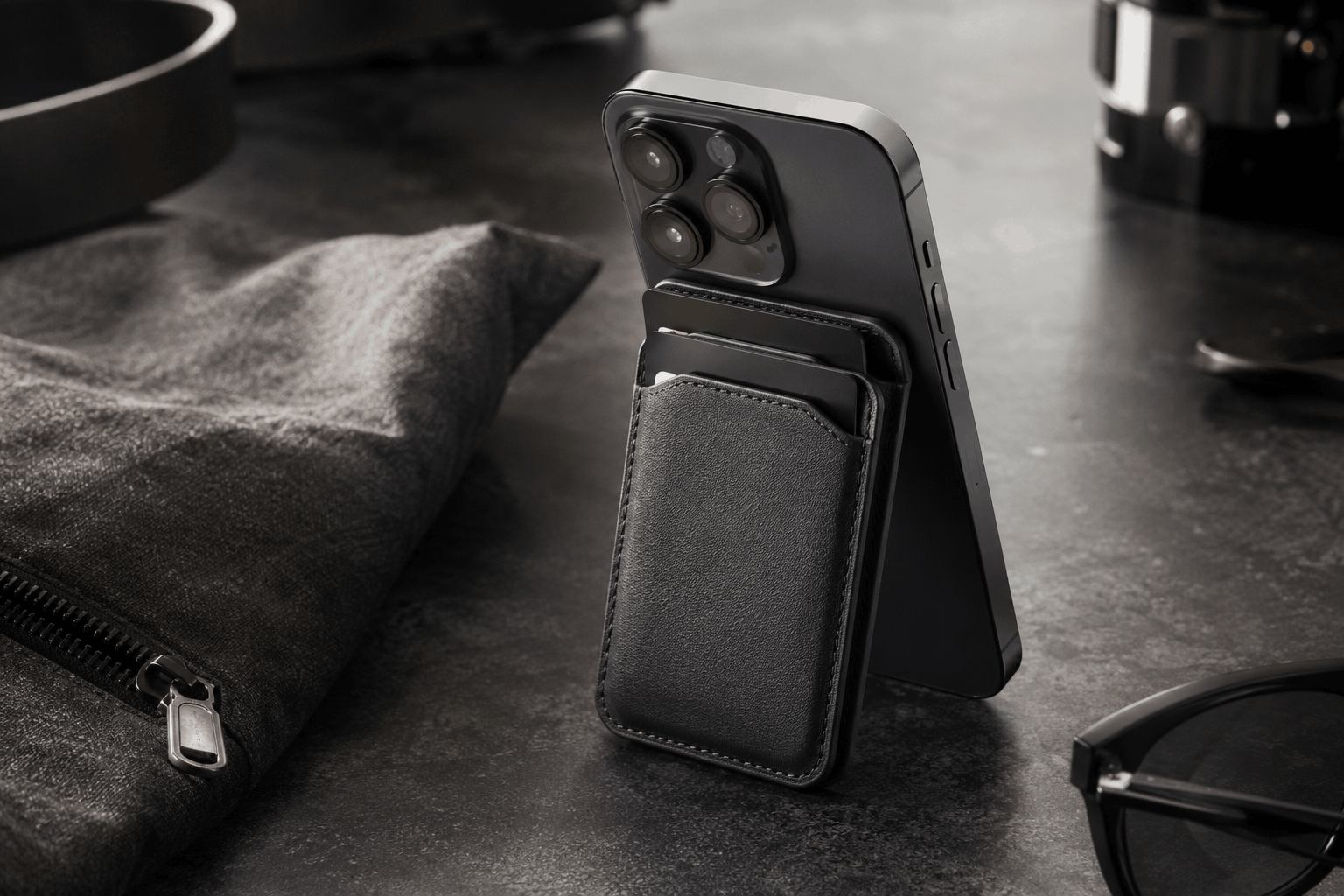
At its simplest, a magnetic phone wallet is a slim card holder that attaches to the back of your phone using magnets instead of adhesive, straps, or a case pocket. Most modern versions rely on the MagSafe standard that Apple introduced with the iPhone 12, though plenty of Android-compatible versions exist too, usually paired with a metal ring or plate stuck to the phone’s case.
How a Magnetic Phone Wallet Actually Attaches
The mechanism is simpler than people expect. Inside the wallet sits a ring of magnets arranged in a specific pattern. On iPhones from the 12 series onward, that pattern is designed to snap directly onto the magnets already built into the phone (or into a MagSafe-compatible case). Android users typically need to add a thin metal plate under their case first, since most Android phones don’t ship with built-in magnets strong enough to hold a wallet securely.
What tends to surprise people is how much the magnet strength varies between brands. A cheap wallet might use weak, unevenly spaced magnets that lose grip after a few weeks. A well-made one uses N52-grade neodymium magnets, arranged to match Apple’s official alignment ring, so the hold stays consistent even after months of daily use.
Why People Switch to One
The main draw is convenience. You’re not digging through a bag or a pocket for a separate wallet, and you’re not stuck with the bulk of a folio case that flips open every time your phone slides on a table. In my experience, the appeal really clicks once you’ve carried one through a busy day, grabbing a card at a register without pulling out an entire wallet.
There’s also a minimalism angle. A lot of people who switch to a MagSafe wallet are downsizing from a traditional bifold, keeping only the two or three cards they actually use daily and leaving the rest at home. That’s a real shift in habit, not just a gadget purchase.
And for anyone who’s tired of case-integrated card slots, which tend to make phones noticeably thicker, a magnetic wallet adds almost no bulk. Most sit under 4mm thick.
What It’s Actually Good For (and Where It Falls Short)
A magnetic phone wallet works best for people who carry two to four cards, want their phone and payment method in one grab, and don’t need cash storage day to day. It’s genuinely useful for commuters, students, and anyone who wants to skip carrying a separate wallet for quick errands.
Where it struggles is anywhere you need more than a handful of cards, or if you rely on cash regularly. Stack too many cards in one and the magnetic hold weakens, since the extra thickness pushes the wallet further from the phone’s magnets. Three cards is usually the practical ceiling for most wallets on the market, even if the product claims to hold more.
One thing worth flagging: magnetic strips on hotel key cards and some older transit cards can get wiped if they sit directly against a strong magnet for too long. Chip cards and tap-to-pay cards are unaffected, but if you’re holding a magstripe-only card, it’s worth double-checking after a few days of use.
Durability and What Actually Wears Out
The two failure points are almost always the same: the magnets weakening over time, and the outer material fraying at the edges from being slid on and off. Leather versions tend to age better cosmetically, developing a patina rather than looking scuffed, while synthetic leather and silicone options often show wear faster but cost less to replace.
Genuine leather wallets from brands like Bellroy or Apple’s own MagSafe leather wallet line hold their magnetic strength well because they use certified alignment magnets. Off-brand versions from marketplace sellers are far more inconsistent. Some are genuinely fine. Others lose noticeable grip within a couple of months, which is the single most common complaint you’ll find in product reviews.
Buying Advice: What to Actually Check Before Purchasing
Skip the marketing copy and look at three things: magnet certification, card capacity, and material.
For magnet certification, look for wallets that explicitly mention compatibility with Apple’s MagSafe alignment ring, or ones that include their own metal plate for Android phones. This matters more than any other spec on the listing.
For card capacity, be honest about how many cards you actually carry daily, then buy for that number rather than the maximum the listing advertises. Overloading a magnetic wallet is the fastest way to end up with a card that slides out mid-day.
For material, leather ages better and looks more intentional over time, but costs more upfront. Synthetic options are cheaper and often just as functional if you’re not picky about long-term appearance.
Price-wise, expect to pay somewhere between $15 and $60 depending on brand and material, as of mid-2026. Official Apple accessories sit at the higher end, while third-party options from Amazon or similar marketplaces cover the lower range. Check the Apple accessories page directly if you want confirmed current pricing, since third-party prices shift often.
A Few Mistakes People Make With Them
The most common mistake is buying one without checking whether the phone actually has built-in magnets. Older iPhones, most budget Android phones, and tablets generally don’t, which means the wallet either won’t stick at all or will need an added metal plate to work at all.
Another mistake is assuming the wallet doubles as a phone case. Most don’t offer any drop protection, so if your phone slips, the wallet does nothing to cushion the fall. Pair it with a MagSafe-compatible case if you want both the card storage and some actual protection.
People also sometimes stack a magnetic wallet on top of a magnetic car mount or magnetic stand, not realizing this can interfere with the hold or, in rare cases, affect the phone’s compass or NFC reading briefly. It’s a minor issue, but worth knowing if your phone’s tap-to-pay starts behaving oddly right after adding a wallet.
Is a Magnetic Phone Wallet Worth It?
For most people who already carry a phone everywhere, yes. It removes a redundant object from your pocket and, once you’ve used one for a couple of weeks, going back to a separate wallet feels unnecessary for quick trips. The catch is picking one with solid magnets and being realistic about card capacity from the start.
If you carry cash regularly or need to hold more than four cards, a traditional wallet or a hybrid case with a built-in slot will serve you better. But for the two-to-four-card crowd who mostly taps or swipes, it’s a genuinely useful switch.
FAQs
Does a magnetic phone wallet work on any phone case? Only if the case is thin enough (usually under 3mm) and doesn’t already contain metal that interferes with magnetic grip. Thick or rugged cases often reduce the hold noticeably.
Can it damage my credit cards? Chip and contactless cards are safe. Older magstripe-only cards, like some hotel keys, can occasionally get wiped after extended contact with strong magnets.
How many cards can it realistically hold? Two to three cards is the practical limit for most models before the magnetic hold starts to weaken.
Do Android phones support magnetic phone wallets? Yes, but usually only with an added metal ring or plate attached to the case first, since most Android phones don’t include built-in magnets.
Are expensive magnetic wallets actually better? Generally yes, mainly because of magnet quality and certification. A Wirecutter review roundup of MagSafe accessories is a good place to compare tested options before spending more on a premium brand.