
Which RV Antifreeze to Buy
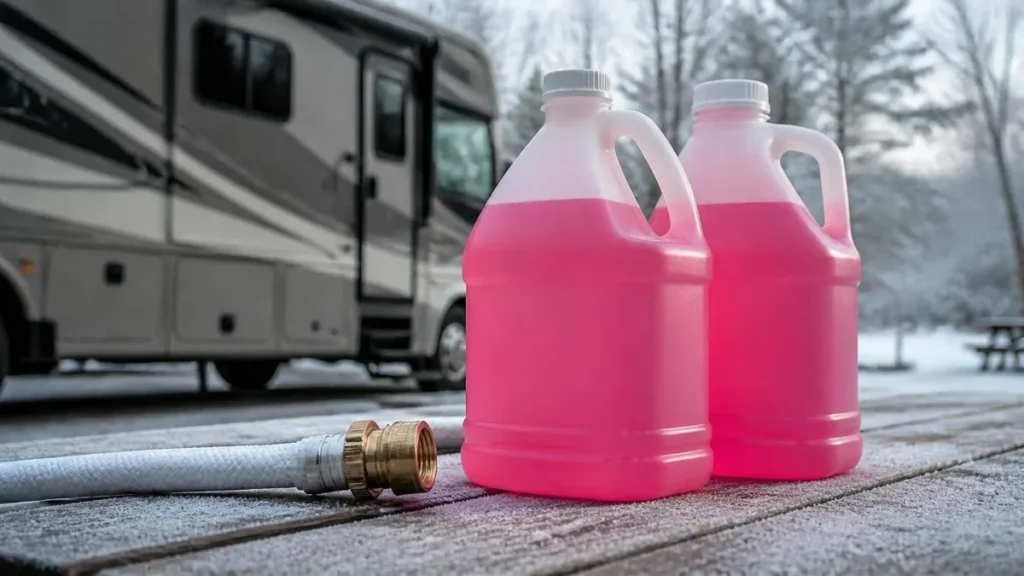
There are two common types on the shelf: ethanol-free propylene glycol, and propylene glycol blended with ethanol (sometimes sold as an “alcohol blend”). Camping World says the ethanol blends cost less but are flammable, can dry out seals, often leave a strong taste or smell, and aren’t considered safe for potable water systems. It also warns that some products labeled “propylene glycol” are actually PG-and-ethanol mixtures, so read the ingredients and the “potable water” wording, not just the front of the jug.
| Type | Safe for drinking-water lines? | Main trade-offs |
|---|---|---|
| Ethanol-free propylene glycol (RV/marine) | Yes, when labeled for potable systems | Costs more; still must be flushed before use |
| Propylene glycol + ethanol blend | Check the label and your RV manual | Flammable; can dry seals; stronger taste and smell |
| Automotive antifreeze (ethylene glycol) | No, never | Toxic; attractive to pets because it’s sweet |
The pink color is only dye. It helps you see where the antifreeze has reached, but it says nothing about what’s in the jug. Your owner’s manual and any fixture makers’ guidance come before general advice, especially if you have a tankless water heater or a built-in filtration system.
What the “-50°F” Rating Actually Means
The number on the label is usually a burst-protection rating, not the temperature at which the liquid stays liquid. Quoting Camco, RVtravel.com reports that ice crystals begin to form in a -50 propylene glycol product around +10°F and it looks solid at roughly -10°F to -15°F. The slush doesn’t expand the way water does, and that’s what protects the pipes. Seeing slushy pink fluid on a cold morning is expected. It doesn’t mean the product has failed.
Burst ratings also assume the antifreeze hasn’t been watered down. Practical Sailor notes that “burst point” is a fuzzy term, and different brands describe it differently on their labels. Treat the rating as a useful comparison between products, not a guarantee for every pipe material. The practical way to protect it is to remove as much water as you can before the antifreeze goes in.
How Much You’ll Need
Most RVs take about 2 to 4 gallons, including what goes down the drains, according to Camping World. RV Wholesalers puts most travel trailers and fifth wheels at 2 to 3 gallons, with large coaches needing more. Extra bathrooms, an outdoor shower, an ice maker line or a washer hookup all add to the total, so buy a spare jug. Running dry halfway through leaves part of the system unprotected.
Step-by-Step: Winterizing With Antifreeze
Layouts vary, so follow your manual where it differs. The sequence below is the common one.
- Drain everything. Empty the fresh, gray, and black tanks and drain the water heater. Open the low-point drains and every faucet to let gravity pull out as much water as possible.
- Bypass the water heater. Set the bypass valves so antifreeze skips the tank. Camping World says bypassing is recommended mainly because you’d otherwise need a lot more antifreeze. If your RV has no bypass, check the manual or consider an aftermarket kit.
- Draw antifreeze from the jug, not the fresh tank. Use the pump’s winterizing kit or a short hose from the pump inlet into the jug. Both Camping World and RV Wholesalers advise against filling the fresh tank with antifreeze, because it takes a lot of product and dilutes protection.
- Run the pump and open fixtures one at a time. Work through hot and cold at each faucet until solid pink fluid comes out. Include the shower, outdoor shower, toilet and any other outlets.
- Protect the traps. Pour roughly one to two cups of antifreeze down each drain so the P-traps hold it instead of water. RV Wholesalers suggests about two cups per drain and about one cup in the toilet. Camping World says a few more quarts into the toilet is optional if you want some in the black tank.
- Take out or bypass water filters. RV Wholesalers lists emptying the filter canister as a pre-step, since leftover water in it can freeze.
- Close up and label it. Return the pump valve to its normal position only when you de-winterize, and tag it “WINTER” so you don’t forget.
Compressed Air: A Partner to Antifreeze, Not a Free-for-All
Many owners blow the lines out with compressed air first, then use antifreeze so the system isn’t diluted. Camping World’s technician guidance is to use compressed air regulated to 30 to 40 PSI, while RV Wholesalers sets 40 PSI as ideal and warns against exceeding 50 PSI. Whatever the source, the lowest figure in your own owner’s manual should win. Use a regulator and a blow-out plug on the city-water inlet, never a bare shop compressor.
Air alone can leave pockets of water in low spots. That’s why even owners who prefer the air method usually add antifreeze to the traps and toilet.
Common Mistakes
- Using automotive antifreeze. This is the dangerous one, and no cleanup afterward fully removes the risk.
- Skipping the drain-down. Antifreeze poured into full lines gets diluted and loses protection.
- Missing the extras. Outdoor showers, ice makers, washer hookups, and low-point drains freeze too.
- Filling the water heater. It wastes product, and most manuals say to bypass it instead.
- Rushing the spring flush. Residual antifreeze tastes bad and leaves a smell.
De-Winterizing: Flush First, Then Sanitize
Camping World’s flushing routine runs fresh water through each fixture until the water is clear and free of the antifreeze color, repeating the cycle two or three times. Hook up to a sewer connection first, since the flushed antifreeze ends up in the gray tank.
Sanitize after the antifreeze is gone. A Camping World technical-team reply on its sanitizing page advises flushing the antifreeze out before adding bleach, so the two never mix in the system. Camping World’s own bleach ratio is about 1/4 cup per 16 gallons of tank capacity, diluted in at least a gallon of water before it goes in. It cites the NFPA 1192 contact times of one hour at a stronger dose or four hours at the lower one, and says not to leave the solution in longer than 24 hours. Your manual may give a different procedure, and if so, follow it. Then flush until you can no longer smell bleach, and re-open the water heater bypass before refilling it.
Storage, Shelf Life and Disposal
- Shelf life. Camping World says most RV antifreeze lasts one to four years once opened. Keep it in a cool, dry, shaded spot.
- Disposal. Don’t dump flushed antifreeze on the ground. Camping World recommends a dump station, septic tank or residential sewer clean-out, even for products marked biodegradable.
- Pets. Propylene glycol isn’t meant for animals to drink. Clean up spills and keep jugs out of reach. If a pet drinks any antifreeze, call a vet right away.
While the RV Sits for Winter
Antifreeze handles the plumbing, but a stored rig has other cold-weather jobs. If you run lithium house batteries, remember that cold limits charging. Our LiFePO4 battery guide explains why charging below freezing needs protection. If your rig has a retractable awning, retract it before snow and wind arrive. Our awning buying guide covers winter care for fabric awnings in general, though it focuses on home installations, so follow your RV maker’s instructions for yours. More routine upkeep topics live in our Vehicle Maintenance section.
If you plan to camp in freezing weather with the water system in use, antifreeze isn’t the answer. Draining or antifreezing is for storage and unheated seasonal use. Cold-weather camping depends on insulation and heat for your particular rig, so check your manufacturer’s guidance.
Quick Answers
Is the water safe to drink with antifreeze in the lines?
No. Flush the system fully, and sanitize it, before drinking from the tap.
Does RV antifreeze freeze?
It can turn to slush or look solid at low temperatures, but a properly diluted-free, drained system is designed to avoid pipe damage. The rating on the jug is for burst protection.
Can I reuse last year’s jug?
An unopened or properly stored jug can be fine for a year or more. Antifreeze that’s frozen into slush in storage, discolored, or bubbling is better replaced.
The Bottom Line
Get ethanol-free propylene glycol labeled for potable water, drain the system first, keep antifreeze out of the water heater and fresh tank, and check every fixture for solid pink flow. In spring, flush until the water runs clear, then sanitize. Before you start, read your RV and water-heater manuals, since they take priority over any general guide.
Last updated: October 26, 2026