







Every Piece of Equipment in Curling, Explained Simply
Watch curling for the first time and it looks almost absurd. Grown adults sliding a granite rock down ice while two teammates scrub furiously in front of it with brooms. But every piece of equipment in curling exists for a specific, functional reason, and once you understand what each item actually does, the sport makes a lot more sense.
The Stone: The Central Piece of Equipment in Curling
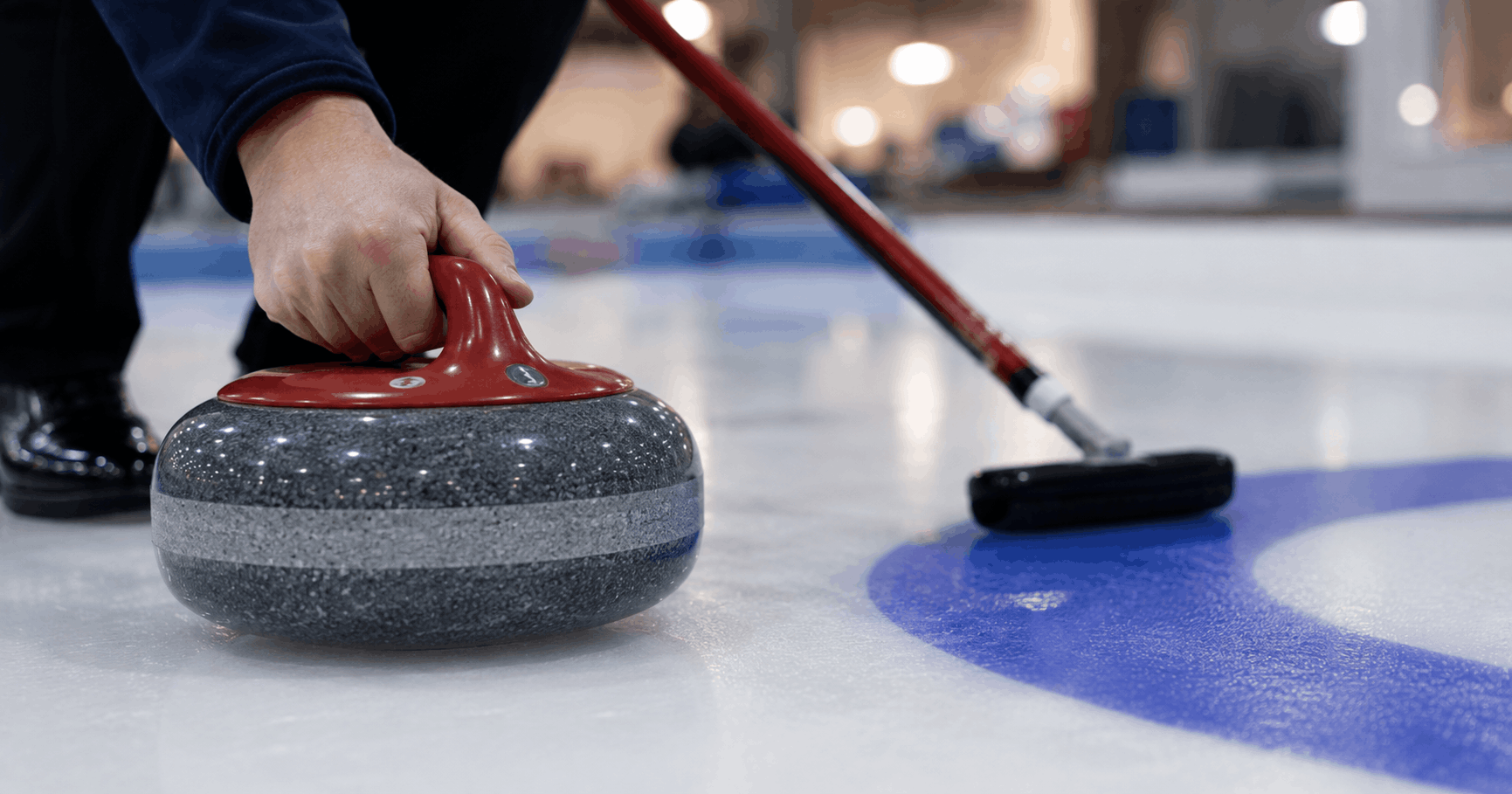
The stone is the object everyone’s actually watching. It weighs around 44 pounds (roughly 20 kilograms) and is cut from a specific type of granite, most famously quarried from Ailsa Craig, a small island off the coast of Scotland. That granite is unusually dense and resistant to water absorption, which matters because a stone that absorbed moisture would crack and flake apart after repeated freezing and thawing.
Each stone has a handle bolted to the top, which the thrower grips and twists slightly on release to give the stone its curl, the slow curving path that gives the sport its name. The bottom of the stone isn’t flat either. It has a small concave running band, a narrow ring of contact that actually touches the ice, which is why the stone can curl instead of just sliding in a straight line. This is the single piece of equipment in curling that almost everyone recognizes, even people who’ve never watched a full match.
The Broom (Curling Brush)
This is where a lot of newcomers get confused, since the sweeping looks almost decorative at first glance. It isn’t. Sweeping briefly melts a microscopically thin layer of ice ahead of the stone, which reduces friction and lets the stone travel farther and curl less. Skilled sweepers can genuinely extend a stone’s distance and straighten its path, which is why teams argue over sweeping calls mid-match.
Modern brushes have moved away from the old corn-straw brooms entirely. Today’s brush heads are usually fabric or synthetic pads mounted on a lightweight shaft, often carbon fiber, and the choice of head material is regulated fairly closely by the sport’s governing bodies after a period in the 2010s when new synthetic fabrics were sweeping (pun intended) the sport and raising fairness concerns. The World Curling Federation maintains current equipment rules covering exactly which brush heads are approved for competition.
Curling Shoes
Curling shoes look like ordinary sneakers until you flip them over. One shoe has a regular grippy sole, called the gripper, and the other has a smooth, slick sole called the slider, usually made from Teflon or a similarly low-friction material. That mismatch is intentional. The gripper foot pushes off from the hack, while the slider foot glides across the ice during the delivery, the long lunge a player makes while releasing the stone.
In my experience, this is one of the details that surprises casual viewers the most, since it looks like a strange split-personality shoe rather than dedicated sports equipment. Beginners at recreational curling clubs often use a slip-on slider that fits over a regular shoe instead of buying dedicated curling shoes outright, which keeps the entry cost lower for anyone just trying the sport a few times.
The Hack
The hack is the foothold set into the ice at each end of the sheet, similar in concept to a starting block in track. It gives the thrower something to push off from during the delivery, and without it, generating consistent power and a straight release would be far harder on ice with almost no natural grip. It’s a simple piece of equipment, but it’s a required fixture, not an optional accessory, and every competitive sheet of ice has one built into the surface at both ends.
Ice, Pebble, and the Playing Surface Itself
This one isn’t equipment in the traditional sense, but it deserves a mention because it interacts directly with the equipment above. Curling ice isn’t smooth like a hockey rink. It’s sprayed with tiny water droplets that freeze into a bumpy texture called pebble, and the stone actually rides on top of those little bumps rather than gliding across flat ice. That’s part of why sweeping works the way it does. Melting the pebble slightly changes how the stone interacts with the surface in real time.
Common Misconceptions About Curling Equipment
A lot of people assume sweeping is mostly for show, and that misconception is understandable given how theatrical it can look on TV. But the physics are real, and elite teams practice sweeping technique as seriously as they practice their throws.
Another common mix-up is assuming all curling stones are identical or interchangeable. In reality, matched sets used in major competitions are manufactured together specifically so that stones from the same set behave consistently, which is part of why you’ll see the same stone sets used across multiple international events rather than each venue sourcing its own.
Why This Equipment Setup Has Barely Changed
What tends to surprise people who look into the sport’s history is how little the core equipment has changed over roughly two centuries, compared to how much other winter sports have evolved with technology. The stone’s granite composition and general shape are essentially unchanged from historical designs. Most of the modern innovation has actually happened in the brush heads and footwear rather than the stone itself, since those are the components players have more room to experiment with under current rules. Coverage from outlets like the BBC during past Winter Olympics cycles has touched on this same point, noting how sweeping technology sparked more rule changes in the last decade than almost anything else in the sport.
FAQs
What is the most important piece of equipment in curling? The stone is generally considered the central piece of equipment in curling, since the entire sport revolves around its movement, though the broom plays an equally critical role in actually controlling that movement once the stone is in play.
Why do curling brooms matter if the stone is already moving? Sweeping changes the ice surface directly ahead of the stone, reducing friction just enough to affect both how far the stone travels and how much it curls, giving teams real influence over the shot after release.
Do curling stones ever get replaced? Not often. Quality stones, particularly those cut from Ailsa Craig granite, are built to last for decades of competitive use, and full replacement of a matched stone set is uncommon outside of major venue upgrades.
Can beginners rent equipment instead of buying it? Yes. Most curling clubs, including those affiliated with organizations like USA Curling, provide loaner brooms, slider attachments, and stones for new players, so nobody needs to buy gear before trying the sport at least once.
Is curling equipment expensive to buy for casual play? A full personal setup, including dedicated shoes and a quality brush, can run a few hundred dollars, but casual players usually rely on club-provided gear for a long time before investing in their own.
Also Read: Best Watches Under $1000: 8 Picks Worth Your Money