





Olympus Pen F Digital Camera: Full Review & Buying Guide
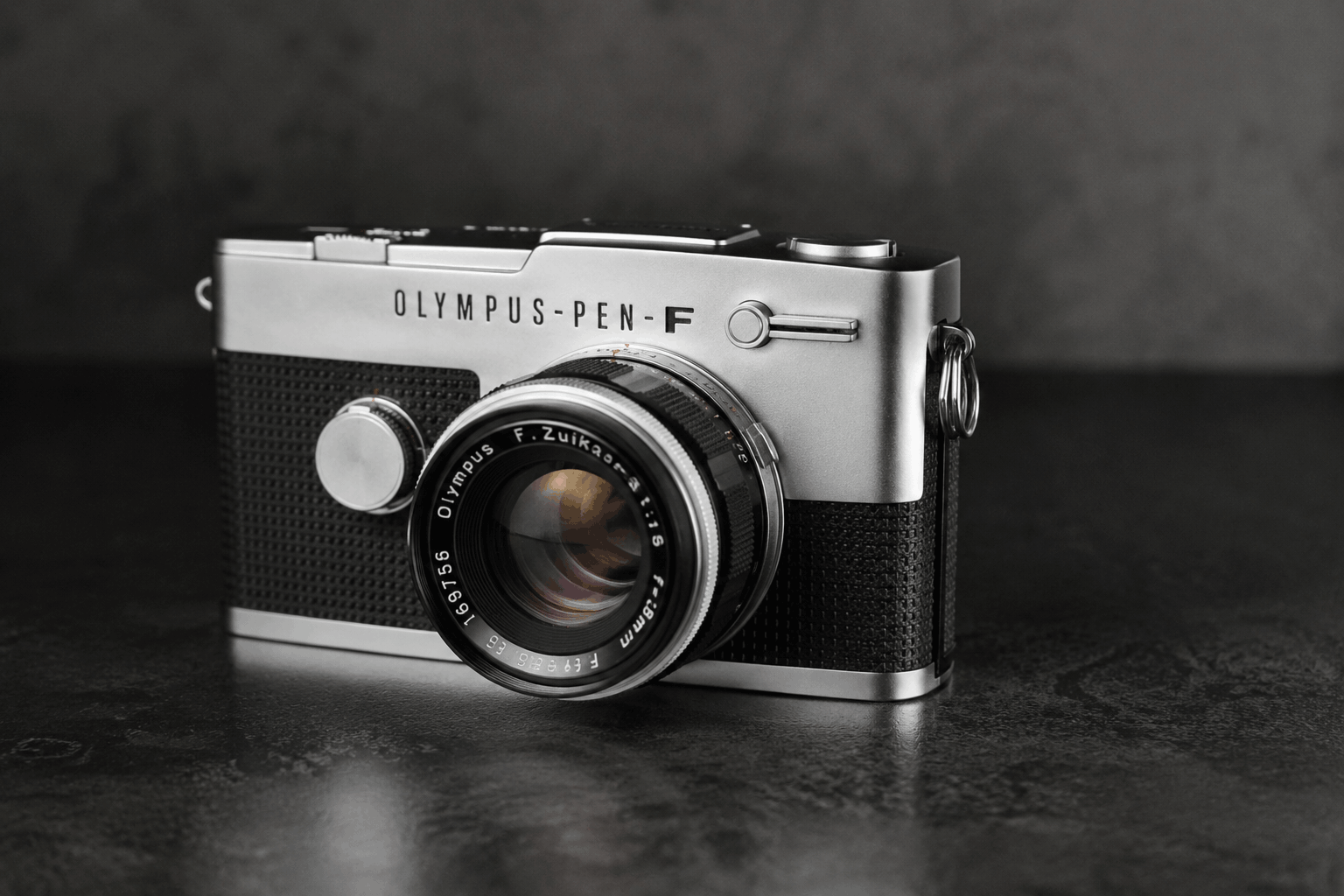
If you’ve ever held a camera and thought “this looks like art,” there’s a good chance it was the Olympus Pen F digital camera. Announced back in January 2016, it took the styling of Olympus’s beloved 1963 film rangefinder and squeezed a modern Micro Four Thirds sensor inside. The result is one of the most photogenic cameras Olympus ever made, and honestly, one of the most divisive.
I’ll get into the specs, the real-world shooting experience, and whether this camera still makes sense to buy secondhand, because Olympus (now operating as OM Digital Solutions) hasn’t made a direct successor.
Design and Build Quality
The Pen F borrows heavily from its 1963 namesake, and it shows in every detail. The top plate is machined metal, the dials have real resistance when you turn them, and the whole thing feels like it was built by someone who actually cares about tactile feedback. It’s noticeably smaller and lighter than a typical DSLR, which is part of the appeal for street and travel photographers who don’t want to lug around a brick all day.
What tends to surprise people is how the control layout doubles as a creative tool. There’s a dedicated front dial for Olympus’s Color Creator and Monochrome Profile Control modes, letting you dial in hue, saturation, and film-style grain effects without diving into menus. It’s a genuinely different way of shooting compared to most mirrorless cameras, which bury this stuff three menus deep.
The body is weather-resistant enough for light drizzle, though it’s not fully sealed like Olympus’s OM-D line. If you’re shooting in genuinely rough conditions, this isn’t the camera for that job.
Specifications That Matter
At its core, the Pen F uses a 20-megapixel Micro Four Thirds sensor, which was a notable bump from the 16MP sensors Olympus had been using at the time. Olympus removed the anti-aliasing filter, which sharpens fine detail but can occasionally introduce moire in repetitive patterns like fabric weaves.
It packs 5-axis in-body image stabilization rated around 5 stops, which was genuinely impressive for 2016 and still holds up reasonably well against newer cameras. The electronic viewfinder runs at 2.36 million dots, and there’s a tilting 3-inch touchscreen on the back that flips out to the side rather than the more common up-down hinge.
Autofocus relies on contrast-detection with 81 points. It’s fine for static subjects and everyday shooting, but it’s not built for fast-moving action. If you shoot sports or wildlife regularly, look elsewhere.
For reference on how Micro Four Thirds sensors compare to other formats, Wikipedia’s overview of the Micro Four Thirds system is a solid starting point if you’re new to the format.
Real-World Performance
In daily use, the Pen F is a joy for deliberate, considered photography. It’s not a camera you point-and-shoot without thinking. The manual dials encourage you to slow down, which fits street photography and portraiture well.
Image quality out of the 20MP sensor is strong for the format, with good color rendering and solid dynamic range in daylight. Low light is where Micro Four Thirds sensors generally show their limits compared to full-frame or APS-C, and the Pen F is no exception. Noise becomes noticeable above ISO 3200, and by ISO 6400 you’re making real compromises on detail.
One thing worth flagging: the mechanical shutter tops out at 1/8000s, and there’s a silent electronic shutter option too, though it can introduce rolling shutter distortion with fast-moving subjects. Burst shooting hits around 10fps with autofocus locked on the first frame, or a slower 5fps with continuous AF.
Battery Life and Handling
Battery life is rated at roughly 330 shots per charge using CIPA standards, which is about average for a mirrorless camera of this era. In practice, if you’re chimping the screen a lot or shooting bursts, expect less. Carrying a spare battery is a good idea for full-day shoots, and third-party batteries are widely available and generally reliable for this model.
The grip is minimal by design, staying true to the retro aesthetic, and that can be a downside if you’re using larger lenses or have bigger hands. Adding an optional accessory grip helps, though it does chip away at the compact form factor that makes the Pen F appealing in the first place.
Software and Menu Experience
Olympus’s menu system has a reputation for being dense, and the Pen F doesn’t escape that. There’s a genuine learning curve before you feel at home navigating it. Once you’ve customized the function buttons to your shooting style, though, it becomes much faster to use day to day.
The in-camera Color Creator lets you preview edits live through the viewfinder before you shoot, which is a feature I think more manufacturers should copy. It’s more useful than most in-camera filter gimmicks because you’re shaping the RAW capture, not just slapping a filter on a JPEG afterward.
Price and Availability
As of mid-2026, the Olympus Pen F is no longer sold new by the manufacturer. Olympus exited the camera business, transferring it to OM Digital Solutions in 2021, and no direct successor to the Pen F has been released. At launch in 2016, it retailed around $1,199 body-only in the US.
Today, your only realistic path to owning one is the used and secondhand market. Prices vary a lot depending on condition and shutter count, so check current listings on retailers like B&H Photo or similar camera-focused marketplaces, and always verify the seller’s return policy given the camera’s age.
Pros and Cons
The strengths here are real: gorgeous retro design, genuinely useful in-body stabilization, a distinctive shooting experience built around manual control, and image quality that still holds up for everyday photography.
The weaknesses are equally real. Autofocus isn’t built for action photography, low-light performance trails behind newer sensors, and buying one now means buying used gear with no warranty and no future firmware support. Olympus (now OM System) has moved on, and this camera is effectively frozen in time.
Alternatives Worth Considering
If the retro design is what draws you in but you want something currently in production, the Fujifilm X100VI and the Fujifilm X-T5 both lean into similar dial-driven control schemes with more modern autofocus systems. Fujifilm’s official site has current specs and pricing for both.
If you specifically want Micro Four Thirds glass compatibility and don’t mind sacrificing some retro flair, OM System’s current OM-5 or OM-1 models carry the stabilization and image quality forward, just without the dedicated color dial.
Who Should Buy the Pen F Today
This camera makes sense for photographers who prioritize a tactile, deliberate shooting experience over cutting-edge autofocus or low-light performance. Street photographers, portrait shooters, and anyone who wants a camera that’s genuinely fun to hold and operate will get a lot out of it, especially at the lower prices it commands on the used market now.
It doesn’t make sense if you need reliable autofocus tracking, shoot mostly in dim conditions, or want manufacturer support and current firmware updates. In my experience, cameras like this age well for hobbyists but poorly for anyone relying on them professionally.
Frequently Asked Questions
Is the Olympus Pen F still being made? No. Olympus exited the standalone camera business in 2021, and OM Digital Solutions hasn’t released a direct successor to the Pen F.
Does the Pen F shoot video? Yes, it records 1080p Full HD video, though it lacks 4K, which was already becoming standard on competing cameras around the same time.
Is it weather-sealed? It offers some resistance to light moisture but isn’t fully weather-sealed like Olympus’s OM-D series.
What lenses work with the Pen F? Any Micro Four Thirds lens, including options from Olympus, Panasonic, and third-party manufacturers like Sigma.
Is it a good camera for beginners? It’s usable for beginners, but the dense menu system and lack of guided modes make it a better fit for someone with at least some prior camera experience.
Also Read: Best Camera Bag for Hiking: 2026 Buyer’s Guide and Top Picks